
YCA1030 Dusk to Dawn Sensor
4.4Editor score
UL Listed for safety
Hard-wired installation
IP65 weatherproof
Standard fit design
Compare top light sensors for home security including motion detectors and dusk to dawn models to automate lighting and enhance safety effectively.
Light sensors for home security play a vital role in modern automated safety systems. They detect ambient light levels to trigger actions like turning on lights when it gets dark or when motion is detected. Choosing the right sensor ensures reliable performance and energy efficiency across various home environments.
We compared ten leading products based on connectivity options detection range and smart home integration capabilities. Each item was evaluated for its ability to work seamlessly with hubs or standalone systems. Our analysis focuses on features that maximize security while minimizing false alarms and power consumption.
This guide highlights key strengths and weaknesses to help you find the ideal match for your setup. Each pick includes detailed specs and user feedback to inform your decision. Please note that availability and pricing may change over time so verify details before purchasing.
4.4Editor score

4.8Editor score

4.4Editor score
The following table provides a side-by-side comparison of all ten products evaluated in this guide. It highlights key specifications and compatibility details to help you quickly identify the best fit for your security needs.


The Zigbee Motion Sensor with Light Sensor offers a robust solution for smart home automation. It stands out by combining motion detection with ambient light sensing to trigger actions only when needed. This dual capability makes it ideal for energy-efficient lighting control in hallways or garages.
We may earn a commission when you buy through this link, at no additional cost to you.
Its integration with Home Assistant and SmartThings allows for sophisticated local automations without relying on cloud services. The sensor supports low medium and high sensitivity settings to reduce false triggers from pets or environmental factors. Users appreciate the flexible mounting options that allow precise aiming of the detection zone.
While it requires a compatible Zigbee hub which may be a barrier for some users the setup is straightforward for those with existing smart home infrastructure. The battery life is strong with a CR2450 cell providing over a year of typical use. Low battery notifications ensure you never lose automation coverage unexpectedly.
This sensor is perfect for tech-savvy homeowners who value local control and reliability. It excels in scenarios where lighting should only activate when it is dark and motion is detected. For anyone building a Zigbee ecosystem this product delivers significant value and flexibility.
The built-in lux sensor allows automations to check ambient light levels before triggering lights saving energy during daylight hours.
Adjustable settings help tailor the detection zone to specific environments reducing unwanted alerts from moving objects.
We may earn a commission when you buy through this link, at no additional cost to you.
The TP-Link Tapo Motion Sensor is an affordable option for those looking to expand their smart home security. It uses a Sub-1G wireless protocol to ensure stable connections and long battery life. This makes it suitable for areas where Wi-Fi signals might be weak or unreliable.
We may earn a commission when you buy through this link, at no additional cost to you.
Its compatibility with the Tapo Hub allows for seamless integration with other Tapo devices. The sensor can trigger lights or alarms via Smart Actions even if the network is temporarily disconnected. Users can adjust the viewing angle and sensitivity to fit specific rooms or entryways.
While the battery life is impressive at up to two years it depends on usage frequency. The adhesive or magnetic mounting options make installation simple without tools. However reliance on the Tapo Hub means you cannot use it as a standalone device for alerts.
This sensor is best for households already invested in the Tapo ecosystem. It offers reliable performance at a competitive price point. For budget-conscious buyers wanting smart automation features it is a strong contender in the market.
Powered by a single CR2450 battery the sensor can last up to two years reducing maintenance needs significantly.
You can set custom actions to control lights or alarms based on motion detection enhancing overall security.
We may earn a commission when you buy through this link, at no additional cost to you.
The Akamatis Litos v3 represents a step forward in presence detection technology. Unlike traditional PIR sensors it uses mmWave radar to detect both motion and stationary objects. This means it can tell if someone is sitting still in a room rather than just moving.
We may earn a commission when you buy through this link, at no additional cost to you.
Its integrated light sensor matches human eye sensitivity closely providing accurate ambient light data. This is crucial for automations that depend on precise lighting conditions. The device comes pre-configured with ESPHome making it ready to use with Home Assistant right out of the box.
While the design is sleek and light-permeable it does require a Home Assistant installation which may not suit everyone. Users should have basic familiarity with smart home setups. The Wi-Fi connection provides direct control without needing a bridge but may add to network traffic.
This sensor is ideal for advanced users who want granular control over their home automation. It excels in scenarios where detecting stillness is as important as detecting movement. For those prioritizing high precision this model is a top choice.
The 24GHz radar detects stationary people up to 20 feet indoors offering a significant improvement over standard PIR.
The VEML7700 sensor provides readings that closely match human perception for better automation decisions.
We may earn a commission when you buy through this link, at no additional cost to you.
The Philips Hue Secure Smart Contact Sensor adds a layer of security to your lighting ecosystem. It detects when doors or windows are opened and can trigger lights or send alerts immediately. This integration helps mimic presence and deter potential intruders effectively.
We may earn a commission when you buy through this link, at no additional cost to you.
Using the adhesive backing you can place the sensor on various surfaces without drilling holes. The app provides a clear overview of all activity allowing you to track when sensors were triggered. If someone tampered with the sensor you receive a notification which adds peace of mind.
While it is limited to indoor use this sensor is perfect for high-traffic entry points. It relies on the Hue Bridge which must be present in your home. The connection is stable and does not drain your Wi-Fi network resources.
This sensor is best for existing Hue users who want to enhance their setup. It turns simple door or window triggers into powerful automation opportunities. If you value seamless integration with your existing smart lights this is a reliable choice.
When armed the sensor sends real-time alerts to your mobile device and can turn on lights to deter intruders.
You can automate hallway lights to turn on when the front door opens creating a welcoming environment.
We may earn a commission when you buy through this link, at no additional cost to you.
The Philips Hue Outdoor Motion Sensor is designed to handle exterior environments effectively. It combines motion detection with a dusk to dawn feature ensuring lights only turn on when it is dark. This dual functionality helps manage energy use while keeping your property well-lit.
We may earn a commission when you buy through this link, at no additional cost to you.
With a 160-degree detection area it covers large spaces like patios driveways and front doors easily. The IP44 weatherproof rating ensures it withstands rain and dust making it durable for year-round outdoor use. You can control both indoor and outdoor Hue lights from this single sensor.
Battery power allows for flexible placement without worrying about wiring. However it does require a Hue Bridge to function within the ecosystem. The setup is intuitive and works with popular voice assistants for voice control options.
This sensor is ideal for homeowners with an extensive Hue setup. It simplifies outdoor lighting control by handling motion and light levels automatically. If you need a reliable outdoor sensor for your Hue lights this is a solid option.
The sensor turns lights on when motion is detected and only if it is dark outside to save energy.
Designed for outdoor use it has undergone tests to ensure performance in various weather conditions.
We may earn a commission when you buy through this link, at no additional cost to you.
The YCA1030 Dusk to Dawn Sensor provides a straightforward solution for outdoor lighting control. It is a hard-wired photocell that automatically turns lights on at dusk and off at dawn. This makes it an excellent choice for basic security lighting that needs to be reliable.
We may earn a commission when you buy through this link, at no additional cost to you.
Its IP65 rating ensures it can withstand rain and dust making it suitable for outdoor applications. The built-in time delay prevents lights from turning off due to temporary flashes like lightning or headlights. It works with a wide variety of bulbs including LEDs and halogens.
While it lacks smart connectivity it offers unmatched reliability for simple tasks. The UL listing confirms it meets safety standards for commercial and residential fixtures. Installation requires basic electrical knowledge but is standard for post lamps or wall packs.
This sensor is best for those needing a no-fuss outdoor solution. It is cost-effective and durable requiring no maintenance beyond occasional cleaning. If you want lights to always turn on at night without complex setup this sensor delivers.
The sensor manages lights automatically so you never have to remember to turn them on or off manually.
With an IP65 rating the body protects against water and dust for long-lasting outdoor performance.
We may earn a commission when you buy through this link, at no additional cost to you.
This two-pack of dusk to dawn sensors offers great value for covering multiple outdoor areas. Each unit features a swivel mount that lets you focus the light exactly where it is needed. They handle various voltages and are compatible with multiple bulb types for flexibility.
We may earn a commission when you buy through this link, at no additional cost to you.
The IP65 water-resistant rating ensures they can handle harsh weather conditions. Surge protection adds an extra layer of safety for your electrical system. The swivel mechanism makes it easy to adjust the angle to avoid glare or unwanted triggers.
Installation requires disconnecting power and mounting the switch into a knockout hole. It is a reliable solution for those who do not need smart home features. The warranty provides assurance regarding product quality and durability over time.
This set is ideal for homeowners who want coverage for more than one location. It ensures your lights turn on automatically at night to enhance security. For a budget-friendly and dependable option this pack is worth considering.
Handles voltages from 120V to 277V making it suitable for many different residential and commercial setups.
The swivel feature allows precise aiming of the sensor to avoid light pollution and ensure proper detection.
We may earn a commission when you buy through this link, at no additional cost to you.
The Ring Motion Detector is a key component for home security focused on alerts. It watches entire rooms and sends instant notifications when motion is detected. A pet-friendly mode helps filter out small pets to reduce unnecessary alerts effectively.
We may earn a commission when you buy through this link, at no additional cost to you.
Unlike other sensors it connects over Amazon Sidewalk rather than requiring a separate base station. This simplifies setup and provides flexible coverage throughout your home. The connection is secure and uses encrypted protocols to protect your data.
While it is primarily for alerts it can integrate with lights for added utility. The setup is quick and easy making it accessible for non-technical users. It is a solid choice for those already using Ring devices for security.
This detector is best for homeowners prioritizing security notifications. It offers reliable indoor coverage with minimal configuration. If you want to keep an eye on your home without complex wiring this device works well.
One sensor watches an entire room and sends real-time intruder alerts directly to your mobile device.
Customize settings to reduce false alerts from pets under 50 lbs so you only get notified about real threats.
We may earn a commission when you buy through this link, at no additional cost to you.
The YoLink Indoor Motion Sensor stands out for its exceptional range capabilities. Using LoRa technology it can communicate over 2000 feet with obstacles. This makes it perfect for large properties or multi-story homes where other sensors struggle to connect.
We may earn a commission when you buy through this link, at no additional cost to you.
It does not rely on Wi-Fi reducing network congestion and security risks. Device-to-device pairing allows lights to turn on based on motion even if the internet is down. You can receive SMS notifications which is useful if you do not want to rely on app alerts.
The setup involves a hub but the plug-and-play experience makes it easy. The built-in magnet simplifies installation on metal surfaces. While it is a separate ecosystem it offers unique advantages for remote areas.
This sensor is ideal for large homes or estates. It provides reliable coverage where standard protocols fail. If you need long-range security with smart features this sensor delivers impressive results.
LoRa wireless system provides up to 2034 feet range covering multiple floors and buildings easily.
Device-to-device pairing ensures automation works even if the internet and power are temporarily down.
We may earn a commission when you buy through this link, at no additional cost to you.
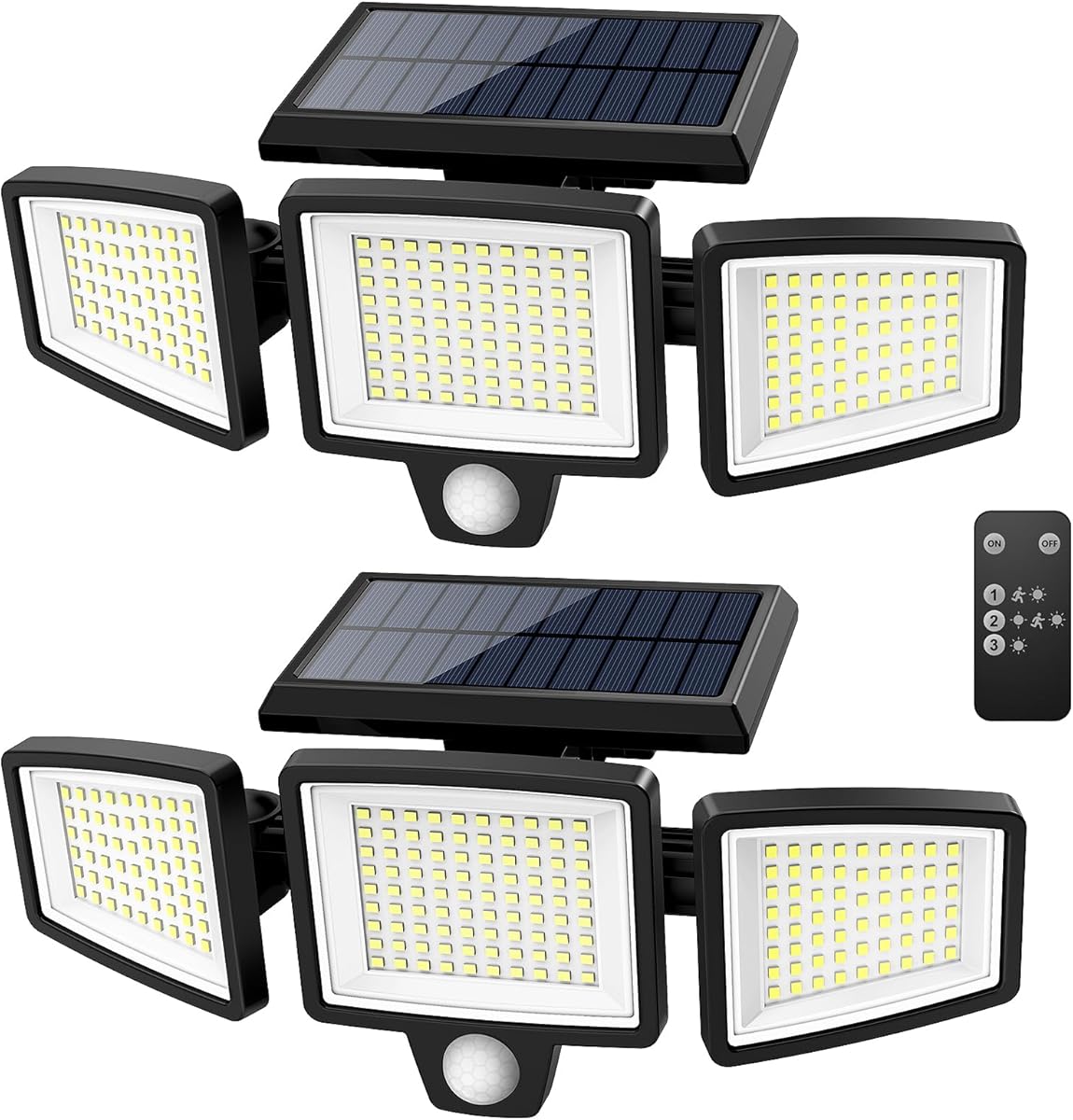
These solar outdoor lights combine illumination with motion detection in one device. They charge during the day and turn on when motion is detected at night. The high LED count ensures bright coverage of large outdoor areas like driveways or yards.
We may earn a commission when you buy through this link, at no additional cost to you.
You can control the modes via a remote for flexibility based on your needs. The IP65 waterproof rating ensures durability against rain and snow. Installation is wireless requiring only a wall mount and no electrical wiring which simplifies setup.
While performance depends on sunlight availability the built-in battery supports extended operation. Setting the light to OFF state on cloudy days helps preserve charge. This product is best for areas where wiring is difficult or expensive.
This two-pack offers great value for covering multiple outdoor zones. It enhances security by illuminating dark areas automatically. If you want bright solar-powered lights with motion control this set is highly practical.
The built-in PIR sensor detects motion up to 26 feet and turns on the light instantly.
High-efficiency panels ensure the battery charges even on days with less light for reliable operation.
We may earn a commission when you buy through this link, at no additional cost to you.
Choosing the right light sensor involves considering connectivity installation and specific features that match your security needs.
Connectivity determines how the sensor communicates with your home network. Wi-Fi devices connect directly but can congest your network. Zigbee and Z-Wave require a hub but offer better battery life and mesh reliability.
Choose a protocol that matches your existing smart home setup for seamless integration.
The range of the sensor affects how much area it can cover effectively. Some sensors detect up to 20 feet while others reach further. For large rooms or outdoor spaces a wider range is essential.
Ensure the sensor's range matches the size of the room you are monitoring.
Some sensors include a light sensor to detect ambient levels. This allows lights to turn on only when it is dark saving energy. Not all motion sensors have this feature so check specifications.
Prioritize models with light detection if you want automated energy efficiency.
Installation varies from wireless adhesive mounting to hard-wired connections. Hard-wired sensors are permanent but offer power reliability. Wireless sensors are easier to place but need battery changes.
Decide if you prefer flexibility with batteries or reliability with wiring.
Battery life impacts maintenance frequency. Some devices last a year while others two years. Look for low-battery alerts to avoid sudden outages.
Choose a sensor with long battery life to reduce upkeep tasks.
Compatibility with your smart assistant is key for automation. Ensure the sensor works with Alexa Google Assistant or Home Assistant. Some require specific hubs which adds cost.
Verify compatibility before buying to ensure it works with your ecosystem.
For outdoor use the sensor must resist rain and dust. Look for IP ratings like IP65 or IP44. This ensures the device functions in various weather conditions.
Check the IP rating to guarantee outdoor durability.
Sensitivity and angle adjustability help reduce false alarms. Adjustable settings let you tailor the detection zone to your needs. This is useful for high-traffic areas or places with pets.
Look for sensors with customizable settings to fit your environment.
Start by installing the sensor in a location with clear visibility of the area you want to monitor. Avoid placing it near heat sources or windows where sunlight might trigger false alarms.
Connect the sensor to your smart hub or app following the manufacturer's instructions. Test the device by walking in front of it to ensure it detects motion correctly.
Regularly clean the lens of the sensor to prevent dust from interfering with performance. Check battery levels periodically and replace them when low-battery alerts appear.
Not all light sensors require a hub. Some use Wi-Fi and connect directly to your network. However many advanced sensors like Zigbee models do require a hub for stable communication.
Yes many light sensors work offline using local protocols like Zigbee. They can trigger lights even if the internet is down provided the hub is powered.
Adjust the sensitivity settings and angle of the sensor. Avoid placing it near pets or windows where movement can trigger false alarms.
Yes many outdoor sensors have IP ratings like IP44 or IP65. This ensures they are protected against rain and dust.
Battery life varies by model from one to two years. Factors like usage frequency affect how long the battery lasts.
Yes many sensors support Alexa integration. Ensure the device is compatible with your smart home ecosystem before buying.
Yes sensors work at night using motion detection. Those with light sensors ensure they only trigger when it is dark.
Gently wipe the lens with a soft dry cloth. Avoid harsh chemicals that might damage the sensitive components.
We reviewed ten top light sensors ranging from wireless smart models to hard-wired outdoor units. Each offers unique benefits depending on your connectivity preferences and specific security needs.
Prioritize compatibility with your existing smart home system to ensure smooth automation. Consider installation requirements and battery life to find a sensor that fits your lifestyle.
Check current prices and availability before purchasing as these can change over time. By selecting the right sensor you can enhance your home security effectively and efficiently.