
TP-Link Tapo Motion Sensor
4.5Editor score
Long battery life
Sub-1G wireless
Adjustable sensitivity
Compare the top ten Matter compatible motion sensors for smart home automation featuring advanced detection, ecosystem support, and reliable performance.
Modern smart homes rely on precise motion detection to automate lighting and security seamlessly. Choosing a Matter compatible motion sensor ensures your devices work together across different ecosystems without needing multiple hubs or complex setups.
We evaluated ten leading sensors based on detection accuracy, battery life, and Matter integration capabilities. Our analysis covers radar-enhanced models, battery-powered units, and wired options to help you find the perfect fit for your space.
Each pick highlights unique strengths like AI-driven presence detection or wide viewing angles. Note that availability and pricing may fluctuate, so verify current details before purchasing to ensure you get the best value for your specific needs.
4.5Editor score

3.8Editor score

3.7Editor score
This side-by-side comparison helps you quickly identify the right sensor for your home by highlighting key specifications like detection range, power source, and ecosystem compatibility for each model listed.




The meross Presence Sensor MS600 stands out as a robust solution for modern smart homes seeking reliable occupancy detection. It combines radar, PIR, and light sensing technologies to ensure lights stay on when you are present even if you are sitting still. This multi-layered approach significantly reduces the false negatives common in traditional motion sensors.
We may earn a commission when you buy through this link, at no additional cost to you.
Its ability to detect presence without movement makes it ideal for reading nooks or home offices where minimal motion occurs. The built-in light sensor adds another dimension to automation, allowing you to tailor lighting based on ambient brightness levels. This helps save energy by ensuring lights only turn on when needed.
While the need for a continuous power supply and a hub for Matter compatibility might be drawbacks for some users, the stability provided is unmatched. The sensor integrates seamlessly with major platforms like HomeKit, Alexa, and Google Home. The pet-proof shield ensures your automation doesn't trigger accidentally due to pets or vacuums.
If you prioritize accuracy and ecosystem flexibility over wireless convenience, this sensor is a top choice. It delivers consistent performance across different smart home setups. We recommend it for users who want advanced detection features and reliable local control without cloud dependency.
The combination of radar and PIR allows for precise detection of both movement and static presence ensuring lights do not turn off prematurely.
Built-in light sensing enables smart adjustments based on natural light levels helping you save energy while maintaining comfort.
We may earn a commission when you buy through this link, at no additional cost to you.
The TP-Link Tapo Motion Sensor offers exceptional value for those looking to automate their home without breaking the bank. While it does not support Matter natively it delivers reliable performance through its dedicated Tapo ecosystem. The sensor uses a Sub-1G wireless protocol which extends battery life significantly compared to standard Wi-Fi sensors.
We may earn a commission when you buy through this link, at no additional cost to you.
Its detection range of up to 23 feet is impressive for its size making it suitable for hallways and entryways. The adjustable sensitivity settings allow you to fine-tune how the sensor reacts to movement reducing false alarms. Real-time notifications ensure you are always aware of activity in your home even when you are away.
The requirement for a Tapo Hub is a consideration since it adds to the initial setup cost. However once set up the sensor provides robust local control features that work even if your internet connection goes down. This makes it a reliable choice for security and basic automation tasks.
For users already invested in the Tapo ecosystem or those seeking a cost-effective solution this sensor is hard to beat. It balances performance and affordability well. We recommend it for budget-conscious buyers who do not strictly require Matter compatibility for their smart home setup.
The Sub-1G protocol ensures the sensor lasts up to two years on a single battery minimizing maintenance and replacement costs.
Smart Actions allow you to control lights and other devices automatically based on motion detection creating a responsive home environment.
We may earn a commission when you buy through this link, at no additional cost to you.
The Aqara Presence Sensor FP300 represents the pinnacle of multi-functional smart home sensing. It combines mmWave radar, PIR, light, temperature, and humidity sensors into one sleek device. This comprehensive approach allows for deeply integrated automation that responds not just to movement but to the overall environment of the room.
We may earn a commission when you buy through this link, at no additional cost to you.
Its AI-driven adaptive learning ensures that the sensor becomes more accurate over time by adjusting to your specific habits and room layout. This reduces false triggers and ensures lights remain on when you are truly present. The Matter over Thread support means you can connect it directly to your existing ecosystem without a proprietary hub.
While the price is higher than standard motion sensors the added data points and compatibility justify the cost for premium setups. The three-year battery life in Zigbee mode also reduces long-term maintenance. However users must ensure they have a compatible Thread border router to fully utilize the Matter features.
If you seek a future-proof sensor that offers rich data and seamless connectivity this device is an excellent investment. It works well with major platforms like Apple Home and Google Home. We recommend it for tech enthusiasts who want the most advanced features available in a motion sensor today.
By monitoring temperature and humidity alongside motion this sensor enables climate control automations that enhance comfort and energy efficiency.
Adaptive AI learning continuously refines sensitivity to reduce false alarms and ensure reliable detection based on your usage patterns.
We may earn a commission when you buy through this link, at no additional cost to you.
The meross Presence Sensor MS605 is designed for versatility and durability with its IP67 waterproof rating. This makes it suitable for outdoor areas like driveways or indoor spaces prone to moisture such as bathrooms. It uses mmWave and PIR sensors powered by AI to detect presence even when you are not moving.
We may earn a commission when you buy through this link, at no additional cost to you.
The battery-powered design allows for flexible mounting without the need for wiring. It runs on a single CR123A battery for up to three years providing long-term reliability. The Matter over Thread support ensures it integrates well with various smart home platforms including Home Assistant and Alexa without cloud dependency.
Users have noted that firmware updates are necessary for stable direct control with some platforms like Alexa. Additionally the sensor requires a hub for certain features which may add complexity. Despite these minor issues the sensor offers strong performance for its price point and robust physical build quality.
If you need a rugged sensor that can withstand varying environmental conditions this is a solid choice. It provides the convenience of battery power with advanced detection capabilities. We recommend it for users who need a durable solution that fits well in challenging locations.
With an IP67 rating the sensor can handle rain and moisture making it suitable for outdoor or damp indoor environments.
The foldable and rotatable stand allows you to position the sensor exactly where it is needed for optimal coverage.
We may earn a commission when you buy through this link, at no additional cost to you.
The Aqara Motion and Light Sensor P2 builds on the legacy of its predecessor with native Matter support over Thread. It combines motion detection with light sensing in a compact wireless design. The Thread protocol ensures fast and reliable communication with low power consumption making it ideal for battery-operated devices.
We may earn a commission when you buy through this link, at no additional cost to you.
A key advantage of this model is that the light sensor can function independently of the motion sensor. This allows for more nuanced automations such as adjusting curtains based on brightness levels alone. The wide viewing angle of 170 degrees ensures broad coverage in living rooms and hallways.
The sensor requires a specific hub to act as a Thread border router which is sold separately. Also note that while it supports Alexa the light sensor functionality is limited there. However for Apple Home and Home Assistant users it offers powerful local control without needing an internet connection.
For users seeking a compact sensor with good battery life and advanced light detection this is a strong option. It delivers stable performance within compatible ecosystems. We recommend it for those who prioritize Thread connectivity and want reliable automation without constant battery changes.
Built on the Thread protocol the sensor offers low latency and high reliability ensuring commands execute instantly without delay.
The separate light sensor enables automations based solely on ambient brightness adding versatility to your smart home routines.
We may earn a commission when you buy through this link, at no additional cost to you.
The Eve Motion 3-Pack offers a cost-effective way to equip multiple rooms with smart motion detection. Each sensor features IPX3 water resistance allowing use in bathrooms or entryways. Being Matter enabled it ensures broad compatibility across major platforms while maintaining privacy with local communication.
We may earn a commission when you buy through this link, at no additional cost to you.
Eve devices are known for their robust privacy features as they do not rely on cloud services for operation. This means your data stays private and automations continue to work even if your internet connection fails. The 9-meter detection range provides ample coverage for standard room sizes.
Setup requires a Thread border router which might not be present in all homes initially. The price point is higher than single units but purchasing three at once saves compared to buying individually. It is a great choice for those who want to automate lighting throughout the whole house.
If you value privacy and multi-room coverage this pack is an excellent investment. It supports voice assistants and offers reliable local control. We recommend it for users who need multiple sensors and want to future-proof their home with Matter technology.
No Eve cloud or registration means your data remains local ensuring high privacy and reliable offline operation.
The 3-pack allows you to automate lights in hallways and entryways ensuring a seamless experience throughout your home.
We may earn a commission when you buy through this link, at no additional cost to you.
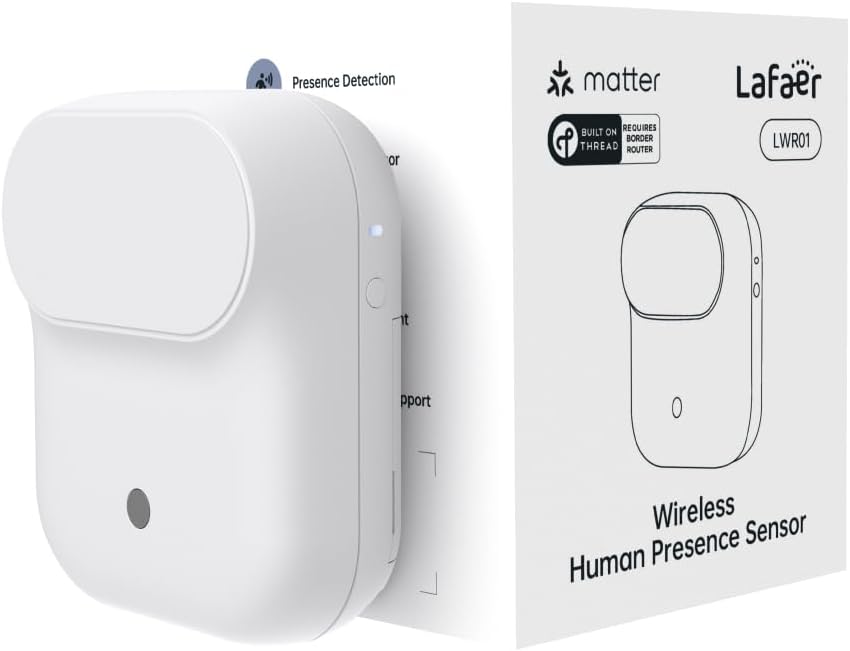
The Wireless Human Presence Sensor LWR01 brings mmWave radar technology to a compact form factor. It detects even subtle movements such as breathing ensuring that lights stay on while you are seated or lying down. This prevents the frustration of lights turning off while you are reading or relaxing.
We may earn a commission when you buy through this link, at no additional cost to you.
Its IPX3 water resistance rating makes it suitable for bathrooms or other areas with moisture. The sensor supports both battery and optional wired power giving you flexibility in installation. A built-in ambient light sensor helps avoid turning on lights during the day when natural light is sufficient.
The sensor operates on Matter over Thread requiring a compatible smart home router. While this limits initial setup options it ensures high reliability and security. The detection range is moderate at 6 meters for movement which fits most standard rooms well.
If you need a simple yet advanced sensor for specific zones this is a good fit. It balances presence detection with environmental awareness. We recommend it for users who want local control and reliable detection without needing a wired connection.
Choose between battery operation for flexibility or a Type-C connection for continuous power to suit your specific needs.
Built-in light detection helps save energy by preventing lights from turning on when daylight is already present.
We may earn a commission when you buy through this link, at no additional cost to you.
The Aqara Zigbee 3.0 Motion Sensor P1 is a straightforward and efficient device for basic motion detection. Its standout feature is the five-year battery life which is among the best in its class. This means you can install it and forget about battery changes for a long time.
We may earn a commission when you buy through this link, at no additional cost to you.
The sensor offers a configurable detection timeout ranging from 1 to 200 seconds allowing you to save energy or ensure prompt detection. It works seamlessly with the Aqara ecosystem and other Zigbee hubs making it versatile for those who already have a Zigbee network setup.
While it does not support Matter natively it integrates well with platforms like Home Assistant through Zigbee bridges. The detection range is adjustable and the mounting options allow for flexible placement. It is reliable for alert systems and basic lighting control.
For users seeking longevity and simplicity this sensor is an excellent choice. It performs well in low temperatures and ensures reliable operation. We recommend it for those who prioritize battery life and already use a Zigbee hub in their home.
With up to five years of battery life this sensor minimizes maintenance and offers reliable long-term performance.
Adjust the detection timeout to suit your needs ensuring lights stay on just long enough after you leave a room.
We may earn a commission when you buy through this link, at no additional cost to you.
The SwitchBot Smart mmWave Radar Motion Sensor uses radar technology to detect subtle movements like breathing. This ensures that lights remain on even when you are stationary. It includes an anti-interference feature that filters out signals from fans or air conditioners improving accuracy.
We may earn a commission when you buy through this link, at no additional cost to you.
Its magnetic base allows for easy and flexible mounting on various surfaces. You can adjust the detection angle and create zones to avoid triggering on pets or other moving objects. This level of customization makes it suitable for complex rooms like living areas.
To connect to Matter platforms you will need the SwitchBot Matter Hub which is sold separately. While this adds a step to setup it ensures seamless integration with HomeKit and Alexa. The battery life is good for a radar device but may need replacement more often than standard sensors.
For users looking for detailed control and advanced presence detection this sensor is a strong contender. It balances technology with ease of use. We recommend it for those who want to fine-tune detection zones and avoid false triggers.
AI filters out noise from appliances reducing false positives and ensuring the sensor only triggers for human presence.
Adjustable detection zones allow you to customize the sensor's range to avoid unwanted triggers in specific areas.
We may earn a commission when you buy through this link, at no additional cost to you.
The SONOFF SNZB-03P Zigbee Motion Sensor is designed for quick and reliable detection. It features a rapid detection time allowing lights to turn on almost instantly when you enter a room. This responsiveness is valuable for both security and convenience in daily use.
We may earn a commission when you buy through this link, at no additional cost to you.
It runs on a CR2477 battery offering up to three years of life. The sensor supports local smart scenes meaning automations can continue even if your internet network goes down. This enhances security and usability during outages ensuring your devices function as expected.
You will need a Zigbee bridge or hub to connect this device to your smart home system. While it lacks Matter support it integrates well with platforms that support Zigbee like Home Assistant. It is a robust option for users focused on basic automation needs.
If you prioritize speed and battery life in a cost-effective package this sensor is a solid choice. It offers reliable performance without unnecessary complexity. We recommend it for users who want quick response times and long battery life in a simple package.
The five-second detection time ensures lights turn on almost instantly providing immediate comfort and convenience.
Local automation ensures your smart devices continue to operate even during internet outages maintaining reliability.
We may earn a commission when you buy through this link, at no additional cost to you.
Selecting the right motion sensor involves understanding your home's ecosystem and specific automation needs. This guide breaks down the critical factors to help you choose a device that offers reliability and longevity.
Matter over Thread is becoming the standard for smart home devices due to its low power consumption and high reliability. If you want your sensors to work across different platforms without needing a proprietary hub ensure the device supports Matter. Traditional Zigbee sensors are also reliable but may require a specific hub to integrate with Apple Home or Google Home.
Look for explicit Matter support if you want future-proofing. Thread networks are more stable and secure than Wi-Fi for battery-powered devices.
Sensors come in battery-powered and wired options. Battery-powered units offer flexible placement but require periodic replacement. Wired sensors like the meross MS600 provide continuous power which is useful for high-frequency use cases like hallways where batteries might drain faster.
Choose wired options for permanent locations like ceilings and battery options for areas where wiring is difficult. Check battery life ratings to ensure they match your usage patterns.
Traditional PIR sensors detect heat changes caused by movement but can miss stationary occupants. Newer mmWave radar sensors detect micro-movements like breathing ensuring lights stay on when you are sitting still. This is crucial for areas like living rooms or home offices.
Prioritize models with radar or hybrid detection if you want to avoid false negatives. Pure PIR sensors are cheaper but less accurate for modern automation needs.
The range of the sensor determines how far away it can detect movement while the angle determines how much of the room it covers. Hallways typically need a narrow range with a wide angle whereas open living rooms benefit from a wider detection field.
Ensure the sensor's rated range covers your space effectively. Some models allow you to adjust sensitivity or create zones to avoid triggering on pets or non-human movement.
If you plan to install a sensor in a bathroom or garage check for water resistance ratings like IPX3 or IP67. These ratings protect the device from moisture and dust ensuring longevity in challenging environments.
Select sensors with appropriate protection for the room where they will be placed. Standard indoor sensors may fail quickly if exposed to high humidity or splashes.
Ensure the sensor supports the voice assistant or home platform you use. While Matter aims to unify this support some features may be limited depending on the platform. Check if the sensor works with HomeKit Alexa and Google Home out of the box.
Read product descriptions carefully to see if all features like light sensing are supported by every platform. Not all features translate equally across ecosystems.
Some sensors come with magnetic bases or stands that allow you to adjust the angle easily. Others require drilling or adhesive mounts. Consider whether you can move the sensor later as you refine your automation setup.
Flexible mounting options save time during installation and allow for better positioning. A rotating stand is useful for directing the sensor towards specific entry points.
Long battery life reduces the need for frequent replacements which is convenient for hard-to-reach mounts. Look for sensors that last two years or more to minimize maintenance. Some models offer indicators when the battery is low.
Check the type of battery used and how easy it is to replace. Larger batteries usually last longer but the device may be bulkier.
Install the sensor in a location that covers entry points without obstructing movement. Place it at a height of about seven feet for optimal coverage and ensure there are no obstructions like large furniture in front of the lens.
Connect the sensor to your smart home app using the provided QR code or instructions. If using Matter ensure your hub is compatible with Thread to avoid connection issues. Test the automation triggers immediately to confirm the sensor is detecting motion correctly.
Regularly clean the sensor lens with a soft dry cloth to maintain accuracy. Dust and grime can block detection and reduce performance. Check battery levels periodically and replace them promptly to avoid losing functionality during critical times.
Not all Matter sensors require a hub but most do need a Matter controller or Thread border router to function properly within the ecosystem. Some devices like routers can act as bridges allowing direct connection to other Matter devices. Check the product details to see if your specific hub supports Matter.
Yes many motion sensors can be integrated into security systems to trigger alarms or notify you when motion is detected. However for professional security monitoring you should consult a dedicated security provider. Some models offer local notification features that work independently of the cloud.
PIR sensors detect heat changes caused by movement which makes them energy efficient but less accurate for stationary occupants. mmWave sensors use radar to detect micro-movements like breathing ensuring lights stay on even when you are not moving. mmWave is better for rooms where you sit for long periods.
Yes many of the Matter compatible sensors in this list support Apple HomeKit. However you will need a compatible Thread border router or HomePod to connect them. Ensure the product page explicitly states HomeKit compatibility before purchasing to avoid setup issues.
Battery life varies by model ranging from two to five years depending on usage frequency. Wired sensors can last indefinitely as long as they remain powered. Proper placement and battery maintenance help extend the lifespan of wireless devices significantly.
Yes Matter sensors generally operate locally using Thread networks which do not rely on cloud connectivity. This means automations like turning on lights continue to work even if your internet is down. Local processing ensures faster response times and better privacy for your data.
Choosing the right motion sensor depends on your specific needs for detection accuracy and ecosystem support. The meross MS600 stands out for its hybrid radar technology while the Aqara FP300 offers advanced environmental sensing for power users.
Prioritize sensors that offer local control and Matter support to ensure your home remains future-proof and efficient. Consider whether you need a battery or wired solution based on the location where you plan to install the device.
Prices and availability may change over time so check current offers before making a purchase. Verify that your smart home hub is compatible with the specific Matter features you want to ensure a smooth setup experience.