
FotoZ Macro Conversion Lens
4.6Editor score
Universal 37mm to 72mm fit
3-element 3-group optical design
Spring-loaded adapter installation
Discover the top macro lenses for insect photography compared by experts. This guide reviews optical quality, magnification, and value for serious nature
Capturing the intricate world of insects requires specialized optics that balance magnification with clarity. A good macro lens for insect photography lets you see fine details like wing veins and eye structures without disturbing the subject.
We evaluated ten top-rated lenses ranging from smartphone attachments to professional-grade optics. Our comparison considers optical performance, magnification ratios, build quality, and ease of use to help you find the right tool for your gear.
Each pick below highlights specific strengths for different budgets and camera systems. Prices and availability change frequently, so verify current listings before purchasing to ensure you get the best deal for your specific needs.
4.6Editor score

4.7Editor score
4.6Editor score
This table compares key specifications across all ten selected macro lenses to help you quickly identify which option best suits your camera system and photographic needs.


This lens stands out as the premier choice for serious insect photographers using Canon RF systems. With a rating of 4.7 stars, it delivers world-class optical quality that reveals minute textures on insect bodies.
We may earn a commission when you buy through this link, at no additional cost to you.
The standout feature is its 1.4x maximum magnification, which exceeds the standard 1:1 ratio found in most macro lenses. This allows for extreme close-ups of compound eyes and fine hairs without needing extension tubes.
Trade-offs include the weight and cost, which may be prohibitive for casual users. However, the Hybrid Image Stabilizer compensates for hand shake at high magnifications, making handheld insect photography more viable than ever before.
Photographers seeking the highest fidelity and unique magnification capabilities should invest in this lens. It represents the pinnacle of RF macro technology for capturing stunning insect details with professional results.
The 1.4x magnification allows you to see details often invisible to the naked eye, transforming ordinary bugs into alien landscapes.
Up to 5 stops of correction helps maintain sharp focus even when shooting handheld in challenging light conditions.
We may earn a commission when you buy through this link, at no additional cost to you.
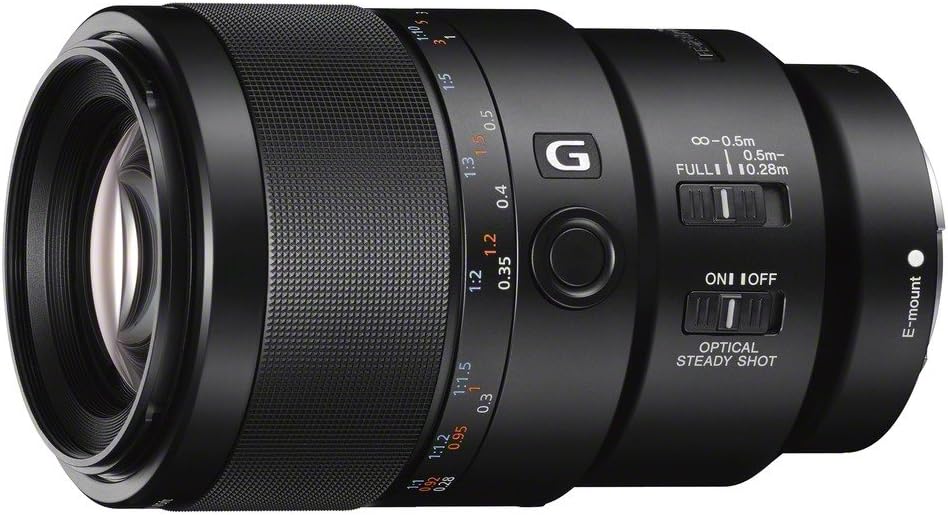
Designed for full-frame Sony cameras, this lens is a favorite among nature photographers for its consistent performance. Its 4.6-star rating reflects reliability and optical excellence in demanding field environments.
We may earn a commission when you buy through this link, at no additional cost to you.
The Nano AR coating effectively suppresses reflections and flare, which is crucial when shooting insects in bright sunlight or against complex backgrounds. Super ED glass ensures high contrast and minimal chromatic aberration.
While excellent, the price and weight can be significant barriers. The DDSSM motor is quiet and precise, but the lens is heavier than some alternatives, which might affect stability during long macro sessions.
If you own a Sony E-mount system and need professional-grade durability, this lens is the top choice. It balances optical perfection with rugged construction ideal for outdoor macro work.
Nano AR coating maintains high image quality even when shooting against bright light sources or sunlit foliage.
Direct Drive SSM ensures quick and silent focusing, essential for capturing skittish insects without disturbing them.
We may earn a commission when you buy through this link, at no additional cost to you.
This conversion lens offers an affordable way to add macro capabilities to existing DSLR or mirrorless lenses. With a 4.6-star rating, it provides excellent value for those unwilling to invest in a dedicated macro lens.
We may earn a commission when you buy through this link, at no additional cost to you.
The universal compatibility allows it to fit lenses ranging from 37mm to 72mm threads, making it versatile for users with multiple cameras. The spring-loaded snap-on design ensures secure attachment without tools or screws.
Trade-offs include reliance on your primary lens quality, which may limit overall sharpness. However, the multi-coated glass elements effectively control distortion, delivering clear close-up images at a fraction of the cost.
For beginners or photographers on a budget, this is an ideal starting point. It transforms your current setup into a macro system without requiring a new purchase.
Adapters cover 37mm to 72mm threads, allowing use with a wide variety of existing camera lenses effortlessly.
The snap-on spring-loaded mechanism enables rapid switching between normal and macro shooting modes in the field.
We may earn a commission when you buy through this link, at no additional cost to you.
TTARTISAN delivers a compact, manual focus option for Sony E-mount users seeking creative control. Rated 4.4 stars, this lens balances optical performance with a lightweight design perfect for travel and fieldwork.
We may earn a commission when you buy through this link, at no additional cost to you.
Its all-metal construction and low weight make it easy to carry on nature hikes. The 1:1 magnification ratio ensures true macro performance, allowing for life-size imaging of small insects and flowers.
Manual focus may slow down shooting compared to autofocus systems, but it offers precise control for static subjects. The F2.8 aperture provides creamy bokeh that helps isolate insects from busy backgrounds effectively.
This lens is ideal for photographers who prioritize portability and value. It is a strong choice for those willing to trade automation for creative flexibility in macro photography.
Weighing just 13.1 ounces, it is significantly lighter than comparable macro lenses, reducing fatigue during long outings.
Dual LD glass elements minimize aberrations, ensuring sharp and clear images even at maximum magnification.
We may earn a commission when you buy through this link, at no additional cost to you.
This lens is a versatile daily driver for Canon RF users who also shoot portraits and landscapes. With a 4.7-star rating, it is praised for its sharpness and built-in stabilization which aids handheld work.
We may earn a commission when you buy through this link, at no additional cost to you.
Although it offers a 0.5x magnification ratio rather than full 1:1, it still captures significant detail for close-up insect work. The optical image stabilization helps prevent blur at slower shutter speeds.
The trade-off is the reduced magnification, which may require cropping for extreme detail. However, the control ring allows quick adjustments without digging into menus, enhancing workflow speed during shoots.
Photographers needing one lens for multiple genres will appreciate its flexibility. It is a reliable option for general close-up photography that doubles well as a macro tool.
Up to 5 stops of shake correction allows for sharper handheld macro shots in lower light conditions.
Direct control ring settings let you adjust aperture or ISO quickly, improving responsiveness during active shooting.
We may earn a commission when you buy through this link, at no additional cost to you.
Designed for iPhone and Android users, this clip-on lens provides impressive optical power for mobile macro photography. Rated 4.0 stars, it enables users to capture detailed insect images without carrying heavy gear.
We may earn a commission when you buy through this link, at no additional cost to you.
The 10X magnification and F1.05 aperture allow for extreme close-ups and better low-light performance than typical phone lenses. This lossless magnification technology ensures details remain sharp rather than digitally zoomed.
Trade-offs include potential alignment issues with the phone clip, which may cause vignetting if not perfectly centered. However, the resulting images often rival entry-level dedicated macro camera outputs.
Mobile photographers looking for a simple upgrade to their smartphone should consider this lens. It brings professional macro capability to the palm of your hand.
The F1.05 aperture lets in more light, allowing for clearer images in shaded environments where insects often hide.
Designed to clip onto most smartphones instantly, it offers a quick setup for spontaneous nature photography sessions.
We may earn a commission when you buy through this link, at no additional cost to you.
This filter kit offers four different diopter powers (+1, +2, +4, +10) to adapt your camera lens for macro photography. With a 4.4-star rating, it is a cost-effective way to experiment with macro shots.
We may earn a commission when you buy through this link, at no additional cost to you.
The filters can be stacked to create higher magnification powers, such as +6 or +7, offering flexibility without buying multiple lenses. They maintain resolution while enlarging the subject significantly.
Quality depends on the base lens; lower-end glass may show softness or vignetting at higher powers. However, the included pouch and lens cap make it easy to protect and carry the set in the field.
Photographers wanting to try macro without investing in dedicated glass will find this useful. It is a practical starter solution for casual nature photography.
Combining filters allows you to customize magnification levels to suit different insect sizes and shooting distances.
Lightweight design adds minimal bulk to your camera bag, making it easy to keep ready for spontaneous shots.
We may earn a commission when you buy through this link, at no additional cost to you.
This lens specializes in ultra-macro work for Sony E-mount users, offering magnification from 2x to 5x. Rated 4.2 stars, it is designed specifically for extreme detail work rather than general photography.
We may earn a commission when you buy through this link, at no additional cost to you.
The wide-angle configuration helps maintain a deeper depth of field at high magnifications, keeping more of the insect in focus. Manual focus provides precise control over critical focus planes for static subjects.
It does not support infinity focus, meaning it is dedicated solely to macro applications. While this limits versatility, it ensures the optical design is optimized for close-up clarity and detail.
For users specifically seeking super macro images, this is a dedicated tool. It allows you to capture details like individual scales on wings that standard macro lenses cannot reach.
The wide-angle design improves focus depth at high magnifications, keeping more of your subject sharp.
Its lightweight body facilitates handheld use, reducing fatigue during extended macro photography sessions.
We may earn a commission when you buy through this link, at no additional cost to you.
ULANZI provides a high-quality phone macro lens that mimics professional DSLR aesthetics and performance. Rated 4.3 stars, it uses upgraded lens technology to capture clear details with natural bokeh.
We may earn a commission when you buy through this link, at no additional cost to you.
The tele-focusing operation allows control over shooting distance, similar to traditional camera lenses. This design helps avoid distorting the subject while maintaining focus on critical details like antennae or eyes.
A requirement is a 17mm screw port case or adapter, which may limit use on phones without such support. However, the aluminum alloy body ensures durability and a premium feel in hand.
Smartphone enthusiasts seeking a more robust lens option will appreciate this design. It bridges the gap between casual clips and professional optics for mobile photographers.
Control the shooting distance precisely to avoid distortion while capturing natural-looking macro images.
The alloy material ensures the lens withstands regular use while maintaining a lightweight and comfortable grip.
We may earn a commission when you buy through this link, at no additional cost to you.
This kit combines macro and wide-angle lenses with a built-in LED light for mobile photographers. With a 4.1-star rating, it is praised for the included light which helps illuminate dark subjects effectively.
We may earn a commission when you buy through this link, at no additional cost to you.
The GlowClip LED light clips anywhere on the phone to provide warm continuous lighting. This is superior to harsh flashes and helps avoid startling insects during close-up photography sessions.
The 15x magnification can be intense; proper positioning is required to avoid blurring or distortion. The TruGrip clip ensures the lens stays secure during shooting, which is vital for shaky handheld use.
This kit is ideal for beginners who want a complete mobile photography solution. The included accessories make it a versatile choice for varied shooting scenarios.
Warm continuous light improves subject illumination without startling insects or causing harsh shadows.
Includes wide-angle and macro lenses along with a case, providing everything needed for diverse mobile shoots.
We may earn a commission when you buy through this link, at no additional cost to you.
Selecting the right macro lens requires balancing optical quality, magnification, and compatibility with your camera system.
Magnification ratio determines how large your subject appears on the sensor. A 1:1 ratio is standard for true macro, but some lenses like the Canon RF100mm offer 1.4x for extreme detail.
For insect photography, higher magnification allows you to see fine textures without physical proximity that could disturb the subject.
Focal length affects your working distance. Telephoto macro lenses like 90mm or 100mm let you shoot from further away, which is crucial for skittish insects.
Choose a longer focal length if you need to maintain distance to avoid casting shadows or scaring your subject.
A wide maximum aperture like F2.8 allows more light and better bokeh. This helps isolate the insect from the background effectively.
Ensure the aperture is bright enough to handle low-light conditions common in forest understory environments.
Verify the lens mount matches your camera system. Sony E-mount, Canon RF, or smartphone adapters must be compatible to function correctly.
Always check the full list of supported camera models to avoid purchasing a lens that does not fit your body.
Look for multi-coated glass and low dispersion elements to reduce flare and chromatic aberration. These features ensure sharp and contrast-rich images.
Higher optical quality minimizes distortion and maximizes resolution for capturing fine insect textures.
Optical image stabilization helps prevent blur caused by hand shake, especially at high magnifications. This is critical for handheld shooting.
Lenses with effective stabilization allow you to shoot at slower shutter speeds without losing sharpness.
Insect photography often occurs outdoors in dewy or rainy conditions. A dust and moisture resistant build protects your investment.
Prioritize weather-sealed lenses if you frequently shoot in harsh natural environments.
Prices range significantly from smartphone clip-ons to professional prime lenses. Set a budget that aligns with your skill level and usage frequency.
Balance cost against long-term utility to ensure you choose a lens that meets your specific needs without overspending.
Position yourself at the correct focusing distance. Most macro lenses require you to be very close to the subject, so move slowly to avoid casting shadows or startling the insect.
Use manual focus for precise control. While autofocus is convenient, manual focus ensures you select the exact plane of focus needed to capture details like the insect's eye.
Clean your lens regularly with a microfiber cloth to remove dust or fingerprints. Proper maintenance preserves optical quality and ensures consistent performance during shoots.
For detailed work, 1:1 magnification is standard, allowing life-size imaging on the sensor. If you need more detail, consider lenses offering 1.4x or higher magnification.
A tripod is helpful for stability, but modern stabilization allows handheld shooting. Use a tripod when shooting static subjects or in low light.
High-quality smartphone lenses like APEXEL can capture impressive images. While they cannot replace dedicated optics, they are sufficient for social media and casual use.
F2.8 to F5.6 is typical. F2.8 offers better light and bokeh, while smaller apertures increase depth of field for more focus.
Use longer focal lengths to shoot from a distance. Move slowly and avoid sudden movements that could scare the insect away.
Filters are cheaper and portable, but dedicated lenses generally offer better optical quality and sharper results for critical work.
The top three picks offer distinct advantages for different needs. The Canon RF100mm stands out for professional quality, while the FotoZ provides excellent value for budget users.
Prioritize magnification and focal length based on your specific shooting style. Ensure compatibility with your camera system before making a purchase decision.
Prices and availability change often, so check current listings to confirm the best deal for your chosen lens today.