
WWZMDiB 6 Pcs 5MM LDR Light Sensor 5516 Photoresistor LM393 3 Pin 3.3-5V Compatible with for Arduino Raspberry Pi ESP32
4.4Editor score
Digital and analog output
LM393 comparator included
Adjustable threshold control
This guide compares the top Light Sensor for Arduino options including photoresistors and digital modules to help you choose the right device for your next
Choosing the right Light Sensor for Arduino is essential for any project that needs to react to ambient light conditions. These sensors allow your microcontroller to detect changes in brightness and trigger actions automatically. Whether you are building a smart home device or an automated garden system, the right sensor ensures reliable performance.
We have carefully evaluated ten different light sensor options to find the best fits for various Arduino projects. Our comparison considers accuracy, ease of use, compatibility with different boards, and the versatility of each module. This list includes both simple photoresistors and advanced digital modules for precise measurements.
Each product in this guide shows key specifications and real-world application ideas to help you decide. We highlight unique features like adjustable thresholds or specific chip types that make each sensor stand out. Please note that availability and pricing can change frequently so always check the latest details before purchasing.
4.4Editor score

4.5Editor score
5.0Editor score
The following table provides a side-by-side comparison of all ten light sensor options to help you quickly identify the right fit for your needs.
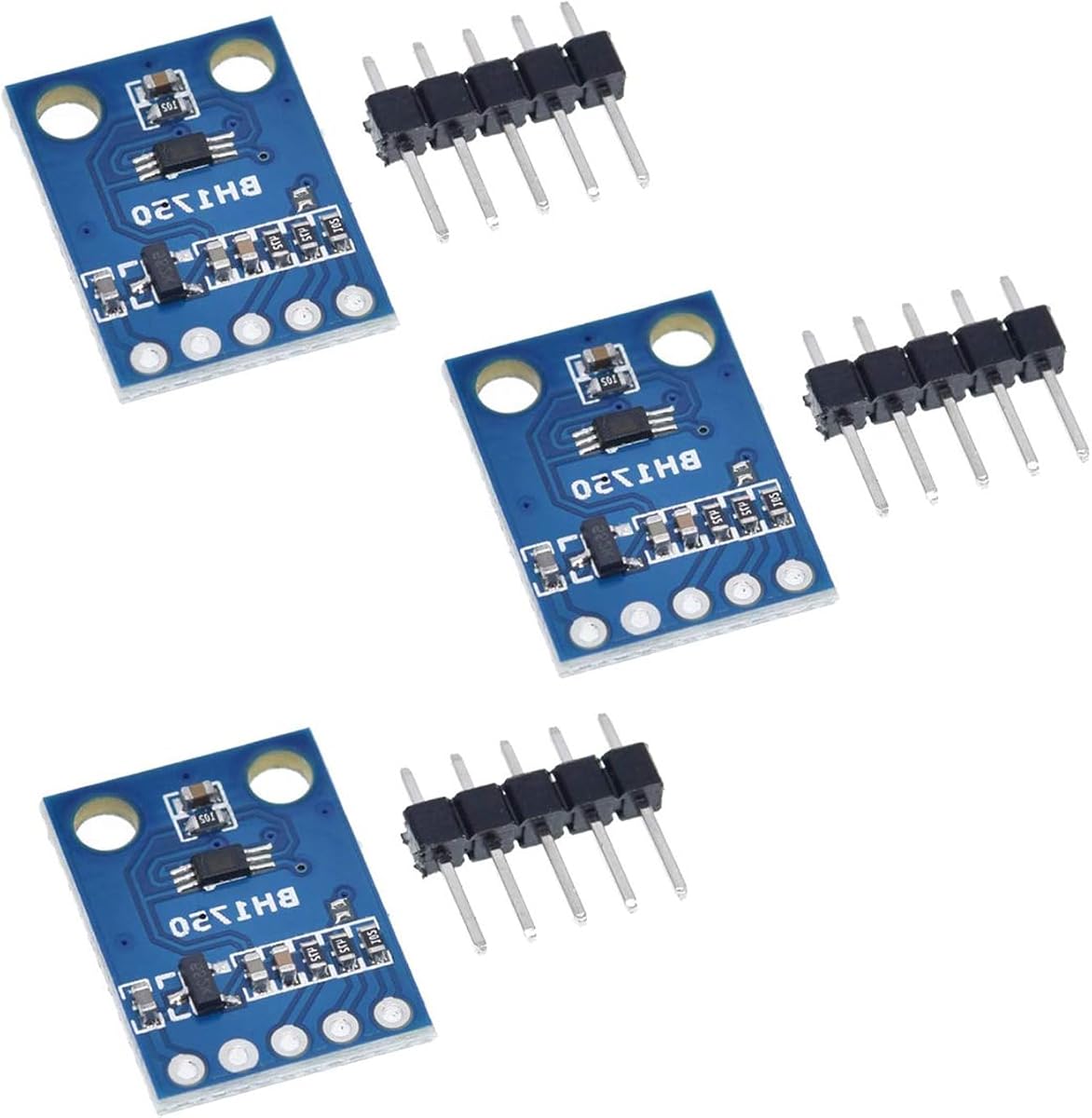


The HiLetgo 3pcs GY-302 BH1750 Light Intensity Illumination Module stands out as the top choice for developers needing accurate light data. With a rating of 4.5 stars it combines reliability with ease of use. The module is designed to provide precise ambient light measurements using the original BH1750FVI chip.
We may earn a commission when you buy through this link, at no additional cost to you.
Key strengths include its compact dimensions which fit easily on breadboards or custom PCBs. The original ROHM chip ensures that readings are consistent and trustworthy across different lighting conditions. This makes it ideal for projects where accuracy matters more than simple on-off switching.
While the small footprint is an advantage for space-constrained projects it may require careful soldering for beginners. Additionally the I2C bus is shared so you must manage addresses if connecting multiple sensors. These trade-offs are acceptable given the high precision and low cost of the module.
This sensor is perfect for anyone building smart home devices or automated lighting systems. If you need a balance of performance and affordability this module is the best pick. It offers professional-grade results without requiring expensive equipment.
The BH1750FVI chip provides digital output proportional to light intensity allowing for accurate Lux calculations.
With just two wires for power and data you can connect this sensor to any Arduino or ESP8266 board effortlessly.
We may earn a commission when you buy through this link, at no additional cost to you.
The WWZMDiB 6 Pcs 5MM LDR Light Sensor module offers exceptional value for beginners and hobbyists on a tight budget. With a rating of 4.4 stars it provides a simple way to detect light changes without complex coding. The module includes an LM393 comparator to provide clean digital outputs.
We may earn a commission when you buy through this link, at no additional cost to you.
This product is ideal for projects where simple threshold detection is sufficient. You can adjust the brightness level using the onboard potentiometer to trigger actions like turning on an LED or buzzer. The ability to use both analog and digital pins gives you flexibility in your code.
Photoresistors are generally less precise than digital chips and may drift over time due to temperature changes. However for basic automation tasks this is rarely an issue. The low price point makes it easy to replace or use in multiple locations.
If you need a cost-effective solution for light-activated switches this package is the best choice. It includes six modules so you have spares for testing and future projects. It works well with Arduino ESP32 and Raspberry Pi boards.
Use the potentiometer to set the exact brightness point where the digital output switches states.
The 3.3 to 5V supply voltage ensures this sensor works with most modern microcontrollers without voltage dividers.
We may earn a commission when you buy through this link, at no additional cost to you.
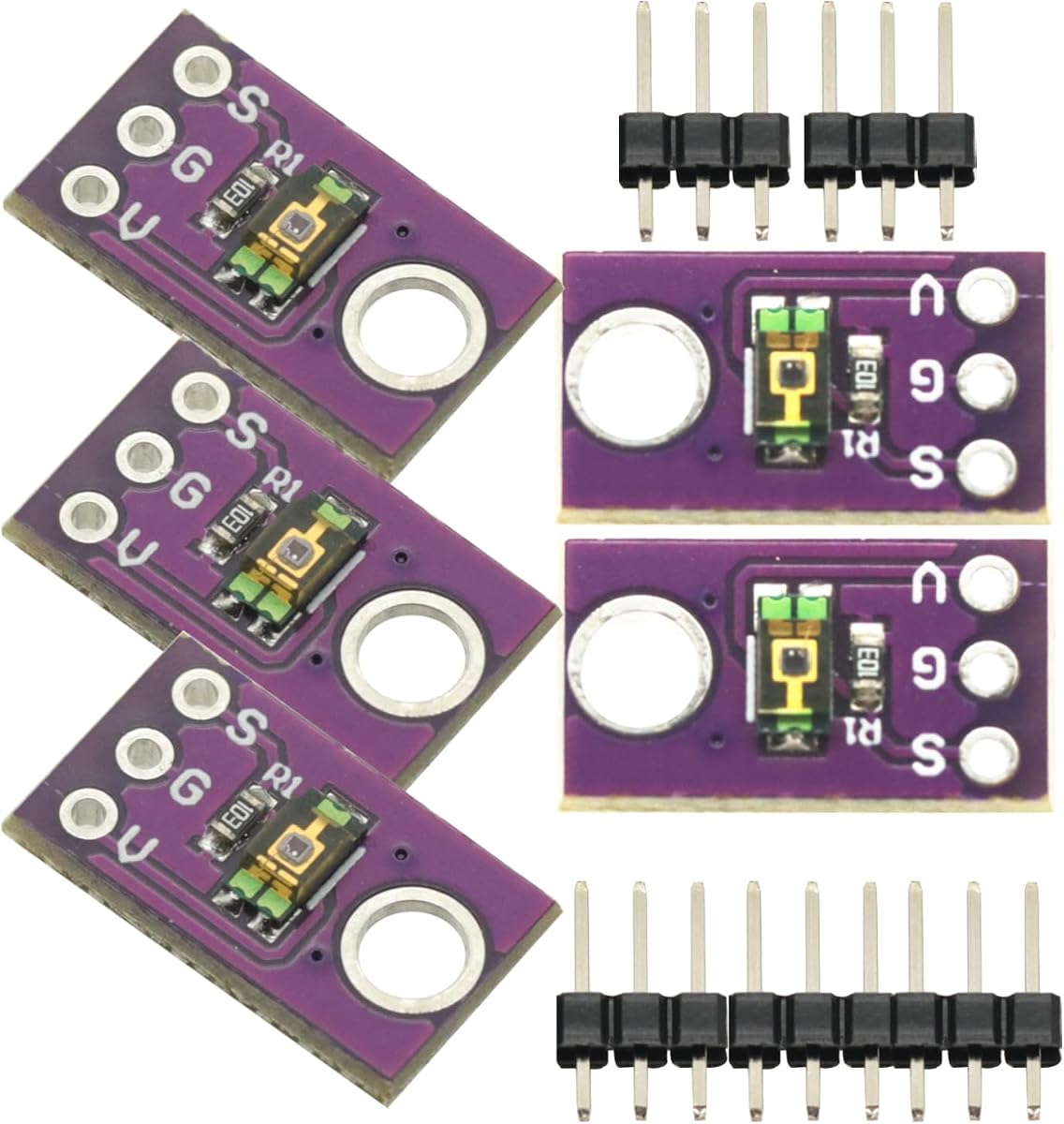
The TEMT6000 Professional Ambient Light Sensor Module is the top pick for high-performance applications. With a perfect 5.0 rating it delivers outstanding accuracy and reliability. This part is often found in industrial devices and high-end electronics due to its superior performance characteristics.
We may earn a commission when you buy through this link, at no additional cost to you.
Its main strength is the spectral response which closely matches the human eye perception of light. This makes it ideal for display backlight dimming and keypad illumination projects. The sensor provides an analog output that can be easily read by any microcontroller ADC.
The main trade-off is that it may cost more than basic photoresistors and requires more care in wiring. However the precision and stability justify the extra expense for critical projects. It is designed to handle a wide voltage range without additional components.
Choose this sensor if you are building professional-grade electronics or need high fidelity light data. It is the best option for projects where user experience and lighting quality are paramount. The package includes five units for redundancy and testing.
The spectral sensitivity is designed to mimic the human eye making it perfect for display and interface lighting.
Built for continuous operation in demanding environments this sensor ensures consistent performance over time.
We may earn a commission when you buy through this link, at no additional cost to you.
The 3-Pack GY-302 BH1750 Light Sensor Module offers a solid option for bulk purchases. With a rating of 4.7 stars it is known for accurate and consistent readings. This module uses the same high-quality chip as the HiLetgo version but comes in a larger pack.
We may earn a commission when you buy through this link, at no additional cost to you.
Its strengths lie in the reliable digital output and the small footprint which saves space on your circuit board. The BH1750FVI chip provides a wide measurement range suitable for most ambient light scenarios. It supports a wide power supply range making it versatile for different setups.
Documentation for this specific brand may be less available than for generic parts so be prepared to research wiring. The compact size also means pins are close together requiring careful soldering. These minor issues are outweighed by the quality of the sensor.
This package is excellent for projects requiring multiple light sensors such as multi-room monitoring. You get three units which is perfect for redundancy and testing. It is a strong choice for anyone prioritizing accuracy and reliability.
The BH1750 chip converts light intensity directly to digital data ensuring high accuracy readings.
At 13.9mm by 18.5mm this module fits into tight spaces where larger sensors cannot be used.
We may earn a commission when you buy through this link, at no additional cost to you.
The Photodiode Sensor Module is unique for its ability to detect light from a specific direction. With a rating of 4.5 stars it is ideal for applications where directional awareness is key. Each module includes both digital and analog outputs for flexible integration.
We may earn a commission when you buy through this link, at no additional cost to you.
Its main advantage is the directional sensitivity which allows you to focus on light sources from a fixed angle. This makes it excellent for light-seeking robots or safety systems that react to specific beams. The sensitivity is adjustable via a potentiometer on the board.
Because it only senses light from the front it may not be suitable for general ambient light measurement. You will need to mount it carefully to ensure it points in the right direction. However this limitation is a feature for many specific use cases.
If your project requires detecting a specific light source rather than general brightness this module is ideal. The pack of ten gives you plenty for prototypes and final builds. It works well with standard Arduino voltage levels.
Unlike omnidirectional sensors this module focuses on light from the front reducing false readings.
Use the onboard potentiometer to tune the sensor to respond only to strong signals.
We may earn a commission when you buy through this link, at no additional cost to you.
The EBOOT 30 Pieces Photoresistor package offers immense value for bulk projects and educational kits. With a rating of 4.6 stars these components are reliable and consistent. Each resistor is a standard 5mm GM5539 type commonly used in hobby electronics.
We may earn a commission when you buy through this link, at no additional cost to you.
Its primary strength is the quantity provided allowing you to build multiple projects without extra purchases. The resistors have a wide operating temperature range making them suitable for various environments. They are easy to integrate into circuits with minimal components.
These are raw components so you will need to design a circuit board or breadboard setup to use them. This is less convenient than buying pre-made modules but offers more control over the design. It is a great choice for learning basic electronics.
Choose this pack if you are teaching a class or building many prototypes at once. The high rating ensures that the components are defect free. It is the best option for those who need quantity and flexibility.
Thirty units ensure you have enough parts for large scale projects or group learning.
The GM5539 type is standard and reliable for most basic light sensing needs.
We may earn a commission when you buy through this link, at no additional cost to you.
The Teyleten Robot 5MM LDR Photosensitive Sensor Module is a robust choice for automated control projects. With a rating of 4.6 stars it includes ten units which is perfect for multi-sensor setups. Each module features an LM393 comparator for clean signal output.
We may earn a commission when you buy through this link, at no additional cost to you.
Its key advantage is the ability to drive relays directly making it suitable for high-power light-activated switches. This eliminates the need for extra transistor circuits in many cases. The digital output simplifies the code required on your microcontroller.
Some users may find the potentiometer adjustment necessary for each unit to work consistently. However this fine-tuning ensures that the sensor reacts at the right brightness level. It is a practical feature for reliable operation.
This module is ideal for automation tasks like lighting systems or security alarms. It balances performance and ease of use well. With ten units you can build a complete home automation system.
The module can switch loads directly which simplifies wiring for light control applications.
The LM393 chip ensures the output signal is clear and free from noise.
We may earn a commission when you buy through this link, at no additional cost to you.
The Digital Light Sensor package provides a user-friendly experience for beginners. With a rating of 4.6 stars it includes tutorials to help you get started quickly. It supports both digital and analog outputs giving you flexibility in how you use it.
We may earn a commission when you buy through this link, at no additional cost to you.
Its main benefit is the broad voltage support allowing it to work with both 3.3V and 5V boards. This makes it compatible with a wide range of microcontrollers without level shifting. The adjustable threshold potentiometer allows precise calibration.
Documentation is sometimes limited so you may rely on community tutorials for specific wiring. However the included guides usually cover the basics effectively. This is a strong option for educational kits and DIY projects.
If you want a sensor that is easy to integrate into various systems this is a great choice. The versatility of the outputs makes it adaptable to many scenarios. It is perfect for those new to electronics.
Designed to work with Arduino ESP32 ESP8266 and Raspberry Pi for broad compatibility.
Access to helpful guides ensures you can start coding and testing immediately.
We may earn a commission when you buy through this link, at no additional cost to you.
The 50pcs LDR Photoresistor Light Sensor offers a high-quality bulk supply for extensive projects. With a rating of 4.9 stars these resistors are reliable and consistent in performance. They feature the GL5516 type which is standard for most light detection.
We may earn a commission when you buy through this link, at no additional cost to you.
Its standout feature is the high ratio between light and dark resistance which allows for precise switching. This makes them suitable for solar tracking and high-precision ambient light detection. The quantity allows for multiple builds and replacements.
As raw components you will need to add resistors and connectors to use them. This requires some basic electronics knowledge but allows for custom circuit design. It is the best choice for those who want full control over the hardware.
Choose this if you need a large number of sensors for industrial or educational use. The high rating ensures quality and longevity. It provides excellent value for money.
The resistance difference between light and dark allows for sensitive threshold detection.
Ideal for solar tracking projects where light angle changes constantly.
We may earn a commission when you buy through this link, at no additional cost to you.
The uxcell Photosensitive Diode Sensor Module is tailored for applications like smart car systems. With a rating of 4.6 stars it offers a good balance of features. The module includes both digital and analog outputs for flexible data processing.
We may earn a commission when you buy through this link, at no additional cost to you.
Its strength is the stability of the LM393 comparator which ensures reliable operation in automotive environments. The wide voltage range allows it to work with vehicle power systems and standard Arduino boards. It is suitable for headlight dimming projects.
Only three units are included so you must plan accordingly for your project. However for a focused project this is often sufficient. The quality is high enough for demanding applications.
Choose this module if you are building automotive electronics or similar robust systems. It is well-suited for projects requiring stable performance over time. It is a reliable option for technical users.
The LM393 chip ensures the signal is consistent even with power fluctuations.
Designed to handle the voltage variations found in vehicle electrical systems.
We may earn a commission when you buy through this link, at no additional cost to you.
Selecting the right sensor depends on your project needs technical skills and budget.
There are two main types of light sensors: photoresistors (LDR) and photodiodes or digital sensors. Photoresistors are simple and cheap but require external components to work. Digital sensors provide direct data and are easier to program.
Choose digital sensors for precision and photoresistors for simplicity and cost.
Consider whether you need digital on-off outputs or analog continuous readings. Digital outputs are easier to read but less flexible. Analog outputs provide more detailed data but require ADC conversion.
Use digital for switches and analog for dimming or measurement tasks.
Check that the sensor supports your microcontroller voltage such as 3.3V or 5V. Many modern boards run at 3.3V so a voltage divider might be needed. Ensure the connector matches your board pins.
Select sensors that match your board voltage to avoid extra circuitry.
Some projects require exact light intensity while others just need basic detection. High accuracy sensors use specific chips like BH1750 which provide precise Lux values. Simple modules use LDRs which vary with temperature.
Pick high accuracy chips for data logging and simple LDRs for automation.
Space is often limited in custom enclosures so check the physical dimensions. Smaller modules are easier to mount but harder to solder. Larger boards have more space for components and easier wiring.
Choose a size that fits your physical constraints without compromising usability.
Bundles often offer better value for larger projects. Buying a pack of five or ten may cost less per unit. Consider how many sensors you need before buying a single module.
Bulk packs are best for multiple sensors or learning kits.
Good documentation helps you get started quickly without frustration. Some modules provide sample code and wiring diagrams while others do not. Check for online resources before purchasing.
Prioritize brands that offer clear guides and support for ease of use.
Consider where the sensor will be used such as indoors or outdoors. Industrial-grade sensors handle temperature extremes better than hobby ones. Protect exposed sensors with cases if needed.
Use robust sensors for outdoor or high-temperature applications.
Begin by connecting the sensor to your microcontroller according to the provided diagram. Ensure that the voltage matches your board and that ground pins are connected. Use breadboards for testing before final soldering.
Install the necessary libraries in your IDE to communicate with digital sensors. Write simple code to read the sensor values and print them to the serial monitor. Adjust the threshold values based on your specific environment.
Protect your sensors from physical damage and excessive heat by using enclosures. Regularly check connections for corrosion or looseness especially in outdoor projects. Cleaning the sensor surface ensures consistent readings.
A photoresistor is an analog component that changes resistance with light and requires external circuitry. A digital sensor includes processing and provides a direct digital signal. The digital version is easier to interface and more precise.
Calibrate by reading the sensor values in your intended environment. Adjust the code threshold to match when the light changes. Use the potentiometer on the module if available to tune sensitivity.
Yes most light sensors work with ESP32 and ESP8266 boards. Check that the voltage levels are compatible with 3.3V logic. Many modules are explicitly designed for these platforms.
Typical sensors cover a range from dark to bright daylight often measured in Lux. The BH1750 chip measures from 1 to 65535 Lux accurately. Photoresistors have a wider but less precise range.
Most digital sensors require specific libraries for easy communication. Libraries like Adafruit BH1750 are available for Arduino IDE. They simplify the code and handle the raw data conversion.
Photoresistors and photodiodes are durable and can last for years. Exposure to extreme conditions can shorten their life. Indoor use typically ensures a very long operational life.
A module with a comparator like the LM393 is ideal for switching. It provides a clean digital output that can trigger relays. This setup is robust and easy to wire.
They can be used outdoors but require protection from moisture. Use waterproof enclosures to prevent damage. Indoor sensors may drift in temperature changes so select industrial ones for outdoors.
We have reviewed ten options ranging from simple photoresistors to precise digital modules. The HiLetgo GY-302 and TEMT6000 are our top picks for accuracy and performance. For budget users the WWZMDiB LDR offers excellent value.
Consider your project needs such as precision voltage and size before buying. Digital sensors are preferred for modern microcontrollers due to ease of use. Always ensure compatibility with your board to avoid extra components.
Check current availability and details before ordering as offerings may change. With the right sensor you can create reliable and smart light-activated projects.