
Lenovo Chromebook 14 Touchscreen
4.4Editor score
MediaTek Kompanio 520
64GB expandable storage
WiFi 6 connectivity
Finding the right laptop for kids to learn coding requires balancing performance durability and ease of use. Young learners need devices that can handle educational software while remaining affordable for families.
We compared ten top-rated laptops and educational tablets based on processor speed storage capacity and screen quality. Our analysis focuses on tools that support coding environments and creative projects.
Each pick highlights specific strengths like touch screens or long battery life to help you choose wisely. Prices and availability change frequently so check the latest details before purchasing.
4.4Editor score

4.2Editor score

5.0Editor score
As an Amazon Associate we earn from qualifying purchases.
The following table offers a side-by-side comparison of all ten selected devices. Reviewing these specifications helps you identify the best fit for your child coding coding and general learning needs.




This HP Chromebook stands out as a versatile tool for kids exploring coding. Its convertible design and strong processor make it suitable for both educational tasks and creative projects.
We may earn a commission when you buy through this link, at no additional cost to you.
The 360-degree hinge allows the device to function as a tablet which is useful for coding apps that benefit from touch input. The display quality ensures text remains clear during long coding sessions.
While the memory is adequate for basic tasks it may slow down with many browser tabs open. However this is typical for Chromebooks at this price point and manageable for most students.
We recommend this device for families seeking a durable and adaptable learning tool. Its ability to handle various modes makes it a strong candidate for growing learners.
The flexible hinge supports multiple modes allowing kids to switch between typing code and sketching diagrams easily.
Powered by the Intel N150 processor this Chromebook handles web browsing and educational apps without significant lag.
We may earn a commission when you buy through this link, at no additional cost to you.
The Lenovo Chromebook offers exceptional value for families on a budget. It provides all the essentials needed for learning coding without breaking the bank.
We may earn a commission when you buy through this link, at no additional cost to you.
Its MediaTek Kompanio 520 processor delivers solid performance for Chrome OS tasks. The inclusion of a memory card slot helps alleviate storage constraints for growing projects.
While it lacks the raw power of higher-end models it is sufficient for web-based coding environments. The included accessories like a mouse and docking station add significant value.
This laptop is an excellent starting point for young coders. It balances cost and functionality effectively making it a top budget recommendation.
The bundle includes useful extras like a docking station and wireless mouse which saves additional costs for families.
With an additional memory card slot kids can store more files and projects without worrying about running out of space.
We may earn a commission when you buy through this link, at no additional cost to you.
This NIMO laptop provides a more robust computing experience compared to standard Chromebooks. It runs Windows which opens up a wider range of coding software options.
We may earn a commission when you buy through this link, at no additional cost to you.
The 15.6-inch Full HD display offers ample space for multitasking between code editors and browsers. The backlit keyboard is a practical feature for evening study sessions.
While the RAM is standard for this class the SSD ensures fast boot times and responsive performance. The two-year warranty provides peace of mind for parents.
Ideal for students needing specific desktop applications this laptop bridges the gap between budget and premium. It is a strong choice for serious learning.
Running Windows allows access to a broader ecosystem of development tools and applications not available on Chrome OS.
The backlit keyboard ensures visibility in low light helping kids type code accurately without eye strain.
We may earn a commission when you buy through this link, at no additional cost to you.
The HP 11A G8 is designed with mobility in mind making it easy for kids to carry to school. Its compact form factor does not compromise essential learning features.
We may earn a commission when you buy through this link, at no additional cost to you.
The AMD processor handles basic web tasks smoothly. Chrome OS keeps the system simple and secure which is beneficial for younger learners who need focus.
The screen size is smaller which might limit multitasking comfort. However for a dedicated learning device this is often a manageable trade-off for portability.
This device is best suited for students who prioritize portability. It serves as a reliable tool for homework and basic coding exploration.
Its lightweight build ensures kids can carry it to class without heavy backpacks reducing physical strain.
Chrome OS provides a streamlined environment that minimizes distractions and maximizes learning time.
We may earn a commission when you buy through this link, at no additional cost to you.
This VTech laptop is designed for younger children who are not ready for complex software. It introduces basic computer concepts in a safe and engaging way.
We may earn a commission when you buy through this link, at no additional cost to you.
The bilingual feature supports language learning alongside logical skills. The keyboard mimics a real laptop helping kids practice typing early.
It is not a full computer but rather an educational toy. This limitation ensures safety but restricts advanced coding potential.
Best for preschoolers this device builds foundational skills. It is a fun first step before moving to real coding devices.
Activities are available in both English and Spanish supporting early language development and cognitive skills.
As a toy device it encourages physical interaction without the concerns associated with unlimited internet access.
We may earn a commission when you buy through this link, at no additional cost to you.
This HP Chromebook distinguishes itself with 8GB of RAM which is generous for a budget device. It allows for smoother multitasking and web browsing.
We may earn a commission when you buy through this link, at no additional cost to you.
The MT8186 processor provides reliable performance for educational apps. It is a solid choice for students who need to run multiple applications at once.
Storage is limited but cloud integration helps mitigate this issue. The device remains lightweight and easy to handle for daily use.
Ideal for heavy users this Chromebook offers better memory than typical entry-level models. It supports demanding web-based coding activities well.
With 8GB of RAM students can keep multiple coding windows open without the system slowing down.
The operating system ensures quick updates and security patches which keeps the device running smoothly.
We may earn a commission when you buy through this link, at no additional cost to you.
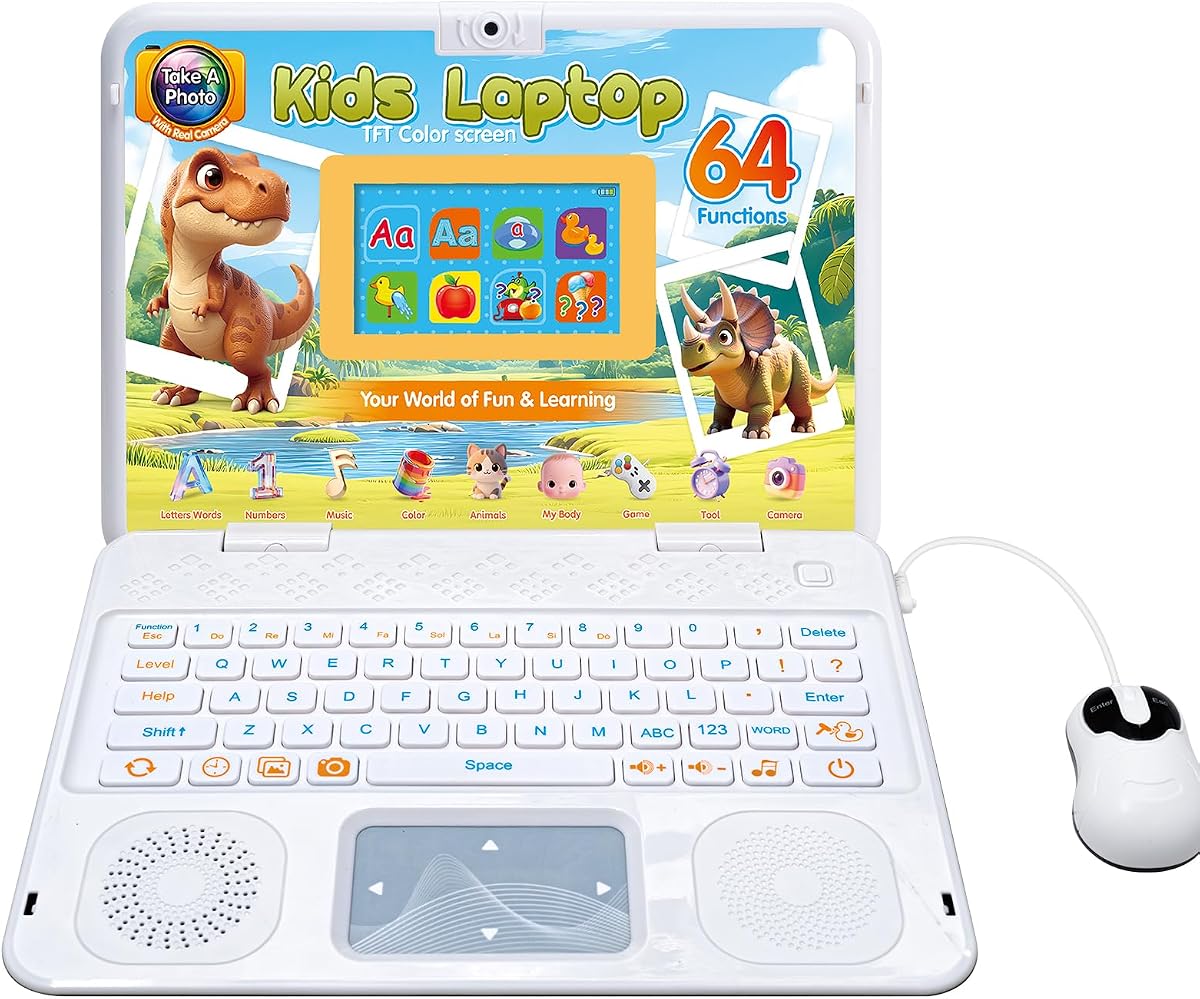
This toy laptop encourages creative play and introduces children to computer interfaces. The included camera adds a fun element for photography activities.
We may earn a commission when you buy through this link, at no additional cost to you.
It is designed for entertainment and basic education rather than serious coding. The colorful interface keeps kids engaged for hours.
While it lacks technical power it is perfect for toddlers. It builds confidence in using devices before transitioning to real computers.
Best for young children this device is a delightful gift. It introduces tech concepts in a safe and playful environment.
The camera allows kids to take photos and use filters fostering creativity and interest in technology.
A vibrant color screen makes learning activities more visually appealing and easier to follow for small children.
We may earn a commission when you buy through this link, at no additional cost to you.
The LeapFrog laptop is a beloved educational tool for preschoolers. It uses a friendly character to teach letters numbers and basic logic.
We may earn a commission when you buy through this link, at no additional cost to you.
The design is robust enough to withstand drops. It focuses on foundational skills rather than technical coding.
This device prepares children for future computer use. It is an ideal bridge between toys and real technology.
Best for toddlers this laptop builds confidence. It is a practical and fun choice for early childhood education.
Pixel the character animates and talks making the learning process interactive and entertaining for young kids.
Activities focus on counting and letters which lay the groundwork for logical thinking and problem solving.
We may earn a commission when you buy through this link, at no additional cost to you.
This educational laptop combines fun with learning to keep children engaged. It offers a variety of modes that test memory and logic.
We may earn a commission when you buy through this link, at no additional cost to you.
The ergonomic design makes it comfortable for small hands. It is a durable option for casual learning activities.
While not a real coding tool it introduces basic computer navigation. It is a good addition to a child's toy collection.
Ideal for ages 5 and up this device supports early cognitive development. It is a budget friendly way to introduce tech.
Included games challenge kids to think critically which supports the logic skills needed for programming later.
The slim design ensures the laptop is easy for kids to carry and manipulate during playtime.
We may earn a commission when you buy through this link, at no additional cost to you.
The LEXiBOOK LAPTAB offers an Android-based alternative to traditional laptops. It provides access to a wide range of apps through Google Play.
We may earn a commission when you buy through this link, at no additional cost to you.
Parental controls allow parents to manage usage effectively. The touchscreen interface is intuitive for younger children to navigate.
While it is more of a tablet it supports learning activities well. It is suitable for creative apps and educational videos.
Best for families seeking versatility this device bridges laptops and tablets. It is a solid choice for diverse learning needs.
Android apps provide thousands of learning tools and games that can be tailored to a child's interests.
Robust controls help parents manage time and content ensuring a safe digital environment.
We may earn a commission when you buy through this link, at no additional cost to you.
Selecting the right device requires evaluating several key factors to ensure it meets learning goals.
The operating system determines which coding tools are available. Chrome OS offers simplicity and security while Windows supports desktop development tools.
Choose an OS that aligns with the specific curriculum or language you wish to learn.
A capable processor ensures smooth running of coding environments and browsers. Look for modern processors like Intel N-series or ARM chips.
Sufficient processing power prevents lag during tasks which helps maintain focus.
Memory allows the device to run multiple programs at once. Four gigabytes is a minimum for basic coding but eight is better.
More RAM ensures smooth performance when using browser-based IDEs.
Local storage stores files offline but cloud storage expands capacity. SSDs offer faster boot times and better reliability.
Consider expandable storage options to manage growing project files easily.
A clear high resolution screen reduces eye strain during long coding sessions. Larger screens help view code and results side by side.
Prioritize Full HD resolution and adequate brightness for comfortable viewing.
Coding requires significant typing so a comfortable keyboard is vital. Look for good key travel and layout.
A backlit keyboard adds value for students who work in low light.
Kids often carry laptops so light weight is beneficial. Rugged builds protect against accidental drops and spills.
Check if the device has been tested for durability standards.
Long battery life allows for uninterrupted learning sessions without searching for outlets. Aim for at least eight hours of usage.
Good battery life ensures the device is always ready for school or home use.
Start by installing a safe coding platform like Scratch or Thonny to begin learning basic logic. Explore online tutorials and resources available for free.
Keep the device clean and free from food crumbs to protect the keyboard. Store it in a protective sleeve when transporting.
Regularly update the software to ensure security and performance. Monitor screen time to balance learning with physical activities.
Visual languages like Scratch are ideal for beginners as they teach logic without complex syntax. Older students can transition to Python which is easy to read and widely used.
While tablets can teach basic concepts a laptop offers more advanced features like full keyboards and desktop software. It is highly recommended for serious learning.
Yes modern Chromebooks support Android apps and web-based IDEs. They can run coding tools like Google Colab and Code.org effectively.
Four gigabytes is sufficient for introductory courses but eight gigabytes is recommended for heavier tasks. More RAM prevents slowdowns when using multiple tools.
Chrome OS is simpler and more secure for beginners. Windows offers broader software compatibility which is useful for advanced programming and desktop development.
Kids can start as early as five with visual tools. Serious text-based coding usually begins around age ten when reading and logic skills are developed.
Basic coding can be done in web browsers but some languages require installed editors. Ensure the laptop supports the specific tools needed for the chosen language.
Choosing the right laptop for kids to learn coding depends on balancing budget with performance needs. The HP Chromebook 14 x360 Plus offers excellent versatility for growing learners.
Prioritize devices with good keyboards and clear screens to ensure comfortable learning. A solid processor helps manage coding tasks without frustration.
Remember to check current prices before buying to get the best value. Investing in the right tool today empowers kids to build a strong technical foundation for tomorrow.