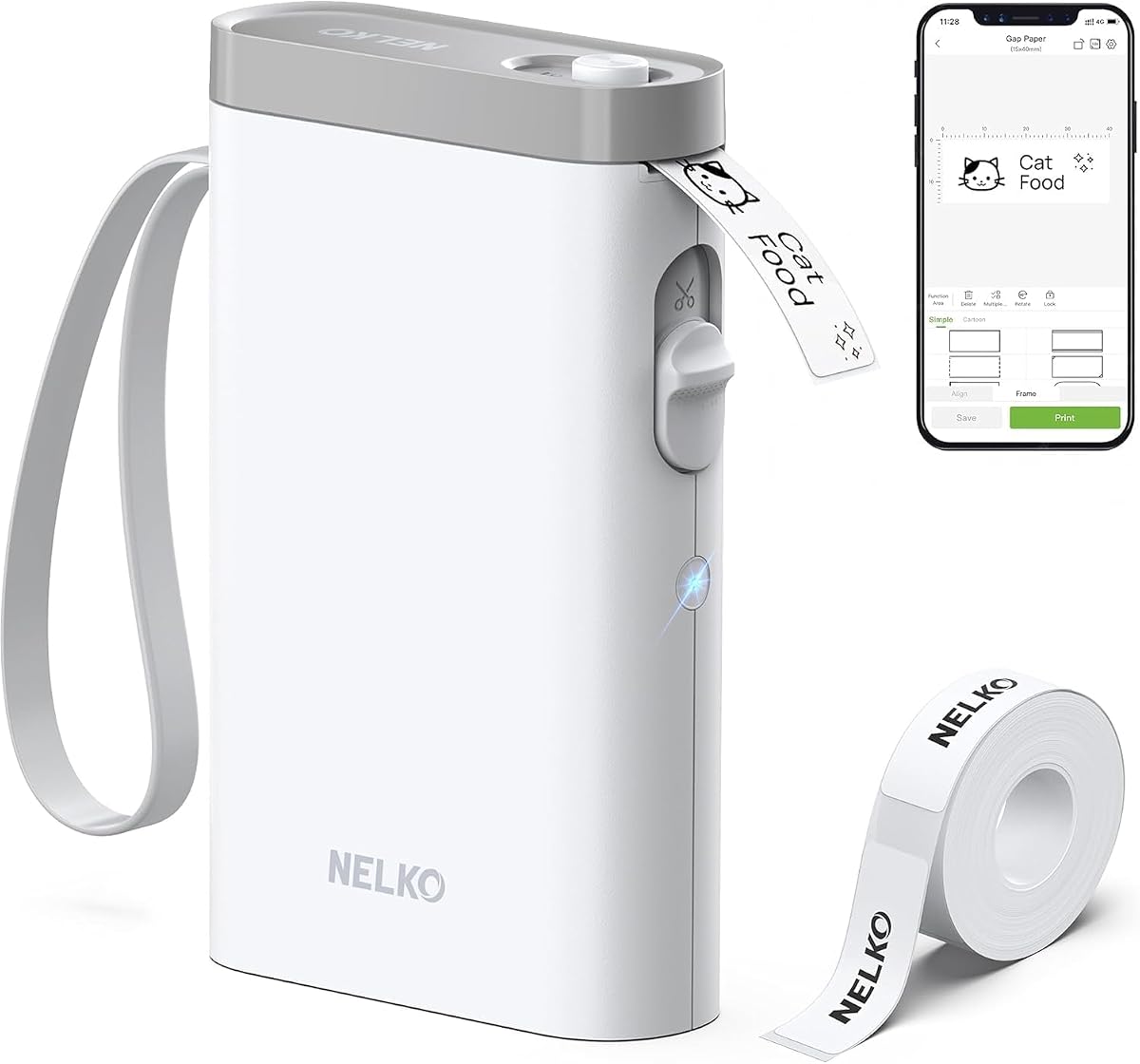
Nelko P21 Label Maker
4.4Editor score
Ultra-portable handheld design
Direct thermal inkless printing
Extensive app template library
Finding the right label printer for library use is essential for maintaining organized collections and efficient workflows. Libraries require durable devices that can handle high-volume tasks while producing clear, professional labels for books and shelves.
We compared ten top-rated models based on connectivity options, printing speed, tape compatibility, and ease of use. Our analysis focuses on features that matter most to librarians, including network sharing and long-lasting label materials.
Each pick highlights specific strengths like Bluetooth mobility or desktop speed. Prices and availability change frequently, so check current listings before purchasing. Our goal is to help you choose a device that fits your library's unique needs.
4.4Editor score

4.5Editor score

4.3Editor score
As an Amazon Associate we earn from qualifying purchases.
The following table provides a side-by-side comparison of all ten products. It highlights key specifications like connectivity, label width, and special features to help you quickly identify the right model for your library environment.



The Brother P-Touch PT-D610BT stands out as a top choice for library environments due to its robust connectivity and professional output. With a strong rating, it offers seamless Bluetooth and USB options, allowing multiple staff members to design labels from various devices.
We may earn a commission when you buy through this link, at no additional cost to you.
This device excels in organization with features like built-in memory for 90 frequently used labels and a visual preview on a large color LCD. The high-resolution printing ensures that barcodes and library logos appear crystal clear, which is vital for inventory tracking and asset management.
While the device is highly capable, it may be too bulky for librarians who need extreme portability. Additionally, the ongoing cost of proprietary tapes can add up over time. However, the efficiency gains from automatic cutting and template libraries often offset these minor drawbacks.
Librarians looking for a reliable, high-speed labeling solution for desktop use should strongly consider this model. It balances professional features with ease of use, making it an excellent investment for maintaining organized and efficient library systems.
Bluetooth and USB connections allow multiple users to design and print labels without being tethered to a single workstation.
High-resolution capabilities ensure that barcodes and detailed text are printed clearly, reducing scanning errors during checkout.
We may earn a commission when you buy through this link, at no additional cost to you.
The Brother QL-820NWB is a powerhouse for libraries that need high-volume, fast labeling solutions. As a network-ready device, it integrates perfectly into existing office IT infrastructures, allowing anyone on the network to send print jobs without direct cable connections.
We may earn a commission when you buy through this link, at no additional cost to you.
Its speed is a standout feature, capable of producing up to 110 standard address labels per minute at 300 DPI. This makes it ideal for busy circulation desks or for creating long banners and signage. The ability to print in black and red adds a layer of visual hierarchy to library labels.
While it offers premium features, the cost is higher than portable options. Also, it is limited to monochrome output, which might not suit all decorative needs. However, for pure functionality and speed in a shared workspace, it is hard to beat.
Large libraries or those with heavy shipping needs will benefit most from this model. It is designed for durability and constant use, ensuring that labeling tasks are completed quickly and efficiently without frequent maintenance or downtime.
Ethernet and wireless interfaces enable seamless integration into library networks, allowing staff to print from any connected computer.
With 110 labels per minute, this printer handles bulk tasks like mass re-labeling or shipping updates with incredible efficiency.
We may earn a commission when you buy through this link, at no additional cost to you.
The Nelko P21 is an excellent entry-level option for libraries or classrooms needing basic organization tools. Its affordability makes it accessible for individual staff members or small branch offices with limited budgets. The device is incredibly lightweight and fits easily into a pocket or bag.
We may earn a commission when you buy through this link, at no additional cost to you.
Using direct thermal technology, it prints without ink or toner, which reduces long-term maintenance costs. The companion app offers a vast library of templates, icons, and borders, allowing for creative customization of labels for bins, books, or supplies. It supports waterproof tapes, which is useful for labeling items in damp areas.
The main limitation is that it relies solely on mobile Bluetooth connectivity and does not connect directly to computers via USB. Also, label lengths are fixed rather than continuous, which might limit very long custom text. Despite this, it is a versatile tool for quick, on-the-go labeling tasks.
Librarians or students who need to organize shelves or supplies on the fly will find this device very convenient. It is perfect for creating name tags, folder labels, or decorative items without the bulk of a traditional desktop machine.
Connecting via Bluetooth to iOS and Android phones allows you to print labels directly from the device in your hand.
The app includes thousands of icons and templates, making it easy to design unique labels without graphic design skills.
We may earn a commission when you buy through this link, at no additional cost to you.
The Brother PT-M95 is a classic handheld label maker that prioritizes simplicity and portability. It features a full QWERTY keyboard, making it quick to type out labels for files, folders, or books without navigating tiny buttons. The device is compact and light, suitable for use in tight library spaces.
We may earn a commission when you buy through this link, at no additional cost to you.
It comes bundled with a variety of label tapes, providing immediate value right out of the box. The display is easy to read, and the device supports various type styles and frames to personalize labels. It is an ideal solution for small home offices or for specific library tasks where wireless connectivity is not needed.
Since it lacks Bluetooth or USB connectivity, you cannot print designs directly from a computer. Also, it only prints up to two lines of text, which might be limiting for complex cataloging. However, for straightforward labeling tasks, it is a reliable and user-friendly option.
Staff members who need a quick, no-fuss tool for labeling shelves or files will appreciate its ease of use. It is a solid backup device for any library that needs to print labels on demand without complex setup.
The QWERTY keyboard allows for fast typing of text labels without navigating complex menus or symbols.
The bundle includes multiple full-length tapes, so you can start labeling immediately without additional purchases.
We may earn a commission when you buy through this link, at no additional cost to you.
The Brother QL-810W offers professional-grade performance at a competitive price point for wireless labeling. It connects via USB or Wi-Fi, making it versatile for both direct connection and network sharing. The speed of 110 labels per minute ensures that bulk tasks are completed quickly, which is helpful during high-traffic library periods.
We may earn a commission when you buy through this link, at no additional cost to you.
It supports AirPrint and Brother iPrint & Label, allowing for seamless printing from mobile devices or Mac computers. The ability to print in black and red helps highlight important information on labels, such as due dates or restricted items. The cutter is durable, handling up to 300,000 die-cut labels before replacement.
The device is somewhat larger than handheld options and requires network configuration for wireless use. Also, it is limited to monochrome output, which might not suit colorful branding needs. Despite these minor points, it is a robust workhorse for library operations.
Librarians who need a dedicated desktop printer for shipping or asset management will find this model very effective. It balances speed, connectivity, and reliability, making it a strong choice for professional environments.
Wi-Fi connectivity and AirPrint support allow staff to print labels from tablets or laptops without being near the printer.
With 110 labels per minute, this printer keeps up with high-volume demands without slowing down daily operations.
We may earn a commission when you buy through this link, at no additional cost to you.
The SUPVAN T50M Pro is designed for flexibility, supporting a wide range of label sizes and shapes from 0.75 inches to 2 inches. It connects via Bluetooth to smartphones or tablets, allowing for easy editing of labels with images, text, and icons. The companion app is free and requires no registration, which simplifies the setup process.
We may earn a commission when you buy through this link, at no additional cost to you.
It supports square, round, and address labels, making it versatile for diverse library needs like round bins or square file tags. The app delivers high-resolution images, ensuring that logos and QR codes print clearly. This makes it a strong choice for small businesses or libraries that need varied label shapes.
Since it relies on an app for design, users need a compatible device to create labels. Bluetooth connectivity can sometimes be sensitive to interference. However, the ease of use and variety of shapes make it a compelling option for specialized labeling tasks.
Librarians who need to label irregularly shaped items like jars, bins, or unique shelves will find this device very useful. It combines professional-looking output with the convenience of mobile printing.
The device supports square, round, and standard labels, allowing you to match the label shape to the item being labeled.
The free app allows you to upload images and customize labels with fonts and borders, enhancing visual appeal.
We may earn a commission when you buy through this link, at no additional cost to you.
The Brother QL-800 is a high-speed label printer designed for efficiency and ease of use with computers. It features Plug and Label technology, which allows instant printing from Microsoft Word, Excel, and Outlook without needing additional software. This integration saves time for staff who need to print labels directly from their workflow.
We may earn a commission when you buy through this link, at no additional cost to you.
With a speed of 93 labels per minute and 300 DPI resolution, it produces sharp, clear labels suitable for professional use. The black and red printing capability adds visual emphasis to labels, making them stand out. The built-in auto-cutter ensures precise label finishing every time.
While it is fast and reliable, it does not offer Wi-Fi or Bluetooth connectivity, requiring a USB cable connection to a computer. The device is also larger than handheld models, so it needs dedicated desk space. However, for office-based labeling, it is highly effective.
Libraries with dedicated circulation desks or shipping departments will benefit from its speed and software integration. It is a reliable tool for maintaining organized and professional label systems.
Plug and Label technology allows direct printing from standard office applications, simplifying the workflow for staff.
The auto-cutter and high-resolution printing ensure that labels are clean and clear for easy reading and scanning.
We may earn a commission when you buy through this link, at no additional cost to you.
The NIIMBOT B1 is a compact and user-friendly label maker that offers great value for portable labeling tasks. It connects via Bluetooth or USB, providing flexibility for different use cases. The app auto-detects label size, eliminating the need for manual setup and saving time during creation.
We may earn a commission when you buy through this link, at no additional cost to you.
With a built-in rechargeable battery and thermal printing technology, it is energy efficient and requires no ink. The app offers a wide range of fonts, borders, and symbols for customization. It is perfect for organizing home offices, classrooms, or library supplies where mobility is key.
The device is not compatible with tablets, which limits some mobile users. Also, the battery needs regular charging for extended use. Despite these constraints, it remains a versatile tool for quick and effective labeling on the go.
Staff members or students who need to organize items frequently will find this device convenient. Its ease of use and portability make it a strong choice for dynamic library environments.
The app automatically detects label size, so you can focus on design rather than technical setup.
Bluetooth and USB connections provide versatile options for printing from various devices as needed.
We may earn a commission when you buy through this link, at no additional cost to you.
The PM240 Label Maker is a smart and powerful device that supports Excel import and batch printing, making it ideal for libraries with large inventory needs. It connects via Bluetooth or USB and offers high-definition printing at 203 DPI. The companion app includes thousands of icons and templates for easy customization.
We may earn a commission when you buy through this link, at no additional cost to you.
It comes with three rolls of tapes in different formats, providing immediate utility. The waterproof and tear-resistant tapes are durable for long-term use. The device is lightweight and rechargeable, making it easy to carry around the library for on-the-go labeling.
While it is powerful, managing battery life can be a minor consideration for extended use. Also, PC connection requires driver installation, which adds a step to setup. Despite this, it is a highly capable tool for complex labeling tasks.
Librarians who need to print multiple labels at once or manage large collections will appreciate its batch features. It combines smart software with portable hardware for efficient organization.
Excel import and batch printing allow you to generate multiple labels quickly from a spreadsheet, saving significant time.
Waterproof and tear-resistant tapes ensure labels remain intact in challenging environments like wet basements or high traffic areas.
We may earn a commission when you buy through this link, at no additional cost to you.
The Seiko Smart Label Printer 620 is a reliable desktop solution for printing labels quickly and efficiently. It connects to both PC and Mac systems, offering broad compatibility for office environments. The software is intuitive, allowing for easy formatting and customization of labels for various uses.
We may earn a commission when you buy through this link, at no additional cost to you.
It prints at a speed of 2.76 inches per second, which is fast for standard desktop labeling. The front-loading design makes it easy to change tapes without complex steps. It supports a variety of label sizes for address, shipping, and file-folder needs, making it versatile for library operations.
The device is larger and has a more fixed footprint compared to modern portable models. Software updates may be limited, but the core functionality remains robust. It is a solid choice for users who prioritize speed and compatibility over wireless features.
Librarians looking for a straightforward desktop printer that works well with existing computer systems will find this model effective. It provides consistent performance for daily labeling tasks in a professional setting.
With a speed of 2.76 inches per second, this printer keeps up with daily labeling demands without lag.
Support for both PC and Mac ensures that the printer can be used in diverse office environments seamlessly.
We may earn a commission when you buy through this link, at no additional cost to you.
Selecting the right label printer for library use requires considering several factors to ensure efficiency and durability.
Libraries benefit from printers with multiple connectivity options such as Bluetooth, USB, Wi-Fi, and Ethernet. Wireless connectivity allows multiple staff members to print from their devices without cables, enhancing workflow efficiency. USB is useful for direct computer connections, while Wi-Fi enables network sharing.
For maximum flexibility, choose a device that supports at least two connection types to accommodate different office setups.
High-volume labeling needs require printers with fast speeds, ideally 90 labels per minute or more. Speed is critical for circulation desks or large inventory tasks where time is limited. Slower models might suffice for occasional use but can become bottlenecks during busy periods.
Evaluate your weekly labeling volume to determine the right speed for your library operations.
Library labels must be durable to withstand handling and environmental factors. Look for printers that support waterproof, oil-resistant, and tear-resistant tapes. Some devices offer BPA-free tapes which are safer for children's areas. Label width and length options should match your shelving and cataloging needs.
Choose tapes that last long and resist wear to maintain clear and professional-looking labels.
User-friendly software with pre-loaded templates saves time in creating labels. Features like Excel import, batch printing, and barcode generation are valuable for library systems. Apps should allow customization with fonts, borders, and icons for clear identification. Avoid software that requires complex setup or excessive permissions.
A robust software suite enhances productivity and ensures consistency across all library labels.
Decide if you need a handheld device for mobile labeling or a desktop printer for station-based tasks. Portable models are great for shelf scanning and quick tasks, while desktop units offer higher speeds and better output quality. Consider where the printer will be placed and how often it will be moved.
Balance portability with performance to match the physical workflow of your library.
For portable printers, battery life is a key factor to ensure uninterrupted work. Rechargeable batteries should last several hours of active printing or weeks in standby. Some models offer auto-shutoff to save power. Desktop printers need stable power connections, so check plug availability.
Select a power solution that supports your typical usage duration without frequent interruptions.
The initial price of the printer is important, but also consider the cost of proprietary tapes and ribbons. Some printers use standard tapes while others require expensive branded supplies. Calculate the total cost of ownership to ensure the device fits within your long-term budget.
Opt for devices with affordable and accessible consumables to avoid unexpected expenses.
High-resolution printing ensures barcodes and small text are clear and scannable. Look for printers with at least 200 DPI resolution for library use. Poor print quality can lead to scanning errors and inefficient operations. Black and red printing can help highlight critical information on labels.
Invest in a device with crisp output to maintain accuracy and professionalism in your library system.
To get started with your label printer, install the appropriate software or app on your device. Connect via Bluetooth, USB, or network as instructed. Load the label tape carefully, ensuring it is aligned properly to avoid jams. Test print a sample label to check alignment and quality before proceeding.
For maintenance, keep the printer clean and free from dust and debris. Regularly check the print head and clean it with a lint-free cloth if necessary. Store tapes in a cool, dry place to prevent adhesive degradation. For battery-powered models, recharge the device before the battery depletes completely to maintain health.
Avoid exposing the printer to extreme temperatures or moisture, which can affect performance. Update the software periodically to access new features and fixes. When not in use, turn off the device to conserve energy. Following these steps will extend the lifespan of your printer and ensure consistent quality.
For libraries, a printer with high speed and durable tape options is ideal. Models with network connectivity like Wi-Fi or Ethernet allow multiple staff members to print easily. Look for waterproof and tear-resistant labels to ensure longevity in high-traffic areas.
Yes, many portable label printers support Bluetooth connectivity with iOS and Android devices. You can download the manufacturer's app to design and print labels directly from your phone. This is convenient for on-the-go labeling without needing a computer.
Most modern label printers use thermal technology, which does not require ink or toner. The heat from the print head creates the image on the tape, making maintenance easy. However, ensure you use the correct thermal tapes for optimal results.
Label tape lifespan depends on usage frequency and storage conditions. Properly stored tapes can last over a year before adhesive issues arise. Active printers may use a roll in a few weeks depending on volume. Always check manufacturer guidelines for tape longevity.
Many desktop label printers connect via USB and include software for PC and Mac. Some also support wireless printing from computers over Wi-Fi. Mobile printers may rely on apps but often have PC modes with drivers. Always verify compatibility before purchasing.
Yes, most label printers support barcode and QR code printing through their software. Ensure the print resolution is high enough for clear scanning. This feature is essential for library inventory and tracking systems.
Choosing the right label printer for library use depends on your specific needs for speed, portability, and connectivity. The Brother P-Touch PT-D610BT offers excellent connectivity and professional output, while the Nelko P21 provides an affordable and portable option for quick tasks.
Prioritize features like durable tapes, software compatibility, and battery life to ensure smooth operations. Consider whether your workflow requires desktop power or mobile flexibility. Matching these needs to the right device will improve library organization significantly.
Prices and availability can change frequently, so always check the current listings before purchasing. Regularly update your printer's software and maintain tapes properly for best results. With the right tool, you can maintain a tidy and efficient library environment.