
Canon EF 75-300mm f/4-5.6 III Telephoto Zoom Lens
4.7Editor score
75-300mm versatile zoom range
Lightweight and compact design
Affordable entry-level telephoto
Discover the top rated camera lens for long distance wildlife photography. We compare reach, stabilization, autofocus speed, and value across ten expert picks.
Capturing wildlife from a safe distance requires specialized optics that balance reach, clarity, and speed. A good lens helps you isolate subjects, maintain focus on moving animals, and deliver sharp images even in challenging light conditions.
We evaluated ten camera lenses for long distance wildlife based on focal range, stabilization technology, autofocus performance, and build quality. Our comparison covers options for Canon and Nikon shooters across various budgets and experience levels.
Each pick highlights specific strengths for nature photography, from budget manual primes to premium super-telephoto zooms. Prices and availability change frequently, so verify details before purchasing to ensure you get the best current deal.
4.7Editor score
4.7Editor score

4.2Editor score
The following table compares key specifications across all ten lenses to help you quickly identify which option fits your specific camera system and wildlife photography needs.



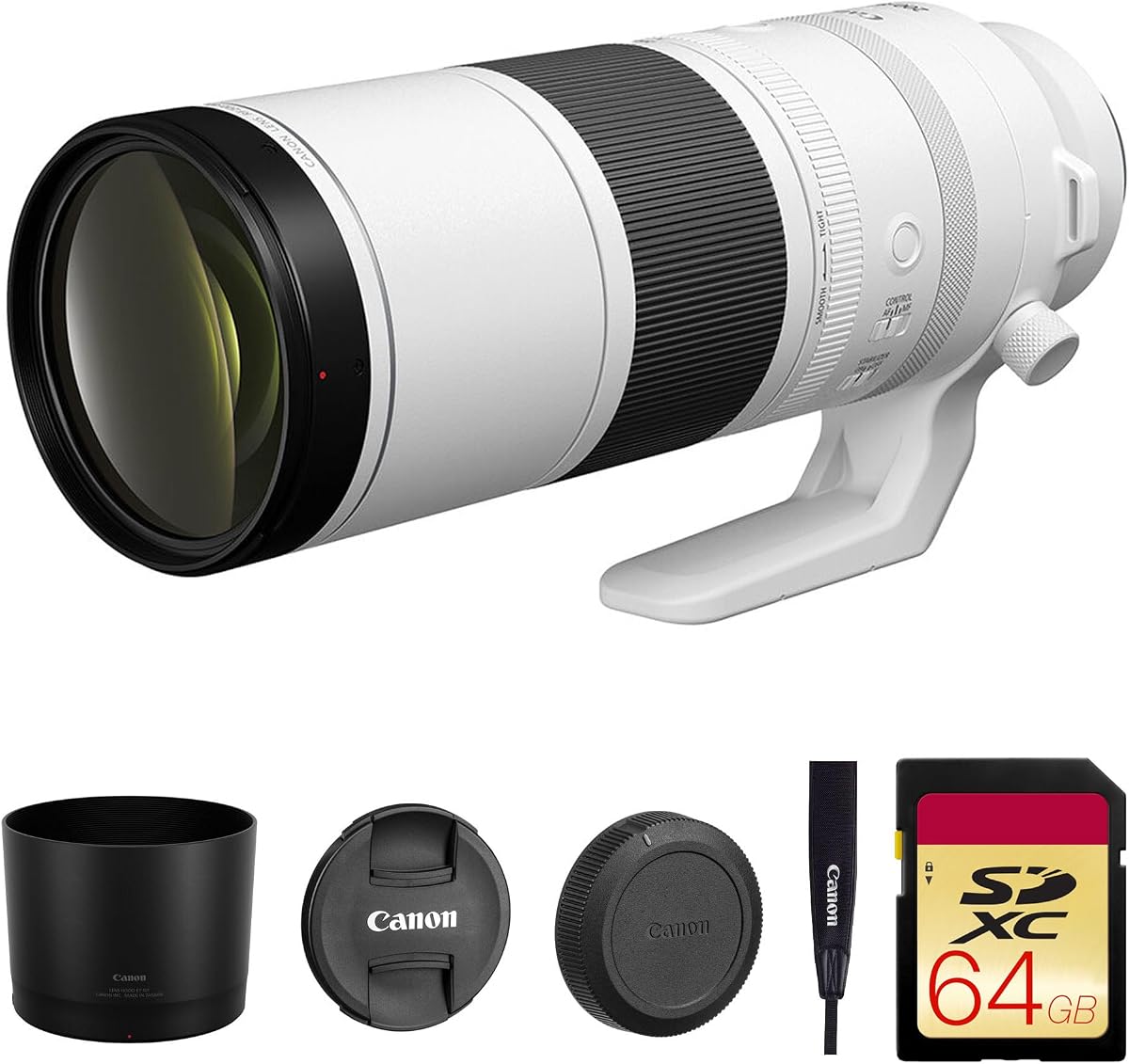
The Canon RF 200-800mm Bundle earns our Editor's Choice with its incredible 800mm reach and sharp optics. Rated highly for wildlife, it pairs a versatile super-telephoto zoom with advanced stabilization and a bonus SD card for immediate use.
We may earn a commission when you buy through this link, at no additional cost to you.
Its 200-800mm range lets you frame distant birds or mammals tightly without moving. The built-in image stabilization ensures handheld shots stay sharp even at full zoom. The USM autofocus locks on quickly and quietly, crucial for skittish subjects.
While expensive, the optical quality and reach justify the cost for serious shooters. Some may find the variable aperture challenging in low light, but modern sensors compensate well. This remains the top modern choice for mirrorless wildlife photographers.
Buyers seeking maximum reach and RF compatibility should choose this lens. Its combination of speed, stabilization, and optical clarity makes it the best overall pick for capturing crisp wildlife details from far away.
With a range extending to 800mm, you can capture details of distant subjects that other lenses simply cannot reach.
Built-in image stabilization supports sharp handheld shooting even at maximum focal length, reducing the need for a tripod.
We may earn a commission when you buy through this link, at no additional cost to you.
This lens offers the world's first AF super-telephoto zoom with a 800mm telephoto end. Its powerful zoom range and compact design make it ideal for mobile wildlife photographers who need reach without excessive weight.
We may earn a commission when you buy through this link, at no additional cost to you.
The zoom range spans from 200mm through 800mm, providing flexibility for varying distances. It works with Canon RF extenders, extending reach even further. The optical design is optimized to maintain sharpness and contrast throughout the entire zoom range.
Although the variable aperture is narrow at the long end, it delivers excellent image quality for the size. Handheld shooting remains comfortable due to the lightweight build. It is a strong alternative to the bundled version if you prefer purchasing standalone.
Choose this lens for its mobility and zoom capabilities. It suits photographers prioritizing a portable super-telephoto option for wildlife and sports that doesn't compromise on optical performance.
Compatible with Extender RF1.4x and Extender RF2x at all focal lengths, allowing extended reach beyond 800mm.
Optimized optical design takes advantage of the RF mount to maintain high image quality through the zoom range.
We may earn a commission when you buy through this link, at no additional cost to you.
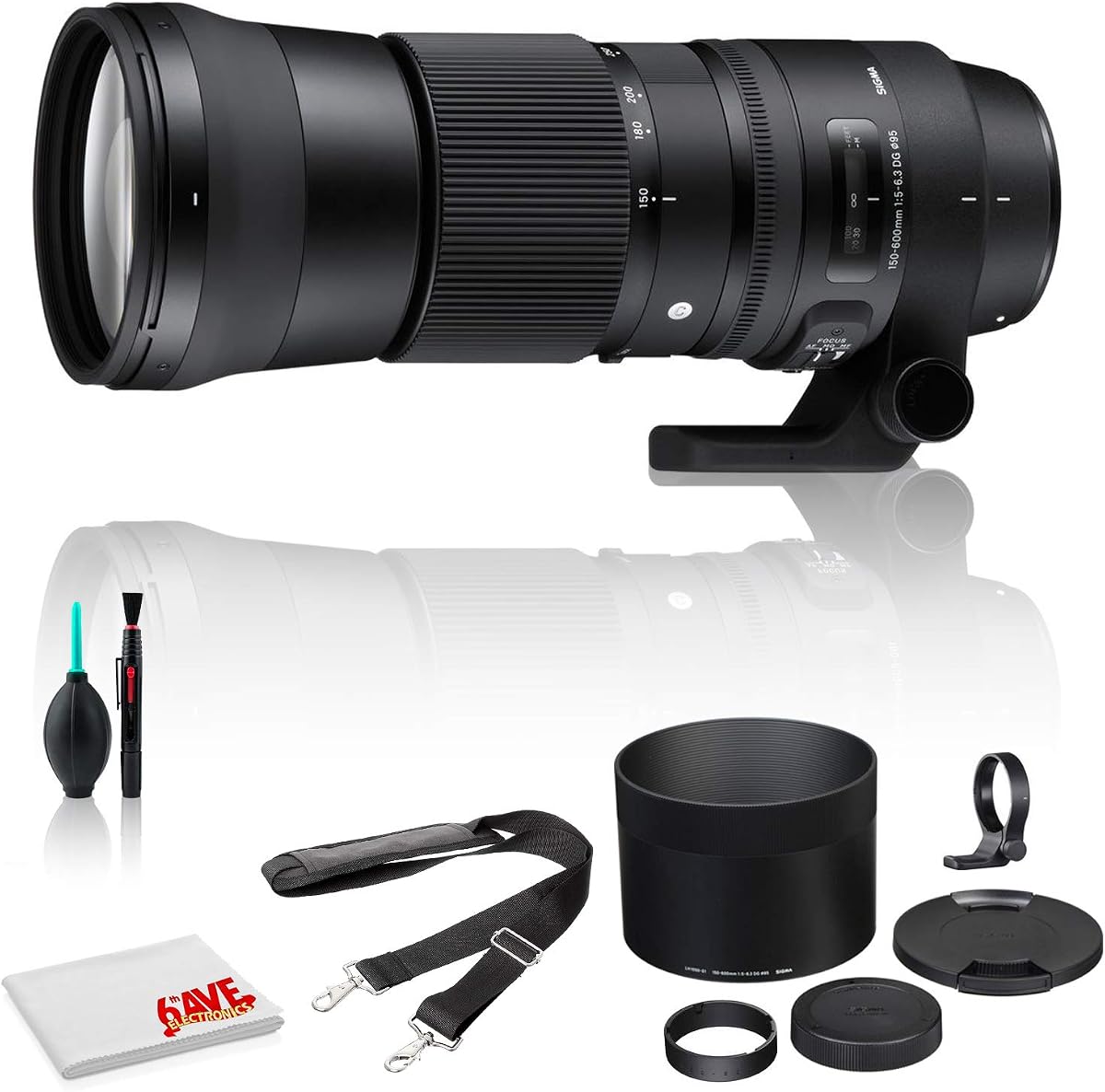
This Sigma lens offers a robust 150-600mm focal range for Canon DSLR shooters. It provides excellent value with a generous zoom range, reliable OS stabilization, and an included cleaning kit for maintenance in the field.
We may earn a commission when you buy through this link, at no additional cost to you.
The Hyper Sonic Motor AF system delivers quick and quiet focusing, essential for moving animals. Optical Stabilizer with an accelerometer helps maintain sharpness even when handheld. The aperture range of f/5-6.3 is standard for this class.
While it lacks the light weight of newer RF glass, it remains a favorite for EF mount users. The build quality is durable for outdoor use. The bundle includes a useful cleaning kit to protect optics during trips.
Buy this lens if you need a versatile and affordable option for DSLRs. It balances reach and performance well, making it a reliable choice for wildlife photography without breaking the bank.
Hyper Sonic Motor AF System ensures quick and accurate focus acquisition on distant and moving subjects.
Standard bundle includes 6AVE Deluxe Camera Lens Cleaning Kit to keep your optics clean during outdoor shoots.
We may earn a commission when you buy through this link, at no additional cost to you.
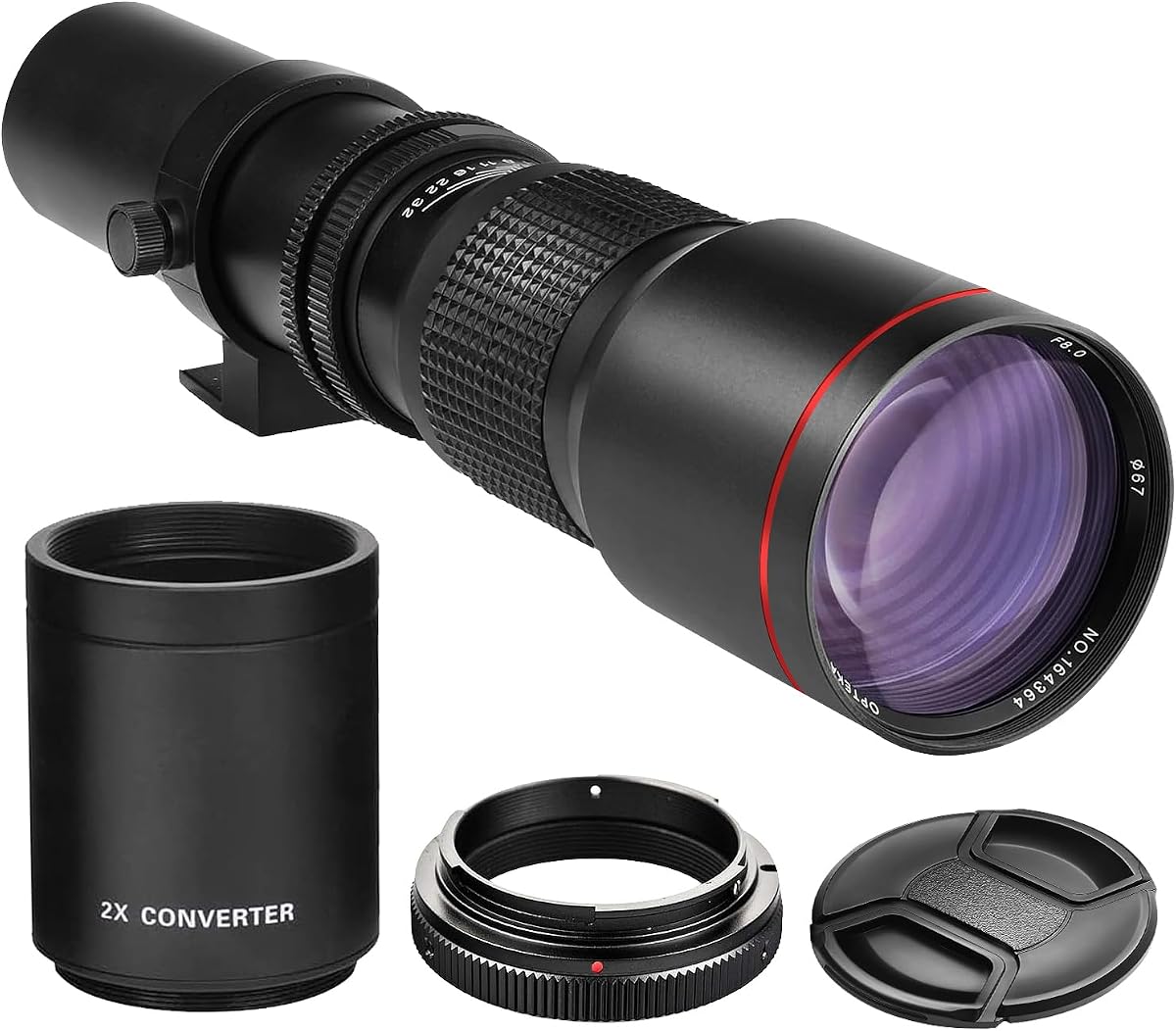
This high-power manual telephoto lens offers an incredible 1000mm reach at a fraction of the cost of premium optics. It is ideal for beginners or those needing extreme reach on a tight budget for distant wildlife shots.
We may earn a commission when you buy through this link, at no additional cost to you.
The 500mm lens can be doubled to 1000mm with the included teleconverter. Its high index, low dispersion multi-coated optical glass aims to provide clear images despite the manual focus requirement. It attaches securely via EF-Mount.
Manual precision allows complete creative control but requires patience for tracking moving subjects. Durability is a plus for outdoor shooting. However, success depends heavily on camera stability and manual focusing skills.
Buyers seeking extreme reach for under a hundred dollars should consider this lens. It serves well for static subjects or patients who enjoy manual focusing for wildlife photography adventures.
The 2X Teleconverter doubles the lens power to a groundbreaking 1000mm for bringing distant subjects closer.
Manual focus and aperture give you complete creative control over your images allowing unparalleled creative expression.
We may earn a commission when you buy through this link, at no additional cost to you.
This Canon EF lens offers professional L-Series quality with a 100-400mm range. It is designed for wildlife and sports, covering an expansive focal range with advanced optical construction and ring-type USM autofocus for precision.
We may earn a commission when you buy through this link, at no additional cost to you.
Advanced optical construction uses one fluorite element and Super UD element to minimize aberrations. Built-in optical image stabilization reduces camera shake by up to two shutter speed stops. It is compatible with optional 1.4x and 2x teleconverters.
The removable rotating tripod collar provides balanced support for long sessions. While the focal length is shorter than super-telephoto zooms, it excels in image quality and speed. The filter kit adds extra value for outdoor shooting.
Select this lens for its professional optics and speed. It remains a reliable workhorse for DSLR shooters who prioritize image quality and versatility over extreme reach.
Advanced optical construction uses fluorite and Super UD elements to minimize chromatic and spherical aberrations.
Built-in optical image stabilization reduces camera shake improving handheld shooting and low-light performance.
We may earn a commission when you buy through this link, at no additional cost to you.
This lens provides an extraordinary zoom capability up to 1600mm, bringing subjects closer than ever thought possible. It is designed for capturing clear long-distance shots with enhanced photographic flexibility for sports and wildlife enthusiasts.
We may earn a commission when you buy through this link, at no additional cost to you.
The 2X Teleconverter doubles the lens power to 1600mm, offering unique versatility. With a 420mm-800mm focal length range, it captures intricate details. The f/8.3 aperture ensures photos are crisp and clear, highlighting your subject matter beautifully.
EF-Mount compatibility secures the lens to your DSLR for superior picture quality. It ensures sharp shots but requires manual focus. While budget-friendly, it demands a stable platform for best results at high magnification.
Buyers needing extreme reach at a low price should choose this lens. It is perfect for stationary subjects or enthusiasts willing to trade speed for unprecedented focal length.
Enhanced zoom capability with a 2X Teleconverter doubles the lens power to a whooping 1600mm.
Precision at its best with its 420mm-800mm focal length captures intricately detailed photos.
We may earn a commission when you buy through this link, at no additional cost to you.
This compact RF lens offers high image quality and versatile zoom from 100-400mm. It is an excellent entry point for EOS R users seeking a lightweight telephoto option for wildlife with reliable optical stabilization.
We may earn a commission when you buy through this link, at no additional cost to you.
Optical Image Stabilizer provides up to 5.5 stops of shake correction, or 6 stops with IBIS. The Nano USM autofocus ensures high speed, smooth, and quiet operation. It features a minimum focusing distance of 2.89 feet at 200mm.
While not an extreme super-telephoto, its 400mm reach is sufficient for many wildlife scenarios. Its compact nature makes it easy to carry on hikes. It pairs well with RF bodies for travel photography.
Buyers wanting a light RF telephoto should pick this lens. It balances size and performance well, ideal for photographers prioritizing mobility without sacrificing essential stabilization and speed.
Optical Image Stabilizer with up to 5.5 stops of shake correction supports steady handheld shooting.
High speed, smooth and quiet autofocus with Canon's Nano USM delivers reliable tracking.
We may earn a commission when you buy through this link, at no additional cost to you.
This lens provides a budget-friendly 75-300mm zoom range for Canon SLR cameras. It offers an accessible entry point for beginners looking to explore telephoto photography without a large financial investment.
We may earn a commission when you buy through this link, at no additional cost to you.
Improved mechanism makes zooming smoother for better control. It measures 2.8 inches in diameter and weighs 16.8 ounces, making it easy to carry. The 4.9-foot closest focusing distance allows reasonable proximity to subjects.
Lacking image stabilization requires a steady hand or tripod for sharp shots at longer focal lengths. The DC motor ensures decent speed for the price. It is a solid choice for casual use or well-lit conditions.
Choose this lens if you need a lightweight, cheap option. It is perfect for hobbyists learning wildlife composition in good lighting conditions.
Improved mechanism makes zooming smoother for a better handling experience.
Measures 2.8 inches in diameter and 4.8 inches long with lightweight 16.8 ounce build.
We may earn a commission when you buy through this link, at no additional cost to you.
This Nikon lens delivers a 200-500mm focal range with exceptional clarity and VR stabilization. It comes in a complete bundle with filters and cleaning kit, making it a top premium choice for Nikon shooters.
We may earn a commission when you buy through this link, at no additional cost to you.
The Silent Wave Motor ensures rapid, silent, and accurate autofocus. Three extra-low dispersion elements diminish color fringing. Vibration Reduction minimizes camera shake with up to 4.5 stops of stabilization. It includes a dedicated Sport Mode for moving targets.
The rotating tripod collar provides stable support for vertical and horizontal shooting. While heavy, its build ensures durability in the field. The electromagnetic aperture mechanism ensures stability during fast continuous shooting rates.
Nikon users seeking a high-performance super-telephoto should buy this bundle. It offers professional features and extra accessories that enhance the wildlife photography experience.
Vibration Reduction image stabilization system minimizes camera shake with up to 4.5 stops of correction.
Bundle includes 3 Piece Filter Kit, Lens Cap Keeper, and Cleaning Kit for immediate field readiness.
We may earn a commission when you buy through this link, at no additional cost to you.
This renewed version of the Canon EF 75-300mm lens provides the same capabilities at a lower price. It is a smart value option for budget-conscious shooters wanting to try telephoto photography on Canon SLR systems.
We may earn a commission when you buy through this link, at no additional cost to you.
It features a 75-300mm focal range and DC Autofocus Motor for reliable performance. The lens measures 2.8 inches in diameter and 4.8 inches long, weighing 16.8 ounces. The improved mechanism ensures smooth zooming.
Renewed lenses undergo inspection to ensure functionality. While image stabilization is not included, this remains a solid starter lens. The silver ring on the zoom band matches the classic design aesthetic.
Buyers wanting to minimize cost while maintaining standard telephoto performance should choose this option. It is a practical pick for beginners starting wildlife photography on a tight budget.
Renewed option offers lower cost while retaining standard 75-300mm capabilities and DC autofocus motor.
Improved mechanism makes zooming smoother for consistent handling during outdoor sessions.
We may earn a commission when you buy through this link, at no additional cost to you.
Selecting the right lens depends on your camera system, target subjects, and how far away you can get.
Wildlife photographers typically need at least 300mm to 600mm to frame subjects tightly. Longer focal lengths allow you to capture animals from a safe distance without disturbing them.
Optical Image Stabilization (IS) or Vibration Reduction (VR) is critical for handheld shooting at long distances. Look for lenses offering at least 4 to 5 stops of stabilization.
Ensure the lens matches your camera mount. RF lenses work with Canon EOS R systems, while EF lenses are for DSLRs. Nikon uses F-mount or Z-mount systems.
Fast autofocus systems like USM, Nano USM, or Silent Wave Motor ensure you do not miss fleeting moments. Quiet motors are vital to avoid scaring wildlife.
Wider apertures allow more light in dim forest conditions. However, super-telephoto lenses often have variable apertures like f/5.6 to f/8, which may require higher ISOs.
Long lenses can be heavy. Consider if you will carry it for hours. Lightweight options like the RF 200-800mm reduce fatigue during hiking trips.
Wildlife photography often occurs in harsh environments. Look for dust and weather sealing to protect the lens from rain and moisture during outdoor adventures.
Decide between professional zooms and budget manual lenses. Bundles with filters and kits can offer better value. Always check for extenders that might expand reach.
Always use a tripod or monopod for lenses longer than 400mm to avoid camera shake. The weight of the lens can strain your arm during long sessions.
For most wildlife photography, a focal length of at least 300mm is recommended. Super-telephoto lenses like 600mm or 800mm provide tighter framing for distant birds.
Yes, optical image stabilization helps keep images sharp, especially when shooting handheld. It compensates for natural hand movement at long focal lengths.
Manual lenses are affordable but require steady hands and patience. They work well for static subjects like nests but are harder for fast-moving animals.
Canon offers adapters for using EF lenses on RF bodies, though native RF lenses like the 200-800mm are optimized for mirrorless performance.
Use a soft brush to remove dust and a microfiber cloth with lens fluid for smudges. Always keep the front cap on when not shooting to protect the glass.
This varies by lens. Telephoto lenses usually have a minimum distance of several feet. Always check specs if you want to shoot closer subjects.
We recommend the Canon RF 200-800mm for top performance or the Nikon 200-500mm for dedicated Nikon users.