
FNIRSI HRM-10 Precision Voltage Internal Resistance Battery Tester
4.4Editor score
Automatic resistance testing
TFT HD color display
Data export capability
This guide compares the top 10 Battery Internal Resistance Testers for accuracy, features, and value to help you choose the right model for your needs.
Choosing the right Battery Internal Resistance Tester is crucial for maintaining power systems across automotive and electronics. A quality device delivers precise readings to identify degradation before failure occurs in critical applications.
We evaluated ten leading models based on measurement accuracy, display clarity, and ease of use. Our analysis considers Kelvin sensing technology, voltage ranges, and data logging capabilities for professional results.
Each pick highlights specific strengths like portability or advanced multimeter functions. Note that market prices fluctuate frequently, so verify current listings before purchasing to ensure you get the best value available.
4.4Editor score

4.5Editor score

2.2Editor score
This side-by-side comparison highlights key specifications and capabilities across all ten tested models to help you find the perfect match for your specific battery testing requirements.




The ZOYI ZT-XR1 stands out as the premier choice for professionals seeking versatility. With a strong 4.5 rating, it delivers precision measurements for both internal resistance and general electrical diagnostics in one unit.
We may earn a commission when you buy through this link, at no additional cost to you.
Its integration of a 25,000-count True RMS multimeter with a dedicated 4-wire Kelvin battery test port is unmatched. The adjustable brightness TFT screen ensures readability in any environment, while the built-in 2000mAh battery supports up to ten hours of continuous use.
While the feature set is comprehensive, users may find the initial setup and menu navigation slightly complex compared to simpler testers. The higher price reflects the dual functionality and industrial-grade safety ratings which justify the investment for serious technicians.
This device is ideal for electricians and repair shops that need a single tool for diverse tasks. It offers significant value by eliminating the need for separate multimeters and battery testers while maintaining high accuracy standards.
Combining a full multimeter with battery testing reduces tool clutter and cost, allowing users to switch modes instantly with a single key press.
Dual independent test ports and high safety ratings protect both the device and the user during high-voltage measurements ensuring consistent performance over time.
We may earn a commission when you buy through this link, at no additional cost to you.
The FNIRSI HRM-10 offers exceptional value for hobbyists and casual users needing reliable resistance testing. Its 4.4 rating reflects consistent performance in identifying battery quality degradation without breaking the bank.
We may earn a commission when you buy through this link, at no additional cost to you.
Using a customized Kelvin four-wire connection method eliminates wire resistance errors ensuring accurate readings down to low ohms. The TFT HD color display presents results clearly while the ability to save eight sets of data helps track battery health over time.
The manual voltage adjustment may slow down workflow compared to fully auto-ranging models. However the clear layout and simple operation make it accessible for users who do not need advanced connectivity options.
This tester is perfect for home workshops and garage diagnostics. It provides essential features at a competitive price making advanced battery analysis accessible to everyone needing reliable maintenance tools.
Despite the budget-friendly price, the device maintains accuracy through four-wire Kelvin sensing which is critical for measuring low resistance values correctly.
The ability to save historical records allows users to compare current battery performance against previous tests easily spotting degradation trends quickly.
We may earn a commission when you buy through this link, at no additional cost to you.
The T-685 represents the pinnacle of battery analysis technology for industrial applications. Although current ratings reflect limited review data, its specifications suggest laboratory-grade performance for critical maintenance tasks.
We may earn a commission when you buy through this link, at no additional cost to you.
It measures resistance with a resolution as low as 1 micro-ohm allowing detection of minute degradation in high-performance cells. The device performs five tests per second offering high throughput for production environments or large battery packs.
The substantial price tag and lower user reviews suggest potential complexity or niche use cases. Buyers should ensure their projects justify this level of precision over more affordable standard testers.
Ideal for research labs and professional pack builders this tool offers unmatched detail. It ensures every cell meets strict standards which is vital for safety and longevity in demanding systems.
Measuring down to 1uΩ allows detection of internal defects invisible to standard testers ensuring the highest possible quality for battery packs.
With five tests per second this analyzer processes large batches efficiently saving time in manufacturing or large-scale maintenance scenarios.
We may earn a commission when you buy through this link, at no additional cost to you.
The Dlyfull Battery Tester is a practical solution for everyday household maintenance. It simplifies checking a wide variety of common battery types ensuring devices like flashlights and toys remain functional.
We may earn a commission when you buy through this link, at no additional cost to you.
Users simply select the correct voltage via a rotary dial and connect the leads to read capacity percentage. This avoids the need to insert batteries into slots making it easier to test installed cells quickly.
While it does not offer lab-grade precision the capacity percentage readout provides sufficient data for consumer use. Some users might find handling test leads slightly less convenient than clip-based testers.
This device is recommended for general users maintaining personal electronics. It provides a straightforward way to extend battery life by preventing overcharging and identifying weak cells early.
Supporting 11 types ranging from small buttons to D cells covers the vast majority of home and hobby needs in one affordable package.
Knowing exact capacity levels helps users avoid discarding batteries that still have usable power reducing waste and saving money over time.
We may earn a commission when you buy through this link, at no additional cost to you.
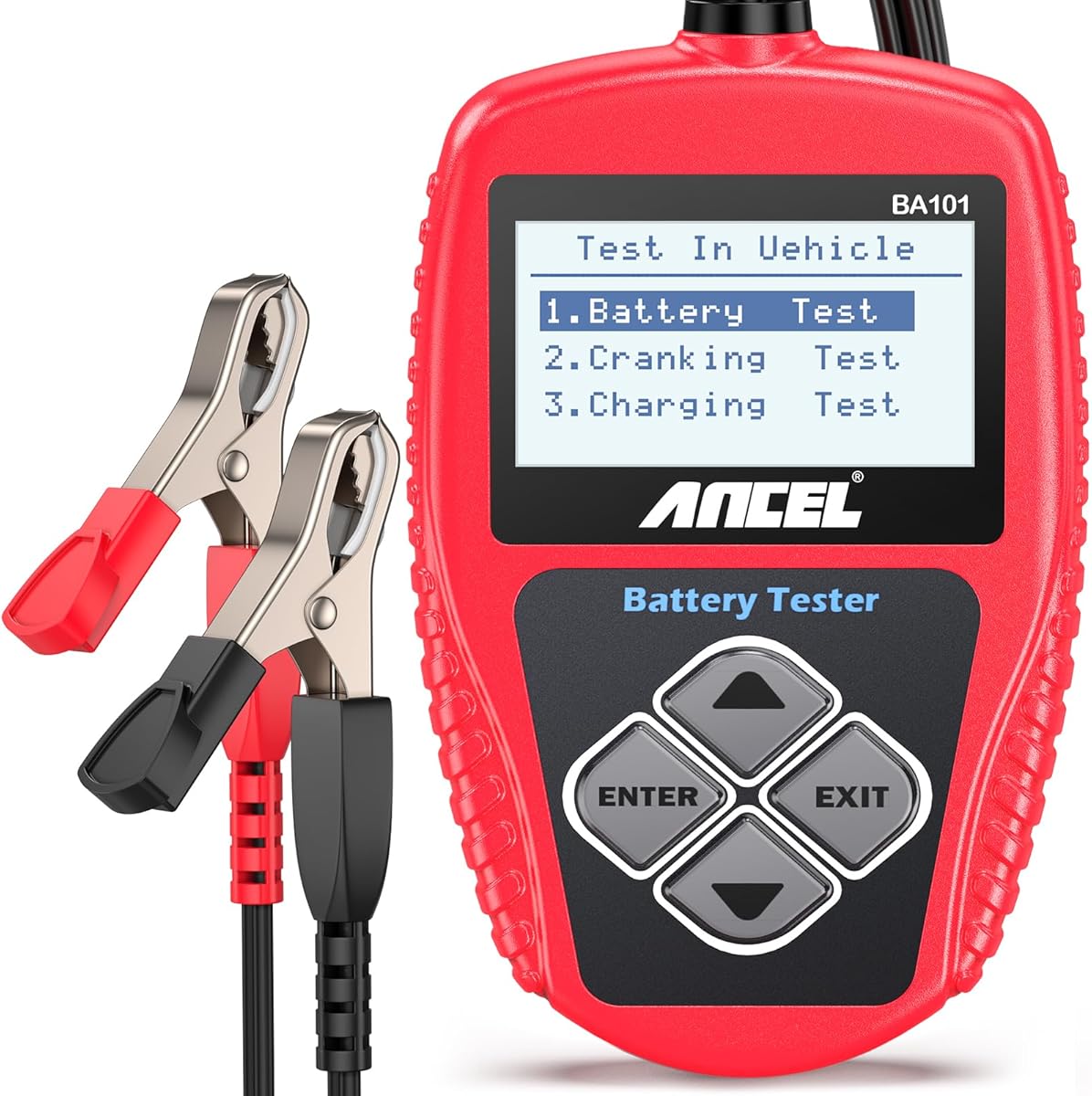
The ANCEL BA101 focuses specifically on automotive health making it a specialized tool for car owners and mechanics. Its high rating confirms reliability in diagnosing starting and charging issues effectively.
We may earn a commission when you buy through this link, at no additional cost to you.
This device tests both the battery and alternator providing a complete picture of the electrical system. Users can adjust settings based on battery labels to get precise State of Health and Charge readings.
The lack of internal battery means it relies on the car's power reducing failure points but limiting use to connected vehicles. It is not suitable for general lithium or household battery testing.
Automotive enthusiasts and repair shops will find this tool invaluable. It prevents unexpected breakdowns by identifying issues early while protecting the tester through built-in reverse polarity safeguards.
Testing both battery and alternator in one process saves time and ensures the vehicle's charging system is functioning correctly.
Reverse polarity and overvoltage protection ensures safe operation even if connections are accidentally reversed during testing.
We may earn a commission when you buy through this link, at no additional cost to you.
The ZOYI XR1 merges a multimeter with a resistance tester for flexible diagnostic work. It is designed for users needing both standard voltage checks and deep battery health analysis.
We may earn a commission when you buy through this link, at no additional cost to you.
Its 25000-count display and Kelvin clip testing ensure accurate readings for various tasks. The Type-C charging port adds convenience for modern users who want to avoid obsolete battery types.
Mixed user reviews suggest variability in quality or experience which warrants checking current feedback before purchase. The adjustable buzzer and auto-shutdown add usability but may not suit all environments.
For general maintenance and repair work this hybrid tool offers efficiency. It keeps the toolkit lean by combining two essential functions into one reliable handheld device.
Switching between multimeter and resistance tester modes makes this device adaptable for troubleshooting circuits and checking cells simultaneously.
Type-C charging and adjustable settings align with modern expectations providing a convenient user experience for daily repairs.
We may earn a commission when you buy through this link, at no additional cost to you.
The RC3563 Analyzer is highly regarded in scientific and laboratory settings for its advanced measurement algorithms. It achieves high precision by using a Kalman filter to process data efficiently.
We may earn a commission when you buy through this link, at no additional cost to you.
Unlike simpler testers it can measure AC resistance of capacitors and resistors offering broader utility. The built-in battery ensures long field operation while the lightweight design enhances portability.
Users may need to calibrate or learn specific settings to get optimal results. However the high rating indicates satisfaction among those needing advanced electrical analysis capabilities.
This analyzer is perfect for researchers and developers working with battery technologies. It provides the accuracy needed for R&D and rigorous testing protocols in controlled environments.
The Kalman filter technology reduces noise and improves accuracy allowing for precise measurements in fluctuating conditions.
Measuring AC resistance expands utility beyond batteries allowing analysis of capacitors and other low-resistance components effectively.
We may earn a commission when you buy through this link, at no additional cost to you.
The YR1035+ achieves a perfect user rating by delivering reliable and straightforward battery testing. It is favored by hobbyists who prioritize accuracy and ease of use.
We may earn a commission when you buy through this link, at no additional cost to you.
Its true four-wire system ensures precise readings while the large LCD provides clear real-time data. The included probes and clips make it ready for immediate testing on various battery types.
While it lacks advanced features like data logging or multimeter functions its simplicity is a strength. It performs its core function exceptionally well without unnecessary complexity.
Ideal for bench testing and hobbyist projects this device offers consistency. It ensures accurate readings for charging and discharge setups maintaining battery health efficiently.
Focusing on core accuracy without extra frills makes this tester easy to use and highly reliable for everyday tasks.
Included probes and clips cover most battery types allowing quick connections for accurate resistance and voltage checks.
We may earn a commission when you buy through this link, at no additional cost to you.
The YR1035 + Square offers an enhanced experience with specialized accessories for diverse battery maintenance. It is perfect for users focusing on lead-acid and lithium phosphate batteries.
We may earn a commission when you buy through this link, at no additional cost to you.
The Kelvin clamp allows users to secure connections hands-free which improves safety and stability during testing. This feature is particularly useful when checking heavy batteries in tight spaces.
While highly rated users should be aware of accessory variations to ensure compatibility with specific needs. The device maintains the accuracy of the base model with added convenience.
Recommended for those with multiple battery types this set provides flexibility. It ensures accurate testing across different chemistries making it versatile for diverse battery management tasks.
The Kelvin clamp secures the leads securely freeing up hands to handle heavy batteries or other tasks safely.
Type-C charging ensures fast power replenishment and compatibility with modern chargers for continuous use in the field.
We may earn a commission when you buy through this link, at no additional cost to you.
The WESTOBIG Battery Tester combines precision with practical features for broad application. It is designed for users needing consistent readings across various battery types from cars to small electronics.
We may earn a commission when you buy through this link, at no additional cost to you.
Its Kelvin four-terminal sensing removes lead resistance errors while the data save function allows easy PC transfer for analysis. The preset function helps quickly identify out-of-spec batteries during bulk checks.
The price is slightly higher than basic testers but reflects the improved accuracy and data management tools. Users may need to navigate settings carefully to maximize its potential.
Recommended for workshops and maintenance teams this tool balances performance and usability. It provides reliable data for proactive battery management extending service life and preventing failures.
Connecting to a PC allows users to track trends and analyze large sets of battery data easily over time.
Preset data sets streamline the checking process for teams ensuring all batteries meet safety and performance standards quickly.
We may earn a commission when you buy through this link, at no additional cost to you.
Selecting the right tester depends on your specific application needs. Consider measurement precision, range capabilities, and usability features to match your workflow requirements effectively.
High-quality testers use 4-wire Kelvin sensing to eliminate wire resistance errors. Look for accuracy ratings below 1% to ensure reliable data for critical systems.
Prioritize models with proven accuracy to avoid misleading results that could lead to premature battery replacements or unsafe conditions.
Ensure the device covers the maximum voltage of your batteries. Most units handle 0-100V but industrial packs may require higher inputs.
Check if the resistance range includes the low ohm values needed for high-performance cells.
Color TFT screens offer better readability than LCDs. Adjustable brightness ensures visibility in bright sunlight or dark engine bays.
A clear interface reduces errors and speeds up the testing process significantly.
Models with data logging help track battery health over time. Exporting to PC via Excel simplifies reporting and maintenance planning.
Choose units with memory storage if you need to review previous tests easily.
Look for CAT II or CAT III ratings to protect against voltage spikes. Reverse polarity protection prevents damage to both the device and the battery.
Safety certifications ensure the tester can handle real-world electrical environments safely.
Built-in rechargeable batteries provide field flexibility. Type-C charging is modern and convenient for long-term use.
Check battery life specifications to ensure the device lasts through your testing sessions.
USB or Bluetooth connections allow seamless data transfer to computers. This feature is vital for professional reporting and analysis.
Devices with connectivity save time during large-scale maintenance tasks.
Budget models offer good entry-level precision while premium units provide advanced analytics. Compare warranty terms to ensure long-term support.
Investing in a reliable unit saves money by reducing false diagnoses and replacement costs.
Always verify the battery voltage before connecting to ensure it is within the device's safe limits. This prevents damage to the tester and ensures accurate readings.
Clean the test probes regularly to remove oxidation. Use is contact cleaner to maintain consistent contact resistance for reliable measurements.
Store the device in a cool dry place and charge the battery periodically if not in use. This extends the lifespan of internal components and ensures readiness when needed.
Internal resistance is the opposition to current flow within a battery. High resistance indicates aging or defects which reduce performance and can lead to failure during high load demand.
Yes, a 4-wire tester eliminates wire resistance errors which is critical for measuring low resistance accurately. 2-wire models are cheaper but less precise for small values.
Yes, many models support 12V car batteries. However ensure the tester is rated for the voltage and has protection features for automotive environments.
Most testers estimate capacity based on resistance and voltage rather than measuring actual amp hours. Accurate capacity testing usually requires a full discharge cycle.
For safety critical systems test monthly. For general hobby use checking every few months or when issues arise is sufficient to maintain reliable performance.
Ideal values vary by chemistry and size. Lithium cells often have lower resistance while lead-acid are higher. Compare against manufacturer specifications or historical trends.
The ZOYI ZT-XR1 leads as the top choice for professionals needing comprehensive multimeter functions. It combines precision with versatility making it a powerful investment for serious work.
For budget-conscious buyers the FNIRSI HRM-10 delivers excellent value without sacrificing accuracy. It meets the needs of hobbyists and casual users effectively.
Always verify current market prices and compatibility before buying. Selecting the right tool ensures safety and extends the lifespan of your valuable battery systems.