
Nano V3.0 (LAFVIN)
4.6Editor score
ATmega328P CH340 chip
Fully compatible with IDE
Compact breadboard design
This guide compares the top 10 Arduino Nano Board options for 2026, evaluating performance, connectivity, and compatibility to help you choose the right
The Arduino Nano Board remains a cornerstone for hobbyists and engineers needing compact microcontroller power. These tiny boards pack significant capability into a breadboard-friendly footprint, making them ideal for embedded systems.
We evaluated ten distinct models ranging from classic ATmega variants to modern ESP32 and Renesas options. Our analysis focuses on connectivity, memory, power options, and community support to ensure reliable selection.
Each pick highlights specific strengths like USB-C support or wireless capabilities. Prices and availability fluctuate frequently, so verify current stock before purchasing to ensure you get the best deal available today.
4.6Editor score
![Arduino Nano [A000005]](https://m.media-amazon.com/images/I/61R1A7CuHTL._AC_SL1200_.jpg)
4.6Editor score

4.5Editor score
The following table provides a side-by-side comparison of all ten selected Arduino Nano Board models. It highlights key specifications such as microcontroller type, memory size, and connectivity options to facilitate quick decision-making.


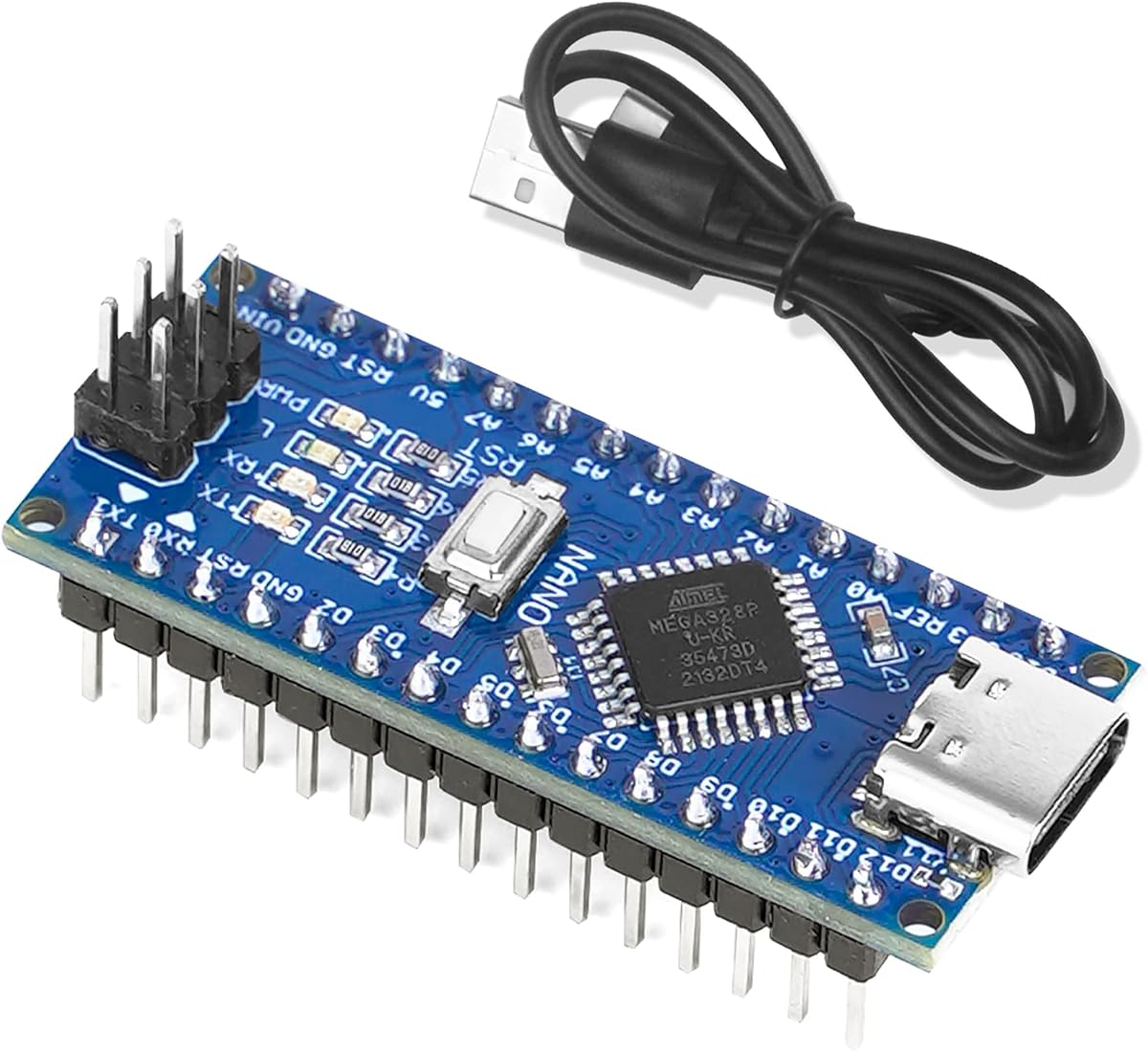
The LAFVIN Nano V3.0 offers exceptional value for makers on a tight budget. With a high rating from users, this board delivers performance indistinguishable from the official version in most use cases.
We may earn a commission when you buy through this link, at no additional cost to you.
Its CH340G chip replaces the original FT232RL making it easy to source and program. The board works perfectly with Windows Mac and Linux ensuring you can develop code on any operating system.
While it is not an official Arduino product the compatibility is nearly complete. Some very specific IDE settings might need adjustment but standard sketches run without issues on this compact platform.
This is the ideal choice for students or bulk prototyping where cost matters more than branding. Buy this if you need multiple boards for a class or large scale project without breaking the bank.
The CH340 driver is widely available and easy to install across all major operating systems for seamless connection.
Pinout matches the original Nano exactly so shields and custom PCBs designed for standard Nano will fit perfectly.
We may earn a commission when you buy through this link, at no additional cost to you.
The official Arduino Nano remains the gold standard for reliability and community support. It is a compact powerhouse suitable for wearables robotics and portable applications where space is limited.
We may earn a commission when you buy through this link, at no additional cost to you.
Equipped with 14 digital I/O pins and 8 analog inputs it offers versatile control options. The mini-USB port simplifies programming and power supply without requiring extra components.
While the cost is higher than clones the quality assurance is unmatched. You get guaranteed compatibility with all Arduino libraries and shields which reduces debugging time significantly.
Choose this board if you need absolute confidence in hardware quality or are working on professional prototypes. It is perfect for beginners who want the most supported path into electronics.
Manufacturing standards ensure consistent performance and durability over time even with frequent handling during development.
Standard shields plug directly onto headers providing immediate expansion for sensors displays and communication modules.
We may earn a commission when you buy through this link, at no additional cost to you.
ELEGOO brings the classic Nano into the modern era with a USB-C port and presoldered headers. This kit saves time on assembly making it perfect for quick prototyping sessions.
We may earn a commission when you buy through this link, at no additional cost to you.
Running on the familiar ATmega328P it ensures compatibility with thousands of existing sketches and libraries. The USB-C connection offers durability and reversibility that micro-USB lacks.
The inclusion of three boards allows you to keep one for breadboarding and another for final deployment. This reduces the need to unplug wires or risk damaging the board during testing.
Select this if you want the convenience of USB-C without moving to a more complex microcontroller. It bridges the gap between legacy code and modern connectivity standards effectively.
Presoldered headers eliminate the soldering step allowing immediate insertion into breadboards for immediate testing and validation.
A dedicated USB-A to USB-C cable is included ensuring you have the correct connection ready out of the box.
We may earn a commission when you buy through this link, at no additional cost to you.
The Nano Every upgrades the classic platform with the ATmega4809 microcontroller offering significantly more flash and RAM. This enables more complex programs without needing external memory chips.
We may earn a commission when you buy through this link, at no additional cost to you.
It maintains the same pinout as the original Nano ensuring existing hardware projects can be upgraded seamlessly. The USB-C port provides modern power and data handling capabilities.
Efficiency improvements mean it consumes less power for the same tasks. This makes it a strong candidate for battery operated devices where runtime is critical.
Choose the Nano Every if your project requires complex algorithms or frequent data logging. It is the best bridge between legacy Nano projects and modern performance needs.
6KB RAM allows for larger buffers and more complex variables without crashing due to stack overflow errors.
Most sketches compile without modification though some low level register manipulations might require slight adjustments.
We may earn a commission when you buy through this link, at no additional cost to you.
This board brings robust wireless connectivity to the Nano footprint using the ESP32-S3. It supports both Wi-Fi and Bluetooth 5.0 enabling seamless IoT integration without extra modules.
We may earn a commission when you buy through this link, at no additional cost to you.
MicroPython compatibility opens development to those familiar with Python making it faster to prototype applications. The dual-core processor handles real-time data processing efficiently.
Support for HID profiles allows it to act as a keyboard or mouse for direct computer interaction. This is rare for microcontrollers in this size class.
Opt for this if your project needs internet access or mobile device communication. It is ideal for smart home gadgets or remote sensors needing to transmit data wirelessly.
Integrated antennas provide reliable communication range suitable for home automation and local network sensor data collection.
MicroPython and Arduino IDE both work allowing users to choose their preferred language for rapid development cycles.
We may earn a commission when you buy through this link, at no additional cost to you.
This kit provides two Nano V3.0 boards with USB-C ports at a very low entry price. It is an excellent starting point for learning microcontroller basics.
We may earn a commission when you buy through this link, at no additional cost to you.
The CH340G chip ensures reliable communication with modern computers while maintaining full IDE compatibility. You can easily upload code and debug without complex setups.
Having two boards lets you test code on one while keeping another ready for integration. This saves time and prevents wear on the active development board.
Choose this if you need extra boards for a classroom or multiple small prototypes. The value is hard to beat for basic digital control tasks.
The switch to USB-C provides better durability and reversible connection which simplifies cable management during long coding sessions.
Simple operation and standard pinout make this perfect for students taking their first steps into electronics programming.
We may earn a commission when you buy through this link, at no additional cost to you.
A three pack offering the classic Nano V3.0 with USB-C connectivity. This is an ideal bulk option for makers needing multiple nodes in a distributed system.
We may earn a commission when you buy through this link, at no additional cost to you.
The boards maintain full compatibility with Arduino IDE and standard shields. You can swap them out freely without worrying about pin mismatches or code conflicts.
Included cables ensure you can connect immediately. This eliminates one common headache where users buy boards without matching power or data cables.
Buy this for projects requiring redundancy or multiple endpoints. It is a cost effective solution for lighting systems or sensor arrays.
Having multiple boards means you can keep a backup on hand in case one fails during critical operation.
5V logic level makes interfacing with older 5V sensors and components straightforward without level shifters.
We may earn a commission when you buy through this link, at no additional cost to you.
The Nano R4 introduces a powerful Renesas microcontroller with 256KB flash and 32KB RAM. It is built for advanced applications requiring significant memory and speed.
We may earn a commission when you buy through this link, at no additional cost to you.
The onboard Qwiic connector simplifies connecting I2C sensors without soldering. This is a massive convenience for prototyping and reducing wiring clutter.
An RGB LED provides visual feedback for system status or debugging. This helps in identifying issues quickly during development and testing phases.
Select this if you are building high performance embedded devices. It is perfect for education and production where modern features justify the cost.
The Qwiic connector allows you to add sensors or displays with a simple plug without soldering extra wires.
The 48MHz clock speed handles complex math and multitasking far better than older 16MHz Nano variants.
We may earn a commission when you buy through this link, at no additional cost to you.
This version of the R4 allows you to solder headers yourself or use castellated edges for PCB mounting. It saves cost and space for custom integrations.
We may earn a commission when you buy through this link, at no additional cost to you.
The hardware remains identical to the pre-soldered version maintaining all performance benefits like fast clock speeds and Qwiic connectivity.
Ideal for production where you need to mount the board onto a custom PCB without bulky headers. It supports direct PCB integration for streamlined devices.
Choose this if you need to embed the Nano into a permanent product design. It is excellent for developers building end devices for customers.
Castellated edges allow you to solder the board directly to a larger PCB creating a compact integrated module.
You will need basic soldering tools to attach headers making this suitable for experienced hobbyists or engineers.
We may earn a commission when you buy through this link, at no additional cost to you.
A single Nano V3.0 style board with USB-C compatibility. It serves as an affordable entry point for users wanting to try the Nano format.
We may earn a commission when you buy through this link, at no additional cost to you.
The OSOYOO branding indicates a reliable third party manufacturer. It runs the same firmware as official boards ensuring code compatibility.
The USB-C port is a welcome upgrade for durability and reversibility. It ensures you can use modern cables without worrying about direction.
Perfect for single project needs or replacements. It keeps costs low while maintaining essential features required for most electronics tasks.
Priced very competitively this unit offers the standard Nano features at one of the lowest costs on the market.
The 5V logic ensures compatibility with the wide range of existing 5V modules and shields available to hobbyists.
We may earn a commission when you buy through this link, at no additional cost to you.
Choosing the right Arduino Nano Board depends on your specific project requirements and technical needs. Consider the following factors before making a purchase.
The microcontroller determines processing power and memory. Classic ATmega328P boards are sufficient for simple tasks while ATmega4809 or ESP32 options offer more speed and features.
Select the MCU based on how complex your code will be and whether you need wireless capabilities for your project.
Memory limits how much code you can store and how much data you can process. Ensure the flash and SRAM meet the needs of your application.
Higher memory is critical for data logging or complex algorithms that require multiple buffers and variables.
Ports like USB-C or mini-USB affect how you connect the board. USB-C is more durable and reversible than older standards.
Choose USB-C for modern setups to avoid damaging the port with repeated plugging during development.
Power options include USB and external voltage inputs. Some boards require specific voltage regulators while others handle a range of inputs directly.
Check if your project needs external power or if USB supply is sufficient for your components.
Ensure the board drivers work with your computer OS. Most third party boards work on Windows Mac and Linux but some require manual driver installation.
Verify system compatibility to avoid frustration when setting up your development environment.
The physical size and header style impact integration. Pre-soldered headers allow immediate breadboard use while loose headers require soldering.
Choose presoldered versions for prototyping and bare boards for final custom PCB designs.
If you need Wi-Fi or Bluetooth choose a board like the Nano ESP32. This removes the need for external communication modules.
Wireless options are essential for IoT projects where data transmission to the cloud is required.
Clones are significantly cheaper than official boards. Determine if the cost savings outweigh the reliability and support of official products.
For learning and casual projects clones offer excellent value. For commercial use official boards may be safer.
Install the correct USB driver for your board if it is not recognized by your computer. This ensures the IDE can upload code without errors.
Always disconnect power before modifying the circuit to prevent short circuits. This protects the microcontroller from potential damage during development.
Store boards in a dry static free environment when not in use. Avoid bending the pins forcefully to ensure long term reliability and connection stability.
Most Nano boards are compatible with the standard Arduino IDE. You may need to select the correct port and driver during setup. Third party boards typically use standard settings that work seamlessly.
The Nano Every uses an ATmega4809 MCU with more memory and higher efficiency. It supports more complex programs than the classic ATmega328P based Nano while keeping the same pinout.
No only models with USB-C ports like the Nano Every and newer clones support USB-C. Older Nano models require mini-USB cables for connection to computers.
Yes most third party boards use CH340 chips that require driver installation on Windows. Mac and Linux often support these drivers natively without extra steps.
Yes the Nano ESP32 has built-in Wi-Fi and Bluetooth which makes it ideal for IoT. It eliminates the need for additional shields or modules for wireless communication.
Most Nano boards operate at 5V logic levels. Some newer models like the Nano R4 operate at 3.3V which requires level shifters for 5V components.
Nano boards are durable and can last years with proper care. They have no moving parts so their lifespan depends on electrical stress and environmental conditions.
In most cases yes the code is compatible across models. However boards with different MCUs might need minor adjustments for advanced register configurations.
We recommend the official Nano for reliability and the LAFVIN for budget needs. The Nano R4 stands out for advanced performance and connectivity features.
Prioritize the features you need such as memory or wireless capability. This ensures you buy a board that fits your long term development plans perfectly.
Check current availability and prices before purchasing since markets change quickly. This ensures you get the best deal on your chosen model.