
Vogzone for MCX4121A-ACAT ConnectX-4 Lx 25GbE Dual SFP28 PCIe 3.0 x8 NIC
4.7Editor score
Mellanox ConnectX-4 Lx
Dual SFP28 ports
RDMA RoCE support
Wide OS compatibility
Cost-effective solution
This guide compares ten top 25GbE network cards for servers and NAS, evaluating performance, compatibility, and features to help you upgrade your network speed
High-speed networking is essential for modern data centers and enterprise storage. A reliable 25GbE network card ensures fast data transfer and low latency for demanding workloads.
We evaluated ten leading 25GbE network cards based on controller quality, port configuration, and OS support. Our analysis covers Intel and Mellanox options for various server needs.
Each pick highlights specific strengths and ideal use cases for your infrastructure. Prices and availability change frequently, so verify details before purchasing to ensure the best fit.
4.7Editor score


5.0Editor score
The following table provides a side-by-side comparison of all ten products, highlighting key specifications and compatibility details to help you make an informed decision quickly.


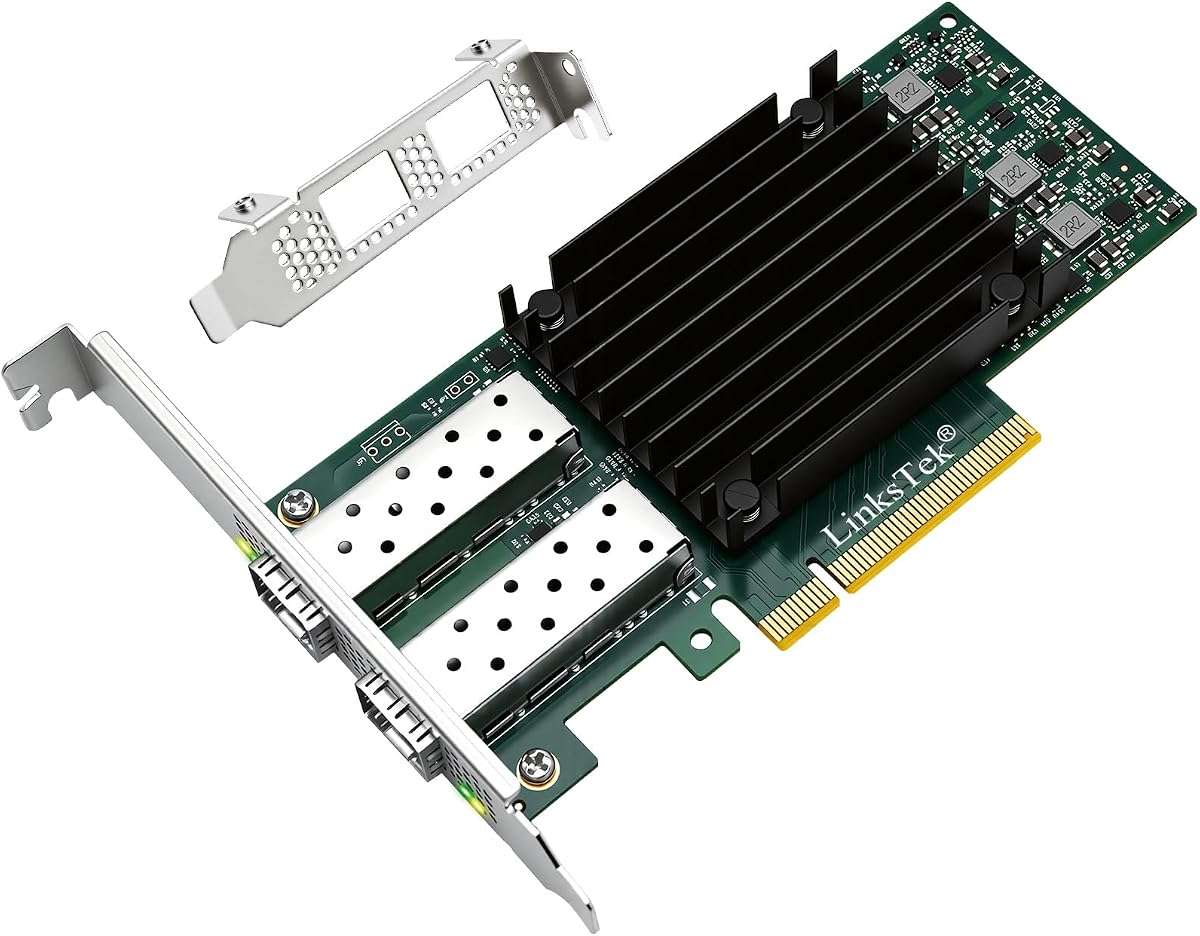


This card stands out as the top choice for enterprise networks needing reliable performance. Its Intel E810 controller delivers consistent throughput and robust error correction. The dual ports allow for flexible configurations including link aggregation for higher speeds.
We may earn a commission when you buy through this link, at no additional cost to you.
The inclusion of Forward Error Correction ensures data integrity even under heavy load conditions. Port Trunking enables combining both ports to reach 50Gbps aggregate bandwidth which is vital for intensive file sharing. Compatibility extends across QNAP NAS systems Windows and Linux environments.
One trade-off is the PCIe slot requirement which needs a minimum x4 slot for optimal performance. However this is standard for high throughput adapters. The low profile bracket makes it suitable for compact chassis installations without sacrificing capability.
Buyers seeking a balanced solution for storage and virtualization workloads will find this card ideal. It offers the best mix of reliability and performance for growing network infrastructures. We recommend it for users prioritizing stability over minor price differences.
Forward Error Correction protects data packets from corruption ensuring smooth transfer across congested networks.
Port Trunking combines both ports to provide up to 50Gbps bandwidth for large file transfers and backups.
We may earn a commission when you buy through this link, at no additional cost to you.
Designed specifically for Synology NAS units this adapter provides seamless integration and optimized performance. It supports high simultaneous throughput essential for storage-heavy environments. The adapter is purpose-built to work flawlessly with DSM software.
We may earn a commission when you buy through this link, at no additional cost to you.
Features like port failover and load balancing ensure continuous availability and efficient traffic distribution. The five-year warranty adds significant value for business users relying on consistent uptime. It enables rapid data access for multiple clients simultaneously.
The limitation lies in its exclusivity to Synology hardware which may not suit mixed OS setups. Additionally users must ensure their DSM version meets the minimum requirements for proper functionality. This restriction keeps performance high within the ecosystem.
Synology owners looking to upgrade their network speed should choose this card for guaranteed compatibility. It removes the guesswork of driver issues and ensures all features work out of the box. Prioritize this if your infrastructure centers on Synology NAS.
Purpose-built for Synology systems this adapter ensures drivers and features are optimized for DSM environments.
Port failover maintains network connectivity even if one port fails increasing reliability for critical storage.
We may earn a commission when you buy through this link, at no additional cost to you.
This card offers exceptional value by leveraging proven Mellanox technology at a lower cost. It features the ConnectX-4 Lx controller which is known for efficiency and scalability. Users gain access to advanced RDMA features without high premium pricing.
We may earn a commission when you buy through this link, at no additional cost to you.
Compatibility spans a wide range of operating systems including Windows Server Linux and virtualization platforms. This flexibility makes it suitable for diverse home lab and enterprise setups. It supports SR-IOV for efficient virtual machine management and resource sharing.
While the price is attractive ensure you source compatible SFP28 modules separately for full functionality. The brand is less recognized than major OEMs which might affect long-term support expectations. However the core hardware remains robust and capable.
Budget-conscious buyers needing enterprise-grade performance should consider this option for best value. It delivers true hardware-based I/O isolation and flexibility required for modern data centers. Choose this if you prioritize cost efficiency and broad compatibility.
Includes support for RDMA and RoCE which offloads network processing to the adapter for faster speeds.
Works with many OS options including Linux variants Windows and VMware ensuring it fits most environments.
We may earn a commission when you buy through this link, at no additional cost to you.
This adapter takes advantage of PCIe 4.0 technology to ensure maximum bandwidth headroom. The Intel E810 controller provides stable performance and strong networking features. It supports a wide array of operating systems making it versatile for mixed environments.
We may earn a commission when you buy through this link, at no additional cost to you.
Advanced features like iWARP and RoCE allow for low-latency data transfer in virtualized setups. It is compatible with both Windows Server and Linux distributions ensuring broad deployment options. The high user rating reflects satisfaction with its plug-and-play functionality.
The lack of macOS support limits use for Mac-based workstations though most servers do not require it. Users must also acquire SFP28 transceivers separately which adds to the total cost. These minor limitations do not detract from its core strengths.
Users needing PCIe 4.0 readiness should select this card for future-proofing their server investments. It offers the speed and features necessary for demanding applications without breaking the budget. We recommend it for those upgrading to newer server platforms.
PCIe 4.0 support ensures faster data movement between the adapter and system for higher throughput.
Supports RDMA protocols to reduce CPU usage during network transfers improving overall system efficiency.
We may earn a commission when you buy through this link, at no additional cost to you.
This adapter delivers solid performance for virtualized environments using the ConnectX-4 Lx controller. It supports various overlay networks which simplifies cloud and large-scale deployment management. The hardware includes RDMA capabilities for high-speed data movement.
We may earn a commission when you buy through this link, at no additional cost to you.
Users appreciate the support for Jumbo frames which reduces overhead during large data transfers. Compatibility with Windows Server and Linux ensures it fits most enterprise architectures. The high rating indicates consistent quality and ease of use.
While PCIe 3.0 is older than 4.0 it remains sufficient for 25GbE workloads without bottlenecks. The focus on storage and virtualization makes it ideal for datacenter servers. It lacks macOS support but targets server use cases primarily.
Server admins needing reliable virtualization tools should choose this card for robust performance. It balances cost and features effectively for those building scalable storage systems. Prioritize this for its proven track record in server applications.
Supports NVGRE VXLAN and GENEVE allowing flexible network segmentation and management in clouds.
Intelligent RDMA features reduce latency for storage operations improving database and file system speeds.
We may earn a commission when you buy through this link, at no additional cost to you.
As a native Intel product this adapter offers top-tier reliability and performance for enterprise use. It features advanced network virtualization offloads that accelerate traffic handling in complex environments. The hardware is optimized for efficiency in cloud deployments.
We may earn a commission when you buy through this link, at no additional cost to you.
Its small packet performance is excellent making it suitable for network appliances and virtualization workloads. Adaptive link establishment ensures compatibility with various switches and controllers. Users benefit from hardware-based traffic steering for better control.
The price point reflects its enterprise-grade build quality but may be higher than third-party options. PCIe 3.0 is sufficient for 25GbE but not future-ready for next-gen speeds. However its stability is unmatched in professional settings.
Enterprises requiring certified performance should select this card for its proven track record. It is ideal for datacenters prioritizing stability and advanced traffic management features. Choose this for mission-critical servers where reliability is paramount.
Hardware based traffic steering directs packets efficiently reducing CPU load and improving flow management.
Optimized for Data Plane Development Kit to enable ultra-fast packet processing for network functions.
We may earn a commission when you buy through this link, at no additional cost to you.
This card utilizes the OCP 3.0 form factor designed for modern server chassis and rack deployments. It is powered by the Intel E810 controller ensuring high stability and throughput for server workloads. PCIe 4.0 provides ample bandwidth for current needs.
We may earn a commission when you buy through this link, at no additional cost to you.
Advanced features like Flexible Port Partitioning allow efficient resource use in virtual environments. It supports a wide range of operating systems from Windows to FreeBSD ensuring adaptability. The hardware is built for low-latency server and storage networks.
The OCP interface requires specific server hardware which may limit use in older desktop chassis. Users must provide their own SFP28 modules which adds setup effort. These are minor constraints given the performance benefits of the controller.
Server builders with OCP 3.0 slots should choose this for high speed and reliability. It is ideal for cloud and NFV workloads needing modern networking interfaces. Prioritize this for its balance of speed and enterprise features.
Allows splitting ports into multiple virtual functions optimizing hardware for complex virtualized environments.
OCP 3.0 design fits optimized server layouts improving airflow and density in data centers.
We may earn a commission when you buy through this link, at no additional cost to you.
Designed for Mac and high-end workstations this adapter brings desktop-speed Ethernet to Thunderbolt systems. It includes two SFP28 optical transceivers for immediate deployment without extra costs. The compact design suits quiet office and studio environments.
We may earn a commission when you buy through this link, at no additional cost to you.
Support for both 25GbE and 10GbE allows seamless integration with existing infrastructure. Thunderbolt 5 delivers full performance even when both ports are active simultaneously. Users can also connect additional peripherals to the adapter pass-through port.
The price is higher than internal options but justified by convenience and included optics. It requires a Thunderbolt or USB4 port which may not be available on all systems. However it offers unmatched ease of use for external setups.
Mac users and video editors needing fast external storage access should choose this card. It provides a premium experience with immediate connectivity and professional build quality. Prioritize this for media workflows and Mac-based systems.
Comes with two SFP28 optical transceivers saving money and setup time for immediate network connection.
Delivers full 25GbE performance on both ports simultaneously ensuring fast file transfers for media.
We may earn a commission when you buy through this link, at no additional cost to you.
This card is an excellent solution for Mac users needing dual 25GbE connectivity via PCIe. It includes SFP28 transceivers which simplifies installation and avoids extra purchases. The adapter supports both 25GbE and 10GbE for flexible networking options.
We may earn a commission when you buy through this link, at no additional cost to you.
It works with Windows and Linux as well making it versatile for mixed environments. The brand reputation ensures quality and reliability for professional deployments. It is ideal for expanding networking in computers with available PCIe slots.
Users should note potential compatibility issues with specific macOS versions which may require updates. The cost is high compared to non-Mac options but reflects the specialized design. This is the only viable PCIe path for Mac systems.
Mac users with PCIe expansion slots should choose this for its seamless integration and included optics. It provides a high-performance networking upgrade tailored to Apple hardware. Prioritize this for Mac-centric setups needing reliable speed.
Designed specifically to work with Mac systems offering drivers that match Apple hardware needs.
Includes transceivers to save cost and time for immediate fiber connection setup.
We may earn a commission when you buy through this link, at no additional cost to you.
This adapter uses the ConnectX-5 controller which offers advanced application offload features for cloud and storage. It provides dual port SFP28 connectivity suitable for robust network backbones. The hardware is designed for enterprise platforms.
We may earn a commission when you buy through this link, at no additional cost to you.
Features include intelligent RDMA offloads which improve data center performance significantly. The tall bracket ensures compatibility with standard server chassis. It supports Web 2.0 and telco platforms making it a versatile tool.
While the controller is older it remains effective for many high-speed tasks. Some users report mixed experiences likely due to driver setup or environment differences. It may be less future-proof than newer generations.
Users with specific legacy requirements should consider this card for its high throughput features. It is best suited for environments already optimized for Mellanox technologies. Choose this if you have existing infrastructure leveraging ConnectX-5.
Intelligent offloads reduce CPU load for applications like cloud and storage improving overall server efficiency.
Designed for web and telco platforms ensuring reliable performance in demanding network environments.
We may earn a commission when you buy through this link, at no additional cost to you.
Choosing the right 25GbE network card depends on your server hardware and performance needs. This guide outlines key factors to ensure you select a compatible and effective solution.
The network controller determines performance efficiency and feature support. Intel and Mellanox controllers are the most reliable for enterprise tasks. Ensure the controller supports your required protocols like RDMA or iWARP.
Prioritize established controller models for better driver support and stability in production environments.
Most cards offer dual ports which allow link aggregation for higher bandwidth or redundancy. Check if the card supports both 25GbE and 10GbE for flexibility. Verify the physical connector type matches your switches or cables.
Select dual port options to maximize flexibility for failover and high-speed transfers.
Compatibility with your OS is critical for driver installation and stability. Verify support for Windows Linux or macOS if you use specific workstations. Some cards have restricted OS lists which may impact mixed environments.
Always confirm OS compatibility on the manufacturer site before purchasing to avoid driver issues.
PCIe generation affects bandwidth potential though 25GbE works well with PCIe 3.0. Newer PCIe 4.0 cards provide headroom for future upgrades and higher throughput. Match the card to your motherboard slot capabilities.
Choose PCIe 4.0 if your system supports it for future-proofing against performance bottlenecks.
Cards come in low profile or full height brackets depending on chassis size. OCP adapters are designed for specific server trays rather than standard PCIe slots. Ensure the physical dimensions fit your case or server.
Verify bracket height and adapter type to ensure the card installs correctly in your hardware.
Many cards do not include SFP28 optical modules so factor this into your budget. Some premium external adapters include optics which can save time and cost. Ensure you buy compatible cables for your distance needs.
Check if transceivers are included and budget for them separately if not part of the package.
Advanced features like RDMA VXLAN offloads help improve virtualized performance and network efficiency. Look for tools like Port Trunking or Error Correction if you need higher reliability. These features impact how the card handles traffic.
Select cards with offloads that match your workloads to maximize server efficiency and speed.
Reliable support ensures quick resolution if drivers or hardware fail. Enterprise grade cards often have longer warranties compared to consumer options. Check the vendor reputation for driver updates and customer service.
Prioritize brands with strong support records to maintain uptime during critical operations.
Install the card securely into the correct PCIe or OCP slot ensuring it is fully seated. Connect SFP28 cables or modules to the ports for physical connectivity. Ensure your case is grounded to avoid static damage during installation.
Update your operating system drivers to the latest version for optimal performance. Verify network settings like port speed and duplex in system preferences or BIOS. Use tools to confirm link status and throughput after setup.
Maintain cool airflow around the card to prevent overheating during heavy workloads. Keep cables and ports clean to avoid signal degradation or connection issues. Regularly check for firmware updates to maintain compatibility and security.
Most 25GbE cards support auto-negotiation to fall back to 10GbE speeds. This ensures compatibility with older switches without needing new hardware. Check the specific card data for auto-negotiation support details.
Most internal cards do not include SFP28 modules so you must buy them separately. Some premium external adapters include optics which adds value. Always verify the product package contents before purchasing to plan accordingly.
RDMA allows direct memory access without CPU overhead reducing latency for data transfers. iWARP is a version of RDMA that works over standard TCP networks. Both improve performance but iWARP offers broader compatibility options.
Most require PCIe slots which standard desktops may have but physical size matters. Low-profile adapters are better for small chassis while full height fit towers. Ensure power and slot width match your desktop specs.
Many standard cards lack macOS support but specialized adapters like Sonnet exist for Macs. You may need Thunderbolt or PCIe expansion systems to connect them. Always verify OS compatibility for Apple hardware.
PCIe 3.0 provides enough bandwidth for single or dual 25GbE ports. PCIe 4.0 offers headroom for future upgrades or higher throughput needs. Both versions work well but 4.0 is more future-proof for upgrades.
SFP28 fiber modules with OM3 or OM4 cables are common for distances. DAC cables provide short range direct connections for rack setups. Ensure cables match the module type and distance requirements.
Use the network settings in your OS to group ports for link aggregation. Some cards have management tools that assist with port trunking configurations. Ensure the connected switch also supports aggregation protocols.
We highlighted top picks like the QXG-25G2SF-E810 for reliability and the Vogzone option for budget efficiency. Each card offers specific strengths tailored to different server and storage needs. Choose based on your infrastructure requirements.
Prioritize compatibility and controller quality to ensure stable performance in your environment. Consider future needs like PCIe 4.0 or RDMA support to keep your network relevant. Proper selection avoids upgrade costs later.
Always check current prices and availability before making your purchase. Models may change or go out of stock frequently. Verify your hardware specs match the card requirements for smooth integration.