
Coral M.2 Accelerator B+M Key
5.0Editor score
4 TOPS peak performance
Energy efficient design
Debian Linux support
This guide compares the top M2 Accelerator Cards for AI inference and edge computing, evaluating performance, compatibility, and value for diverse hardware
M2 Accelerator Cards are essential hardware components designed to enhance machine learning and artificial intelligence workloads on edge devices. These cards provide dedicated processing power that offloads tasks from the main CPU, resulting in faster inference times and improved energy efficiency for critical applications.
We have carefully evaluated ten leading models available in the current market to determine which ones offer the best balance of speed, compatibility, and ease of use. Our analysis focuses on real-world performance metrics, software support, and integration capabilities with popular operating systems and development frameworks.
Each selection in this list highlights specific strengths tailored to different user needs, from budget-friendly options to high-performance premium solutions. Please note that product specifications and availability can change over time, so verifying the latest details with the manufacturer is always recommended before making a purchase decision.
5.0Editor score

4.3Editor score

4.6Editor score
The following table provides a side-by-side comparison of all ten M2 Accelerator Cards to help you quickly identify the model that best fits your specific project requirements and hardware constraints.


The MX3 M.2 AI Accelerator stands out as a top choice for developers needing robust AI capabilities on edge devices. With a rating of 4.3 stars, it delivers exceptional performance for computer vision workloads while maintaining high efficiency.
We may earn a commission when you buy through this link, at no additional cost to you.
Its high-performance AI processing capabilities allow for smooth execution of demanding tasks without overwhelming the host CPU. The flexible integration via the M.2 M-key form factor ensures it fits easily into many Raspberry Pi 5 setups or similar Linux-based systems.
While it is limited to Linux operating systems which may not suit all users, the comprehensive SDK simplifies development significantly. The energy-efficient design ensures that power consumption remains low even under heavy workloads.
Developers focused on Linux environments will find this card offers the best balance of speed and usability. It is highly recommended for those building computer vision applications who need reliable and fast inference.
The comprehensive SDK reduces the time needed to deploy models by providing ready-to-use tools and documentation.
Designed to minimize power draw, this accelerator ensures long run times on battery-powered edge devices.
We may earn a commission when you buy through this link, at no additional cost to you.
This M.2 Accelerator offers a unique dual Edge TPU configuration that boosts total processing power to 8 TOPS. It is rated 4.1 stars and is ideal for applications requiring parallel processing of multiple ML models simultaneously.
We may earn a commission when you buy through this link, at no additional cost to you.
The dual TPU setup provides double the inference capability compared to single TPU modules. Each TPU operates over its own PCIe Gen2 x1 interface, ensuring bandwidth is not a bottleneck during high-load scenarios.
One trade-off is the specific E-key requirement which might not be available on all motherboards without an adapter. However, for systems that support it, the performance per watt remains excellent at 2 TOPS per watt.
Developers needing higher throughput for object detection or video analytics will appreciate the dual TPU design. It is a solid choice for scaling edge AI projects without a massive hardware overhaul.
Running two TPUs simultaneously allows for concurrent model execution which significantly increases overall system throughput.
With 2 TOPS per watt, this card balances high performance with low energy draw for sustainable edge computing.
We may earn a commission when you buy through this link, at no additional cost to you.
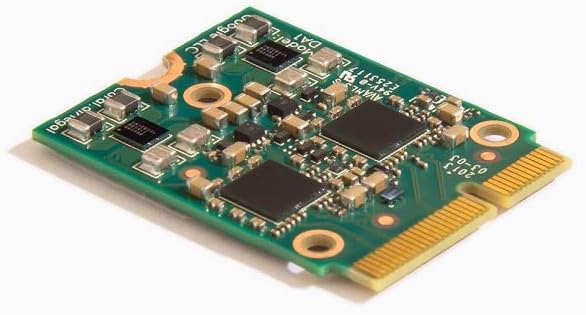
The Coral M.2 Accelerator B+M Key has earned a perfect 5.0 rating from users who value efficiency and reliability. It delivers 4 TOPS of performance using only 0.5 watts per TOPS making it incredibly power efficient for embedded projects.
We may earn a commission when you buy through this link, at no additional cost to you.
Its onboard Edge TPU coprocessor handles high-speed ML inferencing effortlessly. It supports TensorFlow Lite models allowing developers to compile existing models easily without starting from scratch.
While it is limited to single TPU performance, the cost effectiveness makes it a top pick for budget-conscious buyers. It works seamlessly with Debian-based Linux systems which simplifies setup for many hobbyists.
This accelerator is the best value for anyone needing reliable ML inference on a strict budget. It is highly recommended for prototyping or small-scale deployments where power and cost are critical factors.
Achieving 2 TOPS per watt ensures that devices can run longer on battery power without sacrificing performance.
Support for TensorFlow Lite and AutoML Vision Edge speeds up development and deployment cycles significantly.
We may earn a commission when you buy through this link, at no additional cost to you.
The QNAP QM2-2P10G1TB is designed to enhance storage and networking performance in QNAP NAS devices. With a 4.4 star rating it offers two M.2 NVMe SSD slots and a 10GbE network port for faster data transfers.
We may earn a commission when you buy through this link, at no additional cost to you.
It connects via PCIe Gen3 x8 which provides ample bandwidth for high-speed storage caching or expansion. The included 10GbE port allows direct connection to high-speed network devices improving overall system throughput.
Although it is primarily a storage expansion card, its flexibility supports Windows and Linux OS for broader usage scenarios. The low-profile bracket pre-installed ensures it fits into various form factors easily.
Users looking to upgrade their QNAP NAS storage and networking will find this card invaluable. It is not a dedicated AI accelerator but excels at managing data-intensive tasks effectively.
Two M.2 NVMe slots allow for caching or storing large datasets directly on the NAS for quick access.
The 10GbE port enables rapid file transfers over the network which is essential for busy workloads.
We may earn a commission when you buy through this link, at no additional cost to you.
The Rocket 1604L is a powerful adapter designed to leverage the speed of PCIe 5.0 storage devices. It provides four M.2 ports with dedicated x4 lanes for each ensuring optimal performance for every connected SSD.
We may earn a commission when you buy through this link, at no additional cost to you.
With PCIe 5.0 x16 connectivity, it delivers massive bandwidth that reduces latency significantly. The adapter is natively supported by mainstream operating systems allowing easy installation on Intel AMD and ARM platforms.
One limitation is the requirement for a PCIe 5.0 slot which may not be available on older motherboards. However, for users with next-gen hardware, this adapter is essential for maximizing storage potential.
This card is best suited for workstations or servers needing multiple high-speed NVMe drives. While not an AI accelerator it solves critical bandwidth bottlenecks for data-heavy computing environments.
Dedicated lanes per port prevent bottlenecking and ensure each SSD runs at its full rated speed.
Compatibility with Intel AMD and ARM platforms makes it versatile for different system architectures.
We may earn a commission when you buy through this link, at no additional cost to you.
This PCIe Adapter transforms a standard workstation into a dual-TPU machine learning powerhouse by accommodating two Coral M.2 Accelerator cards. It splits a Gen3 x4 lane into four Gen2 x1 lanes for connection.
We may earn a commission when you buy through this link, at no additional cost to you.
By using this adapter users can achieve higher object detection and video analytics performance without buying a whole new system. The included heatsink helps maintain optimal temperatures during heavy AI workloads.
The adapter is designed to be space efficient which is valuable in cases where multiple PCIe slots are not available. It supports TensorFlow Lite models making it a developer-friendly tool for edge computing projects.
Anyone needing to scale up AI inference capabilities on a budget will find this adapter cost effective. It is an ideal way to expand an existing setup rather than replacing entire hardware components.
Adding two TPUs via adapter is cheaper than buying a dedicated workstation for high-end AI tasks.
The heatsink design ensures that both TPU cards remain cool even during continuous operation.
We may earn a commission when you buy through this link, at no additional cost to you.
The ASUS Hyper M.2 x16 Gen5 Card supports up to four NVMe M.2 devices with bandwidth reaching up to 512 Gbps. It adapts server-grade PCB standards ensuring stable data transfers for high-performance storage needs.
We may earn a commission when you buy through this link, at no additional cost to you.
A large heatsink combined with an active fan ensures that M.2 SSDs do not throttle during sustained transfers. This cooling solution enhances reliability and keeps temperatures low even with four drives running simultaneously.
It supports RAID functions across different platforms allowing users to create a bootable RAID array easily. This feature is particularly useful for workstations needing redundant or combined storage volumes.
System builders looking to maximize storage capacity and speed should consider this adapter highly. While it does not offer AI acceleration it solves critical data transfer bottlenecks in demanding environments.
Active fan and thermal pads prevent throttling which keeps transfer speeds consistent under load.
Support for RAID arrays allows for data redundancy or performance improvements tailored to specific needs.
We may earn a commission when you buy through this link, at no additional cost to you.
The waveshare Hailo-8 M.2 AI Accelerator Module stands out with a powerful 26 TOPS Hailo-8 AI processor. It earns a 4.6 rating for enabling real-time and low latency AI inferencing on edge devices.
We may earn a commission when you buy through this link, at no additional cost to you.
Its scalable design enables simultaneous processing of multi-streams and multi-models without slowing down. The module supports TensorFlow, ONNX, Keras, and Pytorch frameworks which makes integration flexible for many developers.
It supports both Linux and Windows operating systems and operates across a wide temperature range. While it is a premium-priced module, the performance justifies the cost for professional applications.
For high-performance AI projects needing robust computing power this module is a top recommendation. It is ideal for complex tasks requiring real-time analysis and multi-model processing capabilities.
Simultaneous processing of multiple streams allows for robust video analytics and real-time tasks.
Support for multiple frameworks simplifies integration into existing development workflows and pipelines.
We may earn a commission when you buy through this link, at no additional cost to you.
The Coral M.2 Accelerator A+E Key is designed for high-performance ML accelerator tasks with 4 TOPS peak performance. It integrates an Edge TPU which delivers efficient machine learning inference for embedded systems.
We may earn a commission when you buy through this link, at no additional cost to you.
Its M.2 A+E key interface allows for easy integration into existing systems that support this standard. This compatibility extends to both Linux and Windows environments making it a versatile choice for developers.
Operating at a low power consumption rate, it is suitable for energy-efficient applications. The industrial-grade reliability ensures it functions well even in harsh environmental conditions.
Users needing reliable inference on a wide range of platforms will find this accelerator very suitable. It balances performance with robust build quality ideal for varied deployment scenarios.
Compatibility with Linux and Windows expands the range of devices this accelerator can be deployed on.
Industrial-grade reliability ensures consistent performance even in demanding or fluctuating environments.
We may earn a commission when you buy through this link, at no additional cost to you.
This adapter is designed exclusively for Coral M.2 Accelerator with Dual Edge TPU modules to maximize inference performance. It fits standard M.2 2280 B-key or M-key slots which ensures easy installation.
We may earn a commission when you buy through this link, at no additional cost to you.
It features bidirectional Gen2 bandwidth that supports high-speed data transfer between the system and the accelerator. The included stainless steel mounting screw ensures vibration-resistant fixation for stable operation.
While it is not compatible with SATA M.2 or Raspberry Pi CM4 enclosures, it provides a dedicated interface for PCIe devices. This specificity prevents buyer errors and ensures the correct setup is chosen.
Users needing a reliable adapter for Coral TPUs will find this product highly effective. It is recommended for those building specific AI inference setups where hardware compatibility is critical.
Bidirectional Gen2 bandwidth ensures data flows efficiently without bottlenecks between host and device.
Mounting screws help fix the PCB securely which prevents connection issues in vibrating environments.
We may earn a commission when you buy through this link, at no additional cost to you.
Selecting the right M2 Accelerator Card requires understanding your specific computing needs and hardware constraints to ensure optimal performance and compatibility.
Evaluate the complexity of your machine learning tasks. For heavy AI computer vision workloads or high-throughput needs, look for models with higher TOPS ratings like the waveshare Hailo-8 or MX3.
Choose a card that meets your processing power needs to ensure smooth inference without lag.
Check your motherboard or single-board computer's M.2 slot type (M-key, E-key, A+E, or B+M) before purchasing. Some cards require specific interfaces like PCIe Gen2 or Gen3.
Verify the interface match to avoid connectivity issues during installation.
Ensure the accelerator supports your preferred OS. Most M2 cards focus on Linux Debian, but some like the Coral A+E Key or Hailo-8 also support Windows.
Select an OS supported model to simplify driver installation and usage.
For battery-powered or energy-conscious projects, prioritize cards with high TOPS per watt ratios like the Dual Edge TPU models which offer 2 TOPS per watt.
Energy efficient models extend battery life and reduce heat generation.
Consider the SDK and framework support offered by the manufacturer. Cards with comprehensive SDKs simplify development and deployment of TensorFlow Lite or Pytorch models.
Strong software support accelerates development timelines significantly.
If you plan to expand your AI capabilities, consider adapters that allow dual TPU setups or expansion slots like the Dual Edge TPU PCIe Adapter.
Future-proof designs allow you to scale without buying new hardware.
Measure the available space in your chassis for M.2 form factors like 2280 or 2230. Some high-performance cards may require larger enclosures or specific mounting brackets.
Ensure physical dimensions fit your case to avoid assembly problems.
Balance performance with cost by comparing options like the Coral M.2 Accelerator which offers high value for entry-level projects.
Determine your budget early to narrow down the best available choices.
Install the M2 Accelerator Card securely into the compatible M.2 slot on your motherboard or board using the provided screw. Ensure it is fully seated and flush with the board to maintain contact integrity.
After installation, install the necessary drivers and software SDK from the manufacturer's website. Configure your environment to recognize the accelerator by following the provided setup guides for your operating system.
Maintain the card by ensuring adequate airflow in the system case to prevent overheating. Check for firmware updates periodically to keep performance optimized and compatible with the latest models.
An M2 Accelerator Card is used to offload machine learning inference tasks from the main CPU to a dedicated processor. This results in faster processing speeds for AI applications such as computer vision and object detection.
No, they require specific M.2 slots with the correct key type and PCIe bandwidth. Always check your motherboard specifications for M-key or E-key support and PCIe generation requirements before buying.
Most M2 Accelerator Cards draw power directly from the M.2 slot which means they do not require extra power cables. However, high-performance models may need additional power if used in specific adapter configurations.
Some models like the waveshare Hailo-8 and Coral A+E Key support Windows 10 64-bit. However, many optimized models are focused on Linux for better support and tool availability.
If your system lacks the specific M.2 key type required by the accelerator, you will need an adapter to convert the slot. For example, converting a PCIe slot to an M.2 slot often requires a dedicated adapter card.
Yes, most manufacturers provide SDKs and support common frameworks like TensorFlow Lite which simplify programming. Documentation is generally comprehensive to help developers get started quickly.
Yes, they are designed specifically to offload AI tasks from the CPU reducing its workload. This allows the CPU to handle other system processes more efficiently without bottlenecks.
We have reviewed ten top M2 Accelerator Cards ranging from budget-friendly Coral options to high-performance waveshare and MX3 models. Each offers unique strengths suited for different AI workloads and hardware environments.
Prioritize performance, compatibility, and power efficiency based on your project requirements. Whether you need high throughput for vision tasks or energy savings for embedded projects, there is a card tailored for your needs.
Remember to check current availability and pricing as specifications may change. Verifying the latest details ensures you get the best value and performance for your specific application.