
KK 2.1.5
5.0Editor score
Affordable pricing
Self-balancing features
Easy customization
Compare the top 10 flight controllers for Hybrid Vtol and Vtol drones to find the best autopilot system for your fixed-wing or vertical takeoff aircraft build.
Flight controllers for hybrid Vtol and Vtol drones are essential components that manage the complex transition between vertical lift and forward flight. These devices ensure stability during takeoff, hover, and cruising while integrating multiple sensor inputs for safe autonomous operation.
We evaluated ten leading flight controllers based on processor performance, firmware support, sensor redundancy, and compatibility with various VTOL configurations. Our analysis focuses on models that handle mixed-mode flight dynamics effectively for both hobbyists and professional developers.
Each pick highlights specific strengths like budget-friendly options, advanced processing power, or versatile firmware choices. Please note that pricing and availability change frequently so verify current details before purchasing your next drone control system.
5.0Editor score

4.8Editor score
This side-by-side comparison highlights key specifications and capabilities across ten flight controllers designed for VTOL and hybrid aircraft applications.



The Pixhawk 2.4.8 stands out as the top choice for pilots needing robust open-source flight control. It handles fixed-wing and multirotor applications seamlessly with a reliable processor core.
We may earn a commission when you buy through this link, at no additional cost to you.
Its fail-safe co-processor ensures critical data integrity even during main processor glitches. The hardware supports extensive modules for telemetry GPS and camera control out of the box.
New users may find the initial configuration slightly complex compared to closed systems. However this learning curve provides unmatched flexibility for future modifications and sensor integrations.
Anyone building a serious research or commercial VTOL system will appreciate this controller reliability. It remains the go-to standard for those seeking full autonomy capabilities.
The fail-safe co-processor monitors critical systems to ensure safe landings during unexpected main board issues.
Being open source allows developers to customize flight dynamics specifically for their hybrid VTOL airframe needs.
We may earn a commission when you buy through this link, at no additional cost to you.
The KK 2.1.5 offers exceptional value for hobbyists wanting basic self-balancing and VTOL control. It is specifically tuned for V-Tail configurations often used in model aircraft.
We may earn a commission when you buy through this link, at no additional cost to you.
Users appreciate the straightforward setup process which gets planes flying faster than complex alternatives. The board supports manual aerobatic maneuvers alongside stabilized hover modes.
Advanced telemetry and autonomous waypoint features are absent on this simpler board. For casual flyers or those focused purely on manual flight control these missing features are acceptable trade-offs.
This controller is ideal for beginners entering the VTOL space without heavy financial investment. Its durability and low price make it a safe first step into flight control.
The firmware includes specific mixing logic for V-Tail surfaces ensuring balanced control during transition phases.
Built-in gyroscopes provide immediate self-leveling which helps new pilots maintain stable flight during hover.
We may earn a commission when you buy through this link, at no additional cost to you.
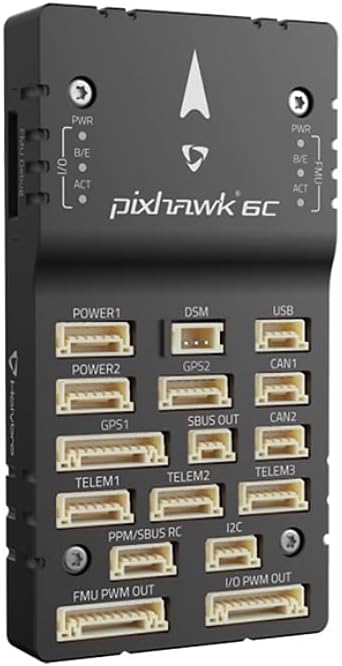
The Pixhawk 6C delivers top-tier performance for those needing advanced autonomy and sensor redundancy. Its H743 processor handles complex algorithms that other boards might struggle to run smoothly.
We may earn a commission when you buy through this link, at no additional cost to you.
Dual redundant IMUs from Bosch and InvenSense ensure critical data accuracy even if one sensor fails. The integrated vibration isolation system filters high-frequency noise for cleaner attitude data.
The premium price point and complex initial setup might deter casual hobbyists. However professional researchers and enterprise developers find these features essential for mission-critical flight reliability.
If you require the absolute best hardware for a high-end hybrid VTOL system this unit is unmatched. It sets the standard for what a modern high-performance flight controller should offer.
Having two independent IMUs guarantees flight stability even if one sensor suffers from temporary interference or failure.
Hardware vibration isolation physically dampens motor vibrations to improve accelerometer readings during hover phases.
We may earn a commission when you buy through this link, at no additional cost to you.
The COREWING F405 V2 is designed for RC airplane applications requiring reliable fixed-wing control. Its compact size makes it suitable for smaller frames where space is limited.
We may earn a commission when you buy through this link, at no additional cost to you.
Featuring an F405 processor it offers decent computational power for basic autopilot features. The board targets standard RC setups ensuring compatibility with common receiver types.
Detailed technical specifications are limited in public documentation which requires research before buying. Pilots needing advanced telemetry might find this unit too basic for complex missions.
For hobbyists focused on fixed-wing or simple VTOL builds this controller offers a straightforward solution. Its size and processor choice provide a balance of performance and practicality.
The small form factor allows easy integration into lightweight airframes without adding excessive weight.
We may earn a commission when you buy through this link, at no additional cost to you.
The PIX 2-12S supports high-voltage 12S configurations ideal for larger VTOL aircraft with significant power demands. It includes essential sensors like MPU6500 gyroscope and LPS22HB barometer.
We may earn a commission when you buy through this link, at no additional cost to you.
Mavlink SBUS and CRSF receiver compatibility ensures flexible connectivity for various telemetry setups. The board design suits DIY projects where specific sensor layouts are required.
Installation requires careful wiring and cable management for secure sensor integration. Users should verify voltage regulation details for 12S setups to ensure safe operation during takeoff.
This controller is best for custom builders needing high-voltage support and standard sensor integration. Its flexibility allows for complex autonomous driving systems alongside drone applications.
Support for up to 12S battery systems expands the power options for larger fixed-wing VTOL builds.
We may earn a commission when you buy through this link, at no additional cost to you.
The F405 Wing Flight Controller is designed specifically for fixed-wing drones with VTOL capabilities. It uses ArduPilot firmware with a mobile app for easy setup and monitoring.
We may earn a commission when you buy through this link, at no additional cost to you.
APP control simplifies parameter configuration for users who prefer smartphone interfaces over desktop ground stations. The board ensures fast and stable flight experiences for both beginners and experts.
Relying on a mobile app might limit advanced parameter access compared to desktop tools. However for quick field adjustments and setup this convenience is highly valued by pilots.
Ideal for those needing a user-friendly VTOL solution without deep technical setup. The lightweight design ensures minimal impact on overall aircraft performance.
Users can monitor and adjust flight parameters directly through a smartphone app for quick field calibration.
We may earn a commission when you buy through this link, at no additional cost to you.
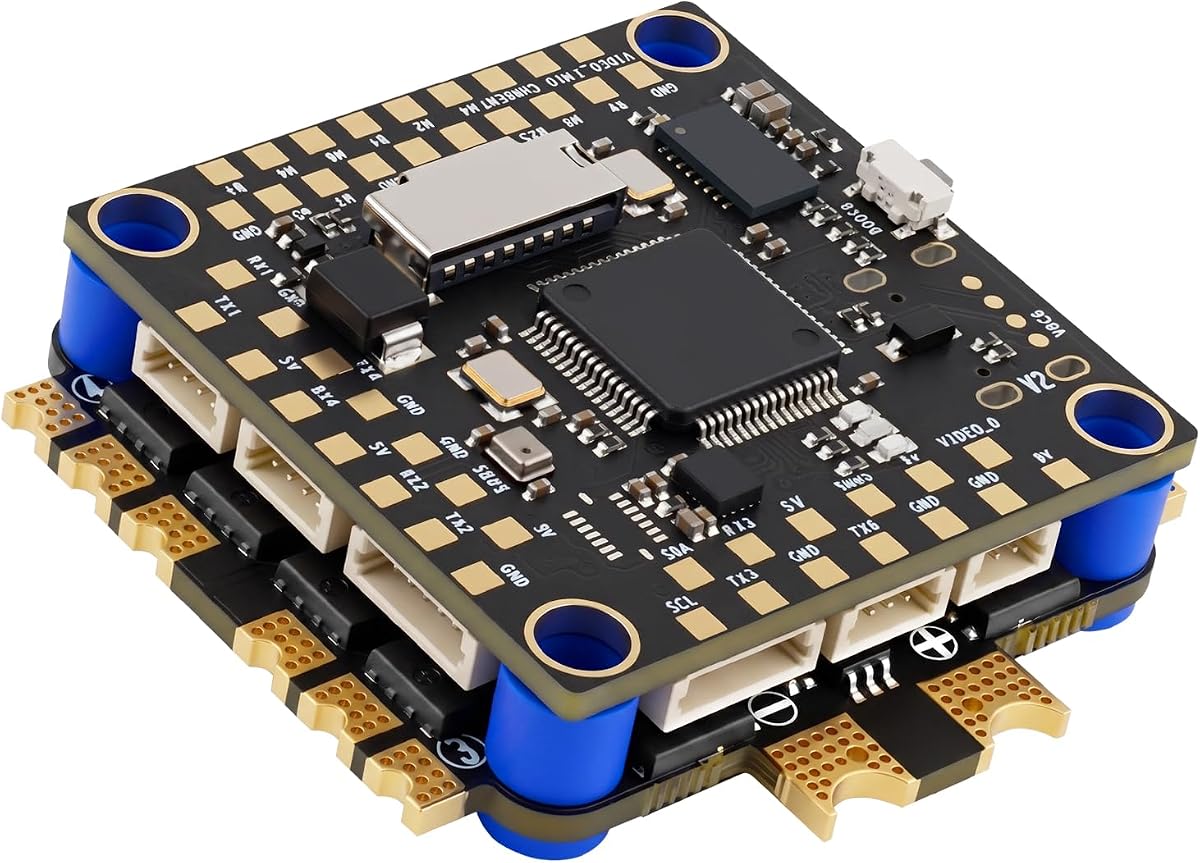
This H743 stack combines a powerful processor with a 60A 32-bit ESC for high-power applications. The dual IMU setup provides enhanced stability for complex flight modes.
We may earn a commission when you buy through this link, at no additional cost to you.
Compatibility with Betaflight INAV PX4 and ArduPilot allows flexible firmware choices depending on mission needs. The CAN bus and multiple UART ports enable extensive peripheral expansion.
The stack design is optimized for FPV and racing but works for lightweight VTOL builds too. Integration is simplified by matching 30×30 mounting patterns for standard frames.
Pilots needing high current capacity and robust sensor data will find this stack reliable. It is a strong choice for builds requiring both speed and stable autonomous control.
The 60A ESC handles demanding power draw ensuring motors run smoothly during aggressive VTOL transitions.
We may earn a commission when you buy through this link, at no additional cost to you.
The H743 50A stack offers a balance of performance and weight for mid-range VTOL builds. Dual IMUs provide consistent stabilization for autonomous flight modes.
We may earn a commission when you buy through this link, at no additional cost to you.
DSHOT and ONESHOT protocols ensure precise motor control while the 50A ESC supports 2S-6S LiPo batteries. It is lightweight enough for efficiency without sacrificing processing power.
Users should note the lower current limit compared to 60A options limits use in larger airframes. However for standard builds this stack provides ample power for reliable performance.
An excellent choice for hobbyists wanting H7 performance in a compact 30×30 package. It supports both racing and autonomous needs through versatile firmware support.
Total stack weight is minimized to reduce payload impact while maintaining high-end processing capabilities.
We may earn a commission when you buy through this link, at no additional cost to you.
The AERO SELFIE F405NC stack includes a 60A ESC and dual IMUs for stable flight. It supports O3 O4 AIR video interfaces making it suitable for modern FPV racing drones.
We may earn a commission when you buy through this link, at no additional cost to you.
Six UART ports allow for telemetry and GPS integration which is useful for hybrid VTOL builds. The stack design ensures efficient use of space in compact airframes.
The 8-bit ESC might be less efficient than 32-bit options for fine motor control. However for general racing and basic VTOL tasks it provides reliable current handling.
Ideal for racers needing video system compatibility alongside solid flight performance. The combination of features ensures easy integration into modern drone builds.
Support for O3 and O4 AIR systems ensures high quality video transmission alongside reliable flight control.
We may earn a commission when you buy through this link, at no additional cost to you.
The AERO SELFIE H743 brings high-end processing to a compact stack suitable for racing and VTOL. Dual IMUs with barometer support provide essential data for stable autonomous flight.
We may earn a commission when you buy through this link, at no additional cost to you.
Seven UART ports and CAN bus support allow extensive expansion for sensors and telemetry. The 32-bit ESC ensures precise throttle control for responsive handling during transitions.
User ratings suggest some initial setup or compatibility challenges may exist compared to rivals. Buyers should review recent feedback to confirm compatibility with their specific video or radio systems.
This stack offers strong performance features at a competitive price for advanced builds. It serves well for those needing H7 power in a standard 30×30 footprint.
The H743 processor enables complex autonomous features that lighter boards might struggle to run smoothly.
We may earn a commission when you buy through this link, at no additional cost to you.
Choosing the right flight controller requires evaluating processor power firmware support and hardware features to match your VTOL build requirements.
Processor speed determines how well the board handles complex autonomous algorithms and sensor fusion. Look for STM32 F405 or H7 series chips for advanced features.
A faster processor ensures smoother flight during transition phases in hybrid VTOL aircraft.
Open-source firmware like ArduPilot or PX4 offers broader support for fixed-wing and multirotor modes. Proprietary firmware may simplify setup but limit customization.
Ensure the board supports the firmware you intend to use for your specific VTOL transition logic.
Dual IMUs provide backup data streams to ensure safe flight if one sensor fails. High-end boards include redundant IMUs for commercial or research grade safety.
Redundancy is critical for autonomous operations where a single sensor failure could cause a crash.
Sufficient UART ports are needed for GPS telemetry and radio modules. CAN bus support allows efficient communication with ESCs and other peripherals.
Check that the board has enough ports for all sensors and communication modules in your build.
Integrated ESC stacks save space and simplify wiring in compact frames. Ensure the current rating matches your motor power requirements.
Selecting a stack with the right amperage ensures reliable motor performance during high-load VTOL transitions.
Standard 30×30 mounting patterns fit most frames. Compact designs reduce overall weight which is crucial for flight efficiency.
Measure your airframe to ensure the controller fits without adding unnecessary bulk or center of gravity shifts.
Higher-end controllers cost more but offer features like vibration isolation and redundancy. Budget models work for simple builds with fewer autonomous requirements.
Match your budget to the complexity of your flight plan to avoid overspending on unused features.
Active user communities provide resources for troubleshooting and configuration. Popular boards often have extensive online documentation and forums.
Choose a controller with strong community support to reduce setup time and resolve issues quickly.
Begin by installing the controller in a vibration-isolated area to ensure accurate sensor readings. Secure all wiring with cable ties to prevent loose connections during flight.
Update the firmware regularly to benefit from performance improvements and bug fixes. Calibrate accelerometers and compasses before each flight session to maintain accuracy.
Store the controller in a dry cool place when not in use. Avoid exposing sensitive electronics to extreme temperatures or humidity for long-term durability.
A suitable controller handles both fixed-wing and multirotor flight modes. It requires robust processor power to manage complex transition logic. Support for ArduPilot or PX4 firmware is essential. The board must support multiple receiver types. Proper sensor integration is also critical.
Open-source controllers offer greater flexibility and community support. They allow deep customization for specific VTOL airframes. Proprietary systems might be easier to set up initially. Choose based on your need for customization versus simplicity.
Dual IMUs provide redundancy which increases safety during critical transitions. They are essential for commercial or research grade applications. Hobbyists might get by with single IMU boards. Consider your risk tolerance when deciding.
Connect GPS to an available UART port on the controller. Ensure the wiring matches the GPS module pinout. Configure the UART protocol in your firmware settings. This enables autonomous waypoints and positioning.
ArduPilot and PX4 are the leading choices for VTOL aircraft. They support complex transition logic between modes. Betaflight is more for racing but has VTOL options. Check documentation for your specific airframe.
Some FPV controllers support basic VTOL modes but lack advanced autonomy. Look for models with multirotor and fixed-wing capabilities. Ensure the firmware supports transition logic.
The Pixhawk 2.4.8 KK 2.1.5 and Pixhawk 6C lead our list for distinct strengths. They cater to different budgets and technical needs across the VTOL market.
Prioritize processing power and firmware support if you need advanced autonomous features. For beginners a simpler board like the KK 2.1.5 may be more appropriate.
Always verify current pricing and availability before purchasing since these details change regularly. Choose the controller that best fits your specific airframe and mission goals.