
Sntieecr STEM Electric Circuit Motor Kit
4.2Editor score
Affordable entry-level option
Includes motors and propellers
Ideal for basic circuit learning
Discover the top electricity learning kits for students and hobbyists. We compare features, project counts, and educational value to help you choose the best
Electricity learning kits provide an engaging way for students to explore the fundamentals of circuits, magnetism, and electronics. These hands-on tools transform abstract concepts into tangible projects, fostering curiosity and technical skills in a safe environment.
We evaluated ten top-rated kits based on project variety, component quality, instructional clarity, and educational depth. Our analysis highlights which sets offer the best value for beginners, intermediates, and advanced learners seeking comprehensive STEM experiences.
Each selection in this guide showcases unique strengths, from simple bulb experiments to complex electromagnetism setups. Please note that availability and pricing may vary, so check current listings before purchasing to ensure you get the best deal.
4.2Editor score

4.7Editor score

4.5Editor score
This side-by-side comparison details the key specifications of each kit to help you decide which one fits your learning goals and budget best.



This National Geographic kit stands out as the most comprehensive option on our list. With over 120 projects, it offers endless opportunities for exploration. The rating of 4.7 reflects its high quality and educational value.
We may earn a commission when you buy through this link, at no additional cost to you.
The key strength lies in its user-friendly design. Components snap together without tools, making it accessible for younger learners. The QR code linking to video instructions ensures kids never get stuck on complex setups.
While the price is higher than basic sets, the sheer volume of activities justifies the cost. It keeps children engaged for hours, promoting sustained learning and creativity without needing additional purchases.
This kit is ideal for families or classrooms seeking a robust introduction to electricity. It balances fun and education perfectly. We highly recommend it for those wanting a long-lasting STEM toy.
With over 120 projects, this kit ensures children never run out of new ideas to explore and build.
The snap-together design eliminates the need for tools, reducing complexity and enhancing safety for young users.
We may earn a commission when you buy through this link, at no additional cost to you.
This kit is tailored for young teens entering middle school science. It covers essential concepts like series and parallel circuits through hands-on experiments. The 4.5 rating indicates solid performance for its age group.
We may earn a commission when you buy through this link, at no additional cost to you.
The included circuit book provides guided learning, which is crucial for beginners. Projects like the fruit battery add a fun twist to standard electrical lessons, keeping engagement high during study sessions.
While it only includes eight experiments, they are well-chosen to cover fundamental principles. However, users must purchase AA batteries separately, which is a minor inconvenience compared to all-inclusive sets.
This is a great choice for classroom use or home school units. It bridges the gap between toy and educational tool. We suggest it for parents looking for targeted science fair preparation.
The fruit battery experiment makes abstract energy concepts tangible and exciting for young learners.
The detailed circuit book ensures students follow a logical progression through electrical engineering basics.
We may earn a commission when you buy through this link, at no additional cost to you.
Designed for high school students, this kit delves deeper into electromagnetism and circuit theory. The combination of 56 electricity and 21 magnetism items offers a robust curriculum. It earns a 4.5 rating for its academic rigor.
We may earn a commission when you buy through this link, at no additional cost to you.
The full-color manual is a standout feature, explaining principles clearly to support independent learning. Including repair tools shows attention to detail, ensuring the kit lasts through multiple classroom cycles.
While highly educational, the complexity might overwhelm elementary students. Also, batteries are not included, so users must source them separately. These factors make it best suited for structured learning environments.
This kit is perfect for advanced students or specialized science clubs. It aligns well with high school physics standards. We recommend it for those ready to tackle serious engineering concepts.
The inclusion of specific magnetism components allows for a complete understanding of electromagnetic interactions.
Repair tools and a sturdy storage bag ensure the components remain usable over many experiments.
We may earn a commission when you buy through this link, at no additional cost to you.
Mysterystone offers a balanced mix of variety and depth. The kit includes unique items like magnetic switches and light control LEDs, which add novelty to standard experiments. It scores a 4.4 rating for its practical approach.
We may earn a commission when you buy through this link, at no additional cost to you.
The manual goes beyond simple steps, explaining the 'why' behind each experiment. This pedagogical approach helps students internalize concepts rather than just following instructions. The solid storage case keeps everything organized.
While it has many projects, setting them up requires focus and time. It may not be the instant gratification toy some expect. However, the educational return is significant for patient learners.
This kit is ideal for budding engineers who want to understand the mechanics. It encourages creativity beyond the manual's limits. We suggest it for students ready to design their own circuits.
Specialized parts like magnetic switches introduce advanced concepts in an accessible way.
The manual explains scientific principles deeply, fostering real understanding of physics.
We may earn a commission when you buy through this link, at no additional cost to you.
For families on a tight budget, this kit offers excellent value. It includes essential components like motors and crocodile clips, allowing for basic circuit construction. The 4.2 rating reflects its functional simplicity.
We may earn a commission when you buy through this link, at no additional cost to you.
The focus is on motor mechanics and simple connectivity. This makes it perfect for teaching the basics of how electricity powers movement. It is easy enough for children to handle without frustration.
Quality is functional but not premium. It serves well for initial learning but may lack durability for heavy daily use. Users should monitor voltage limits to prevent overheating during experiments.
This is an ideal first purchase for curious kids. It lowers the barrier to entry for STEM. We recommend it as a starter set before investing in more complex systems.
The inclusion of motors allows kids to see how electricity creates physical motion effectively.
Its low cost makes it an excellent gift for introducing science without a large financial commitment.
We may earn a commission when you buy through this link, at no additional cost to you.
This kit emphasizes both electricity and magnetism equally. It includes a full 40-page manual that guides parents and children through 18 hands-on experiments. The 4.4 rating suggests reliable performance for home use.
We may earn a commission when you buy through this link, at no additional cost to you.
The materials are designed for safety and durability, making it suitable for repeated family science nights. It encourages collaborative learning, which strengthens bonds while teaching technical skills together.
While solid, it may not match the project count of larger kits. The assembly process requires adult supervision for younger kids. However, the educational value per dollar remains competitive in the market.
It is a great choice for households looking for weekend projects. The combination of motors and magnets offers a broad scope. We recommend it for parents wanting to teach physics fundamentals.
The design encourages parents and children to work together on experiments for enhanced engagement.
Equal focus on electricity and magnetism provides a well-rounded introduction to physical sciences.
We may earn a commission when you buy through this link, at no additional cost to you.
This kit is specifically designed for high school students needing precise measurement tools. The sensitive ammeter and Joule's law module allow for advanced experimentation. It maintains a 4.5 rating for its academic quality.
We may earn a commission when you buy through this link, at no additional cost to you.
The manual is thorough, guiding students through complex setups like double-layer storage. Every item has a fixed place, ensuring organization during multi-step experiments. This structure helps maintain focus on learning outcomes.
The complexity means it is not suitable for very young children. Additionally, batteries must be purchased separately, which adds to the total cost. These factors limit its appeal to casual learners.
We recommend this for serious students or school labs. The tools provided bridge the gap between toy and professional equipment. It is excellent for those preparing for advanced physics courses.
The sensitive ammeter allows students to measure current accurately for better scientific results.
A sturdy box with fixed slots ensures all parts remain intact and easy to find.
We may earn a commission when you buy through this link, at no additional cost to you.
A straightforward option for junior high students. This basic kit focuses on fundamental series and parallel circuits. It boasts a 4.6 rating, likely due to its simplicity and ease of use.
We may earn a commission when you buy through this link, at no additional cost to you.
The English instructions make it accessible for non-native speakers. It helps consolidate textbook knowledge through physical assembly. The plastic storage box keeps all components safe during transport.
However, it lacks the advanced features found in premium sets. It does not include batteries, so users must provide them separately. It is not suitable for complex physics research.
This is perfect for summer camps or home school units. It offers a safe introduction to electricity. We recommend it for students just starting their STEM journey.
The English manual ensures that language barriers do not hinder learning for international students.
By concentrating on basics, it ensures students master core concepts before moving to complex topics.
We may earn a commission when you buy through this link, at no additional cost to you.
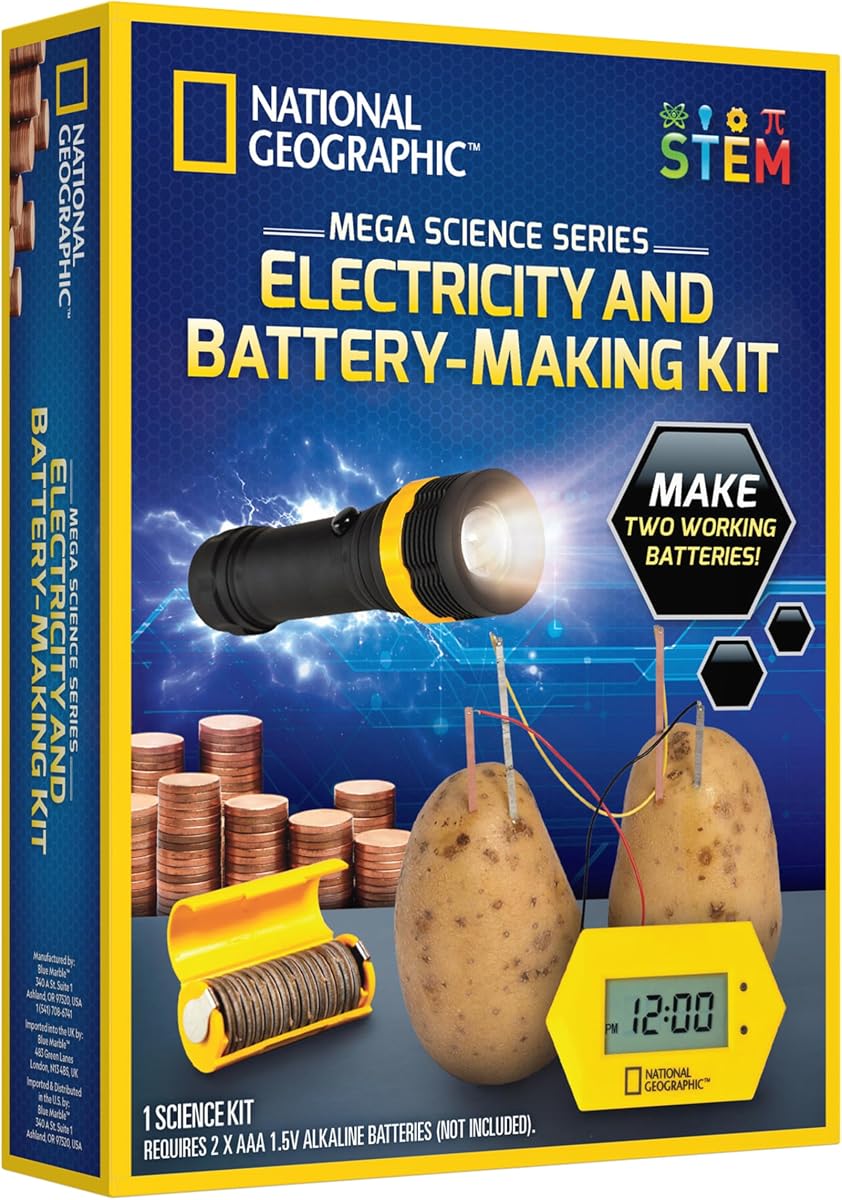
This kit shifts focus to energy generation rather than circuit building. It teaches kids how to make batteries from potatoes and coins. It holds a 4.5 rating for its unique educational angle.
We may earn a commission when you buy through this link, at no additional cost to you.
The detailed learning guide explains the science behind voltage and conductivity. Seeing a flashlight light up via homemade power is incredibly rewarding for children. It sparks interest in renewable energy concepts.
Since it only includes two main projects, it is best as a supplement. It does not offer the variety of a full circuit kit. However, the depth of the specific lessons is strong.
We suggest it for science fairs or chemistry interests. It complements electrical engineering kits well. For a low price, it provides memorable hands-on learning experiences.
Kids learn how chemical reactions can produce electricity through interactive and easy projects.
Building a battery from everyday items creates a lasting memory of scientific discovery.
We may earn a commission when you buy through this link, at no additional cost to you.
An upgrade version of the basic kit, this set adds features like a traffic light circuit. It targets teachers needing curriculum-aligned tools for grades 7-11. It maintains a 4.4 rating for its utility.
We may earn a commission when you buy through this link, at no additional cost to you.
The transparent storage box allows easy visual checks of components. Projects like the wind power car introduce alternative energy sources effectively. It bridges basic and intermediate concepts smoothly.
Like many others, batteries are not included in the box. This requires planning ahead for lessons. Despite this minor hurdle, it offers robust educational content for the price.
This is a solid choice for school classrooms. The variety of projects keeps students engaged throughout the term. We recommend it for educators looking for practical teaching aids.
Features like traffic lights and wind power cars make abstract ideas visually engaging for students.
Designed for grades 7-11, it fits well into standard science syllabi without needing extra tools.
We may earn a commission when you buy through this link, at no additional cost to you.
Selecting the right kit depends on the learner's age, experience level, and educational goals.
Ensure the kit matches the child's reading level and fine motor skills. Younger kids benefit from snap-together designs, while older students can handle soldering or complex wiring.
Always check the manufacturer's age recommendation to guarantee safety and engagement.
Look for kits that offer a wide range of experiments. A good kit should cover series and parallel circuits, electromagnetism, and energy sources to provide a holistic view.
Diverse projects keep students interested and allow them to apply concepts in different contexts.
Clear instructions are essential for successful learning. Video guides or detailed color manuals help students understand the 'why' behind experiments rather than just following steps.
Choose kits with comprehensive guides to minimize frustration and maximize educational value.
Durability matters for long-term use. High-quality wires, switches, and LEDs withstand repeated assembly and disassembly. Check reviews for signs of breakage or poor electrical connections.
Investing in robust components ensures the kit remains usable for years.
A sturdy storage case or box keeps parts organized and safe. Without proper storage, small components like batteries and bulbs are easily lost.
Prioritize kits that include organized containers to protect your investment.
Safety should never be compromised. Look for low-voltage systems, non-toxic materials, and protective enclosures for live parts.
Ensure the kit meets safety standards and includes warnings for adult supervision when necessary.
Decide whether you want a toy-like experience or a rigorous academic tool. Some kits focus on fun projects, while others align with high school physics standards.
Match the kit's focus to your specific learning objectives to get the most value.
Compare the cost against the number of included components and experiments. A higher upfront cost might be justified by better durability and more advanced features.
Consider the cost per project to determine the true long-term value of the kit.
Start by reading all instructions thoroughly before assembling any components. This helps you understand the basic rules of electricity and prevents damage to sensitive parts.
Always check battery polarity and ensure all connections are secure before turning on power. Loose wires can cause short circuits or overheating, which may damage the kit or harm users.
Store components in the provided case after use to prevent loss. Keep batteries separate when not in use to avoid leakage and corrosion on metal contacts.
These are educational tools designed to teach the principles of electricity and magnetism through hands-on experiments. They typically include wires, switches, bulbs, and magnets for building circuits.
Most kits use low-voltage batteries and safety-rated materials. However, adult supervision is always recommended, especially for younger children handling small parts or batteries.
Many modern kits are designed to be tool-free, using snap connectors or simple clips. Always check the product details to confirm if screwdrivers or pliers are required.
Yes, many kits align with science standards and provide excellent material for science fairs. They offer tangible results and demonstrations that are highly effective in classrooms.
There are options available for various ages. Basic kits work for children as young as eight, while advanced sets with complex electronics are better for teenagers and adults.
Most experiments are designed to be built and operated within 30 minutes to an hour. The number of projects included determines how many hours of engagement the kit provides.
We have reviewed ten top kits ranging from basic introductory sets to advanced physics labs. The National Geographic Circuit Kit stands out for its variety, while EUDAX offers depth for high schoolers.
When choosing, prioritize kits that match your student's current knowledge level and learning goals. Look for clear instructions and durable components to ensure a successful and enjoyable experience.
Remember to check current stock and prices before purchasing as these details can change rapidly. Investing in a quality kit now will provide hours of educational fun and discovery.