
Canon EF 50mm f/1.8 STM Lens
4.8Editor score
Affordable f/1.8 aperture
Silent STM motor
Compact lightweight design
This guide compares the best camera lenses for product photography to help you capture sharp, detailed images for your e-commerce and marketing needs.
Finding the right lens is crucial for product photography. You need sharp optics and reliable focus to showcase items clearly. A good lens ensures colors pop and textures stand out in every shot.
We evaluated ten top-rated lenses based on image quality, focal range, and ease of use. Our list includes options for mirrorless and DSLR cameras, covering various budgets and specific product needs.
Each pick highlights key strengths and ideal use cases for your studio or field work. Remember that prices and availability change frequently, so check current listings before making your final purchase decision.
4.8Editor score

4.8Editor score
4.7Editor score
Here is a side-by-side look at all ten lenses to help you compare their key features at a glance.


The Canon RF24-70mm F2.8 L IS USM Lens stands out as a top choice for product photography. Its high image quality and bright aperture ensure sharp results. The optical image stabilization helps reduce shake during handheld shots.
We may earn a commission when you buy through this link, at no additional cost to you.
With a zoom range covering wide to short telephoto, this lens adapts to various product sizes. The Nano USM provides smooth and quiet autofocus which is useful for video. The control ring allows quick setting changes without digging into menus.
While it is priced higher than others on this list, the versatility justifies the cost. You save money by not needing multiple lenses. The stabilization and autofocus performance make it reliable for professional studio and location work.
Photographers needing a single do-it-all lens should consider this option. It handles portraits landscapes and product shots equally well. The investment pays off through consistent high-quality images and workflow efficiency.
The 24-70mm range lets you frame tight details or full product shots without changing lenses.
Up to 5 stops of shake correction helps capture sharp images even in lower light conditions.
We may earn a commission when you buy through this link, at no additional cost to you.
The Canon EF 50mm f/1.8 STM Lens is an excellent budget-friendly choice. It delivers great image quality for its price. The f/1.8 aperture is perfect for creating background blur and working in dimmer lighting.
We may earn a commission when you buy through this link, at no additional cost to you.
Its stepping motor ensures near silent and continuous autofocus which is ideal for videos. The lens is very compact making it easy to carry around. On full frame cameras it acts as a standard 50mm focal length.
The fixed focal length means you must move physically to frame your shot. This can be a limitation if you cannot move freely around the product. However for most setups this encourages better composition skills.
Beginners or those on a tight budget will love this lens. It offers professional results without the high cost. The lightweight design reduces fatigue during long shooting sessions.
The wide f/1.8 aperture allows for shallow depth of field to isolate products from backgrounds.
Its small size makes it easy to pack and use with smaller DSLR camera bodies.
We may earn a commission when you buy through this link, at no additional cost to you.
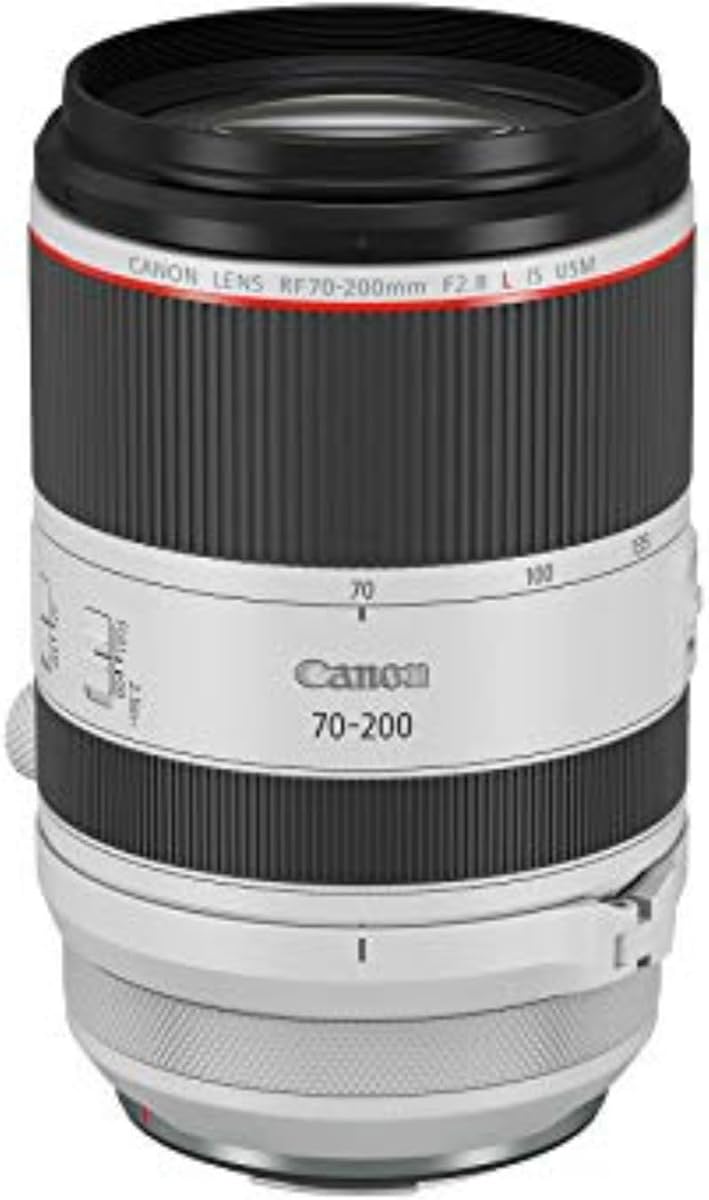
The Canon RF70-200mm F2.8 L IS USM Lens offers premium telephoto performance. Its high image quality and bright aperture make it suitable for detailed product shots. Optical image stabilization provides up to 5 stops of shake correction.
We may earn a commission when you buy through this link, at no additional cost to you.
This lens is compact and lightweight compared to many telephoto zooms. The dual Nano USM delivers high speed smooth and quiet autofocus. Minimum focusing distance is 2.3 feet which is decent for mid-range product photography.
The price is quite high and may not fit every budget. You need to be mindful of the minimum focusing distance for close up shots. However the image quality and stabilization performance are top notch.
For photographers needing reach for larger products or studio work this lens is ideal. The stabilization and bright aperture allow for crisp images even when shooting handheld. It is a serious tool for professionals.
The 70-200mm range compresses perspective which can be flattering for certain product styles.
Up to 5 stops of correction allows for sharper shots in less light without a tripod.
We may earn a commission when you buy through this link, at no additional cost to you.
This fully manual focus lens is unique for photographers who want total control. The 85mm focal length and f/1.8 aperture are ideal for portraits and isolated product shots. It offers precise focus control and creative freedom.
We may earn a commission when you buy through this link, at no additional cost to you.
The lens has no electronic contacts so you must use manual mode to avoid errors. The hybrid aspherical lens and ultra multi-coating reduce aberrations and glare. This ensures clear image quality and dreamy background blur effects.
Using this lens requires careful adjustment of shutter speed and aperture before shooting. This can slow down your workflow if you are used to autofocus. However it helps you learn photographic skills and explore artistic possibilities.
Artists looking to transcend conventions will appreciate this lens. It is compatible with many Canon DSLRs. The affordable price makes it accessible for those wanting to try manual focus photography.
Fully manual design allows for ultimate precision and creative control over focus points.
Hybrid aspherical lens and multi-coating technology reduce aberrations for clear images.
We may earn a commission when you buy through this link, at no additional cost to you.
The Canon RF50mm F1.8 STM Lens is a solid option for EOS R system users. It is compact and lightweight which reduces camera bulk. The large f/1.8 aperture helps with low-light photography and background blur.
We may earn a commission when you buy through this link, at no additional cost to you.
A stepping motor provides smooth and quiet continuous autofocus during video and photos. A control ring allows direct setting changes for quick adjustments. Optimized lens placement and coatings deliver outstanding color balance while minimizing ghosting.
As a fixed focal length lens you must move to frame your shot. This limits flexibility compared to zooms but improves composition skills. The lightweight design makes it perfect for street or light product photography.
Photographers with mirrorless Canon bodies should consider this lens. It offers excellent value and performance. The control ring and quiet AF make it a pleasure to use daily.
Specialized coatings minimize ghosting and flare for clearer images in various lighting.
Direct setting changes via the control ring speed up workflow during shoots.
We may earn a commission when you buy through this link, at no additional cost to you.
The Sigma 135mm F1.8 DG HSM ART lens is a state-of-the-art prime. Its large Hyper Sonic motor delivers ample torque for outstanding speed and stable performance. The large f/1.8 aperture allows for more creative control over imagery.
We may earn a commission when you buy through this link, at no additional cost to you.
This lens offers a stunning compression effect making it ideal for portrait work. Dust and splash proof mount ensures performance in any condition. Each lens is handcrafted and undergoes individual evaluation before leaving the factory.
The price is significant and the lens is quite large and heavy. You may need a sturdy tripod for handheld work due to weight. However the optical quality and autofocus performance justify the premium investment.
Serious photographers seeking top-tier quality will appreciate this lens. The compression effect and wide aperture create unique artistic shots. It is built to withstand challenging environments and daily professional use.
The large Hyper Sonic motor ensures fast and stable autofocus even at lower speeds.
Dust and splash proof mount provides reliability for shooting in various conditions.
We may earn a commission when you buy through this link, at no additional cost to you.
This Canon EF 75-300mm lens offers a long telephoto range for a low price. The DC autofocus motor is efficient for this class. The zoom mechanism is improved making zooming smoother than previous models.
We may earn a commission when you buy through this link, at no additional cost to you.
With a maximum magnification that allows close focusing at 4.9 feet you can capture larger products from a distance. The lens measures 2.8 inches in diameter and weighs 16.8 ounces which is quite light. It includes a silver ring on the zoom for style.
The variable aperture means less light at longer focal lengths. This may require higher ISO or tripod use indoors. Renewed products carry some risk so check warranty terms before buying.
Budget-conscious photographers needing reach will find this lens useful. The smooth zoom and light weight make it easy to handle. Just be aware of the aperture limitations in dim environments.
Improved mechanism ensures smoother zooming for easier composition adjustments.
Weighing only 16.8 ounces reduces fatigue during long shooting sessions.
We may earn a commission when you buy through this link, at no additional cost to you.
This lens kit allows smartphone users to take macro and wide angle photos. It includes a 15x macro lens and a 0.45x wide angle lens. The GlowClip LED light helps illuminate subjects in dark settings.
We may earn a commission when you buy through this link, at no additional cost to you.
Crafted from aircraft-grade aluminum and premium optical glass the lenses are durable. The TruGrip lens clip offers superior gripping power. Quick-release lanyard and travel case make transport and protection easy.
Smartphone photography has limits compared to DSLRs but this kit helps overcome some. The LED light reduces harsh shadows. The macro lens lets you capture intricate details on small items.
Hobbyists or those needing quick product shots can use this. It is very affordable and portable. For professional e-commerce results dedicated cameras are better but this is a great start.
Rechargeable LED light provides continuous illumination for better lighting in dim spaces.
The clip design works with most smartphone models for broad compatibility.
We may earn a commission when you buy through this link, at no additional cost to you.
This bundle provides a DSLR camera with two versatile zoom lenses. The 24.1 Megapixel CMOS sensor captures high detail. Improved Dual Pixel CMOS AF helps with focus accuracy. Built-in Wi-Fi and NFC allow easy image sharing.
We may earn a commission when you buy through this link, at no additional cost to you.
The 18-55mm lens handles standard shots while the 75-300mm offers telephoto reach. This combination covers many product photography needs without extra gear. Video capture resolution is FHD 1080p for content creation.
For beginners this is a solid start. The included lenses reduce initial costs. However advanced autofocus and low light performance may be limited compared to higher models.
New photographers wanting to learn can use this kit. It offers enough quality for learning and small business needs. The included lenses make it ready to use out of the box.
Improved Dual Pixel CMOS AF provides smooth and accurate focus for stills and video.
Built-in Wi-Fi and NFC make transferring images to smartphones simple and fast.
We may earn a commission when you buy through this link, at no additional cost to you.
This Canon EF 200mm f/2.8L II USM lens offers excellent sharpness and speed. It has a fixed focal length and maximum aperture of f/2.8. The lens construction includes 9 elements in 7 groups for quality.
We may earn a commission when you buy through this link, at no additional cost to you.
Closest focusing distance is 1.5m or 4.9 ft which allows moderate close-ups. The USM motor provides fast autofocus. Weight is 1.7 lbs which is reasonable for a fixed lens at this focal length.
The lack of zoom means you must move to frame shots. This limits flexibility but ensures high optical quality. It is more expensive than zoom options but delivers professional results.
Photographers who need a specific focal length will appreciate this lens. The bright aperture helps with isolation and low light. It is a reliable tool for professional product and portrait work.
9 elements in 7 groups ensure superior sharpness and color accuracy.
Ultrasonic Motor delivers fast and quiet autofocus for efficient shooting.
We may earn a commission when you buy through this link, at no additional cost to you.
Choosing the right lens depends on your camera system budget and specific product needs. Understanding key factors helps you make an informed decision.
Focal length determines how wide or zoomed in your shot will be. Wide angles like 24mm capture more of the scene while longer focal lengths like 200mm isolate details. For product photography prime lenses around 50mm or zooms like 24-70mm are common.
Pick a focal length that matches how close you can get to your product and how much background you want included.
A wider aperture like f/1.8 or f/2.8 lets in more light and creates background blur. This helps your product stand out. However smaller apertures like f/8 provide more depth of field for full product sharpness.
Consider if you want blurred backgrounds or total sharpness and choose an aperture range that supports your style.
Ensure the lens fits your camera mount such as Canon RF EF or Sigma. Mismatched mounts require adapters which may reduce performance. Check your camera model list before buying.
Always verify the lens matches your camera system to avoid extra costs and compatibility issues.
Fast and quiet autofocus helps capture sharp images quickly. Look for motors like USM or STM that are smooth. Manual focus lenses give more control but slow down workflow.
Prioritize lenses with reliable autofocus if you shoot moving products or need speed.
Stabilization reduces shake especially in lower light or with slower shutter speeds. This leads to sharper results without a tripod. Some lenses offer up to 5 stops of correction.
Choose a lens with stabilization if you often shoot handheld or in varied lighting conditions.
Durable build ensures longevity and protection against dust. Professional lenses often feature weather sealing and metal parts. Consumer lenses may use more plastic but can still be reliable.
Invest in build quality if you plan to use the lens frequently or in tough environments.
Lenses range from affordable to premium. Set a realistic budget and look for features that match your needs. Sometimes slightly used or renewed options offer good value.
Balance cost with required features to ensure you get the best value for your money.
Different lenses suit different purposes. Telephoto lenses isolate products while wide lenses show context. Macro lenses focus on details. Decide what kind of product shots you prioritize.
Align your choice with your primary shooting scenarios for optimal results.
Always attach the lens carefully aligning the markers on lens and camera body. Keep the mount cover on when not in use to prevent dust entry.
Clean the glass with a soft brush and microfiber cloth. Avoid touching the glass with fingers to prevent smudges that affect image quality.
Store lenses in a dry place away from direct sunlight. Use a lens cap on both ends when carrying to protect the glass and mount.
A 50mm or 24-70mm lens is often ideal for product photography. These offer sharp optics and versatility. Prime lenses like 50mm f/1.8 are great for details while zooms provide flexibility.
Not necessarily but telephoto lenses can isolate products and reduce distortion. Use them if you shoot from a distance or need background compression. Otherwise a standard prime or zoom works well.
For most product shots f/5.6 to f/8 provides good depth of field. Use wider apertures like f/1.8 for artistic blurred backgrounds. Adjust based on how much detail you need in focus.
Prime lenses often have sharper optics and wider apertures but zooms offer flexibility. Choose primes for studio work where lighting is controlled. Zooms help when positions change frequently.
Use lenses designed to minimize distortion like those with aspherical elements. Shoot straight on without tilting the lens. Post-processing can also correct minor distortion issues effectively.
Yes but results are limited compared to DSLR lenses. Smartphone kits like Xenvo can help with close-ups and wide shots. For professional results dedicated cameras with proper lenses are recommended.
Stabilization reduces camera shake for sharper images especially in low light. It helps capture fine details without blur. This is crucial when shooting handheld or with slower shutter speeds.
We reviewed ten options ranging from premium zooms to budget primes. The Canon RF24-70mm offers great versatility while the 50mm f/1.8 is perfect for tight budgets.
Prioritize what matters most to your workflow such as stabilization focal length or autofocus speed. Matching these needs with your camera system ensures smooth operation.
Prices change regularly so check current listings before buying. Investing in the right lens will improve your product photos and overall photography experience.