
HP 17 Inch FHD Laptop Computer for Business & Students 16GB RAM 1TB SSD
4.6Editor score
AMD Ryzen 5 Processor
17.3 Inch IPS Display
1TB SSD Storage
Engineering students need reliable laptops capable of handling complex software, simulations, and multitasking. A good device balances powerful processing with portability for campus life.
We compared ten models based on processor speed, memory capacity, storage options, and build quality. Each entry reflects real-world needs for coursework and projects.
Every pick shows key specs and ideal use cases. Prices change frequently, so check current listings before purchasing to ensure you get the best value available today.
4.6Editor score

4.6Editor score

4.5Editor score
As an Amazon Associate we earn from qualifying purchases.
This table provides a side-by-side overview of all ten selected laptops. Use it to quickly compare specs like processors, memory, and storage to find your match.




This Lenovo laptop stands out as a powerhouse for engineering coursework. It features a 13th Gen Intel Core i7 processor with ten cores and sixteen threads, ensuring smooth execution of complex tasks like CAD modeling or data analysis. With a solid 4.6 rating, it is trusted by users who need reliable performance.
We may earn a commission when you buy through this link, at no additional cost to you.
The 24GB of dual-channel DDR4 RAM allows you to run multiple applications simultaneously without slowdowns. Whether you are coding in Python, running virtual machines, or having video calls, the memory keeps everything fluid. The 1TB NVMe SSD provides ample space for software installations and project files while delivering instant boot times.
A trade-off to consider is the price, which is higher than entry-level models. However, the performance longevity justifies the investment for students needing a laptop that lasts through years of demanding studies. The MIL-STD-810H certification ensures it can handle the rigors of campus life.
It is ideal for students in mechanical, electrical, or computer engineering who need serious compute power. If your coursework involves heavy simulations or compiling large codebases, this device delivers the speed and stability you require to excel without interruptions.
The 10-core processor excels at rendering and running engineering software that demands high computational resources.
With 24GB RAM, you can switch between browsers, IDEs, and design tools effortlessly without lag.
We may earn a commission when you buy through this link, at no additional cost to you.
This HP 17-inch laptop offers a spacious workspace ideal for detailed engineering drawings. It is powered by an AMD Ryzen 5 processor with six cores and twelve threads, delivering reliable speed for productivity tasks. Its 4.6 rating reflects strong user satisfaction with its display and performance capabilities.
We may earn a commission when you buy through this link, at no additional cost to you.
The 17.3-inch Full HD IPS screen provides wide viewing angles and vibrant colors, making it excellent for reviewing schematics or watching lectures. Combined with 16GB of RAM and a 1TB SSD, you have the storage and speed needed for large datasets and multiple applications running at once.
While the larger screen is beneficial, it does add weight and bulk compared to smaller laptops. This might be a consideration if you carry it daily across campus. However, for students who prioritize screen real estate, the trade-off is worth the improved viewing experience and productivity.
Choose this model if you value display size and Windows 11 Pro features for security. It suits students who work on detailed visual projects or need a near-desktop experience in a portable form factor without sacrificing performance.
The 17.3-inch IPS panel offers room to spread out windows for coding or design work comfortably.
Business-grade security features protect your sensitive project files and data on campus networks.
We may earn a commission when you buy through this link, at no additional cost to you.
This budget-friendly laptop offers solid entry-level specs for students who need a reliable machine without high costs. It features an Intel Core i3 processor paired with 12GB of RAM, ensuring smooth handling of basic engineering coursework like coding or document editing. A 4.5 rating confirms its reliability for daily use.
We may earn a commission when you buy through this link, at no additional cost to you.
The 15.6-inch Full HD display provides clear visuals for lectures and spreadsheets. Connectivity is excellent with WiFi 6 and multiple USB ports for external drives or monitors. It also includes a backlit keyboard, which is helpful for late-night study sessions in dim environments.
Users should note that the i3 processor is not designed for heavy 3D rendering or complex simulations. For students whose curriculum focuses on software or data analysis, this is a viable choice. However, those needing high-performance computing might need to access university labs instead.
It is perfect for students on a strict budget or those who primarily use cloud-based engineering tools. If your needs are moderate, this laptop delivers essential features like portability and screen quality at a competitive price point.
The 12GB RAM ensures you can switch between apps without the system slowing down unexpectedly.
Weighing just 3.6 pounds, it fits easily into a backpack for daily commutes to class.
We may earn a commission when you buy through this link, at no additional cost to you.
This HP laptop is designed for efficiency and productivity, featuring an Intel N150 processor that offers speeds up to 3.6GHz. It includes a one-year subscription to Microsoft 365 and Copilot AI tools to assist with writing and research. The 4.4 rating highlights its value for students and business users.
We may earn a commission when you buy through this link, at no additional cost to you.
With 8GB of RAM and an 11-hour battery life, this device is well-suited for attending lectures and working on documents throughout the day. Its compact 14-inch design makes it easy to carry. The WiFi 6 connectivity ensures you stay connected in crowded dorms or libraries.
However, the 128GB storage is quite limited for modern software needs, and Windows 11 S Mode can restrict certain app installations. You may need to rely on cloud storage or external drives. This trade-off is acceptable if you prioritize portability and battery life over local storage.
It is best for students who rely mostly on web-based tools or cloud apps. If you need a lightweight machine for note-taking and online classes, this model provides the necessary features without overwhelming you with bulk or cost.
Copilot AI helps summarize notes and draft emails, saving time on administrative tasks.
The 11-hour battery ensures you can go through a full day of classes without carrying a charger.
We may earn a commission when you buy through this link, at no additional cost to you.
This HP Stream model stands out for its memory and storage offerings. It features 16GB of RAM and a unique storage solution combining 64GB eMMC with a 1TB docking station. The Intel Celeron N4120 ensures basic responsiveness for web browsing and light productivity tasks. Its 4.2 rating reflects mixed reviews on performance versus value.
We may earn a commission when you buy through this link, at no additional cost to you.
The 16GB RAM helps handle multiple browser tabs and document editing smoothly. The large storage allows you to keep files locally rather than relying solely on cloud drives. It includes Microsoft 365 for a year, adding to its value for students needing productivity software.
The trade-off is the processor speed and screen resolution. For heavy engineering software, it may feel sluggish, and the HD display is less sharp than FHD panels. This is acceptable for students who prioritize storage and memory on a tight budget.
It is a solid choice for students who need a laptop for writing reports, managing data, or attending lectures. If you use remote desktop solutions for heavy tasks, this device can handle the management and communication aspects effectively.
The 16GB memory lets you run multiple applications without freezing or slowing down.
The included docking station offers 1TB of storage for archives and project files.
We may earn a commission when you buy through this link, at no additional cost to you.
This essential laptop focuses on modern connectivity and battery efficiency. It features the latest LPDDR5 memory and an Intel N150 processor designed for quick responsiveness on basic tasks. Users appreciate its lightweight design and long battery life, giving it a 4.4 rating for reliability in daily routines.
We may earn a commission when you buy through this link, at no additional cost to you.
The 4.5 LPDDR5 memory offers faster data access than older standards, helping the system feel snappy. With up to 11 hours of video playback, it is ideal for students traveling long distances. The HD display with anti-glare coating reduces eye strain during extended study sessions.
However, the 4GB RAM is a constraint for modern applications, and the 128GB storage fills up quickly. This laptop works best when paired with cloud services. It is not suited for offline-heavy workloads or engineering software that requires high memory.
Choose this if you need a highly portable machine for web-based learning and communication. Its modern connectivity ensures you stay online efficiently while keeping the physical footprint light for easy transport around campus.
LPDDR5 memory improves system responsiveness even with a lower RAM count.
Weighing just 3.24 pounds, it slips easily into any backpack without adding bulk.
We may earn a commission when you buy through this link, at no additional cost to you.
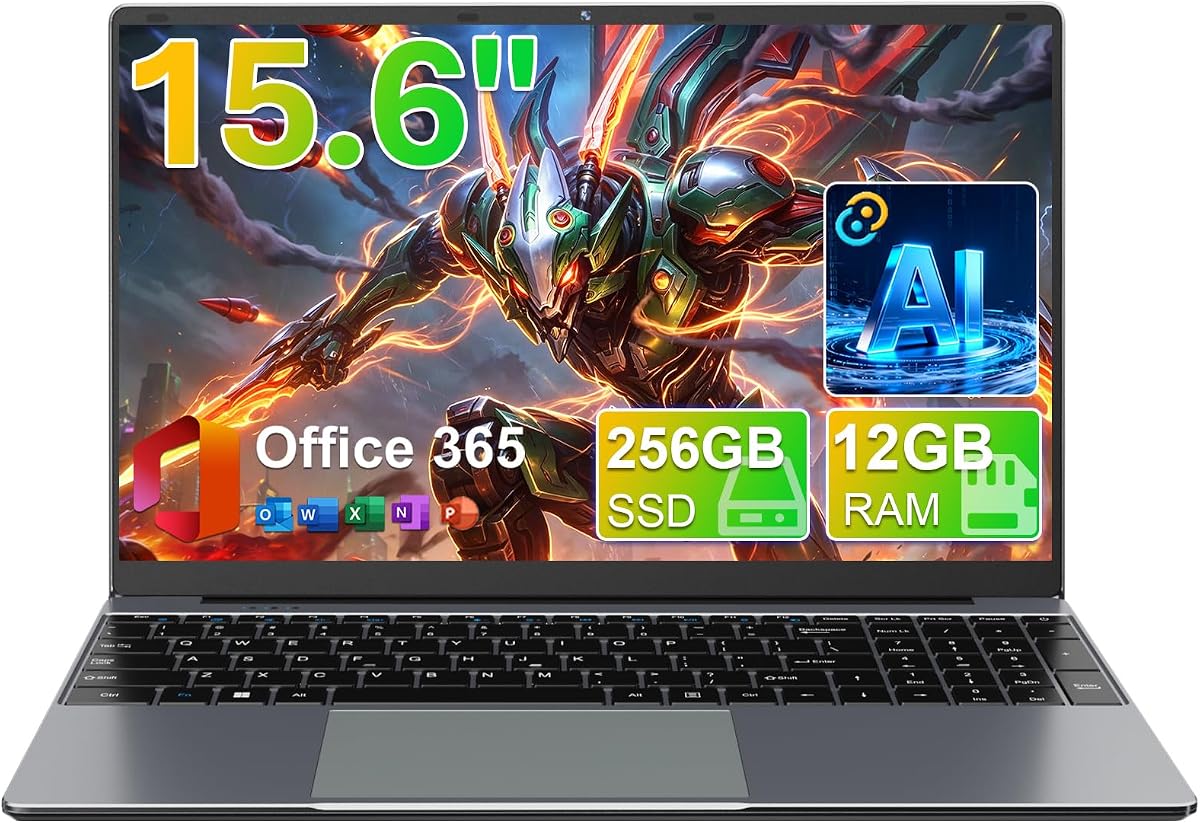
This student laptop stands out for its display and memory configuration. It offers a Full HD IPS panel for vibrant colors and a 12GB RAM to handle multiple windows. The built-in AI assistant helps with writing and meetings. It has a strong 4.6 rating for its practical feature set.
We may earn a commission when you buy through this link, at no additional cost to you.
The 15.6-inch screen is excellent for viewing diagrams or reading documents. The 180-degree hinge allows for flexible positioning during presentations. With a 256GB SSD, you have quick access to files. The 7000mAh battery ensures you can work through a day without constantly searching for outlets.
The trade-off is the older Celeron processor, which may struggle with complex tasks. It is better suited for general use rather than heavy engineering software. For students who need a reliable display and memory, this remains a compelling option.
It is ideal for students who prioritize screen quality and battery life. If your workflow involves a lot of reading, writing, and web-based tools, this laptop provides a comfortable environment at a competitive price.
The hinge allows the screen to lay flat, making it easy to share content with peers.
The 7000mAh battery supports extended sessions of studying or streaming without interruption.
We may earn a commission when you buy through this link, at no additional cost to you.
This HP laptop is designed for student productivity with modern AI features. It includes Copilot and a 365 subscription to help with writing and scheduling. The N150 processor and 4GB RAM handle basic tasks. A 4.3 rating reflects its focus on efficiency over raw power.
We may earn a commission when you buy through this link, at no additional cost to you.
The 14-inch design is easy to carry, and the keyboard offers comfort for long typing sessions. The WiFi 6 connectivity is essential for stable internet in crowded places. With 11 hours of video playback, it supports long commutes or study sessions.
The limited RAM and storage mean you should rely on cloud services for large files. It is not ideal for installing heavy engineering suites. However, for students who use web apps, this laptop provides all the tools needed for daily tasks.
It is best for students needing a lightweight, AI-enhanced device for coursework management. If you are looking for a reliable machine for documents and research, this model offers solid value and convenience.
Copilot helps draft emails and summarize notes, streamlining your administrative tasks.
WiFi 6 ensures you stay connected at high speeds in busy campus networks.
We may earn a commission when you buy through this link, at no additional cost to you.
This Dell laptop offers a balance of performance and comfort for engineering tasks. It features an Intel Core i5 processor that handles general software well. The Full HD display includes ComfortView to reduce blue light during long study sessions. It holds a 4.3 rating for build quality.
We may earn a commission when you buy through this link, at no additional cost to you.
The ergonomic design with lifted hinges supports comfortable typing over time. A numeric keypad is useful for data entry in Excel. Dell provides one year of onsite service, ensuring peace of mind if technical issues arise. The efficient battery helps maintain productivity on the go.
The trade-off is a higher weight compared to 14-inch models. This might be a factor if you carry it daily. However, for users prioritizing keyboard comfort and reliable support, the added bulk is often acceptable for the usability gains.
It is suitable for students who need a dependable workhorse for mixed coursework. If you value a comfortable typing experience and reliable support, this Dell model provides a solid foundation for your studies.
Blue light reduction keeps your eyes comfortable during long periods of screen time.
If hardware fails, Dell can send a technician to your home or campus location to fix it.
We may earn a commission when you buy through this link, at no additional cost to you.
This HP model is designed for versatility across home and student use. It features the Intel N150 processor and modern LPDDR5 memory for responsive performance on basic tasks. With Copilot AI and a 11-hour battery, it supports a full day of work. A 4.4 rating confirms its user-friendly nature.
We may earn a commission when you buy through this link, at no additional cost to you.
The full-size keyboard is great for long typing sessions. WiFi 6 ensures stable internet access in various locations. The lightweight design makes it easy to carry. It includes a 365 subscription to help with coursework documentation and communication needs.
The limited storage and RAM mean you should keep files in the cloud. This might be a hurdle for offline heavy users. However, if your workflow is cloud-centric, these constraints are manageable. It offers a clean and efficient experience for most students.
It is best for students needing a reliable machine for writing and data. If you prioritize ease of use and modern AI tools, this laptop provides a balanced solution for academic work.
Copilot features help draft and organize content quickly.
With 11 hours of video playback, it supports long study days.
We may earn a commission when you buy through this link, at no additional cost to you.
Choosing a laptop for engineering requires balancing power with portability. This guide outlines the essential factors to consider for your specific needs.
Engineering software often relies on single-core and multi-core performance. Look for processors with at least 4 cores for smooth multitasking. Intel Core i5 or i7 and AMD Ryzen 5 or 7 series are recommended.
Prioritize a CPU that can handle your specific coursework software efficiently.
RAM is critical for running simulations and development environments. 8GB is the minimum, but 16GB ensures smoother performance. Higher RAM helps when keeping many applications open.
Aim for at least 16GB if your coursework is intensive.
Solid State Drives (SSD) provide fast boot times and file access. Aim for at least 256GB of storage for software installation. Larger capacities prevent the need for external drives.
Choose an SSD over traditional hard drives for speed.
A sharp display reduces eye strain during long study sessions. Full HD resolution is standard. IPS panels offer better viewing angles and color accuracy for design work.
Look for anti-glare coatings to protect your eyes.
You need a laptop that lasts through your day. Aim for 8 to 11 hours of battery life. This ensures you can work anywhere without hunting for outlets.
Long battery life is essential for campus mobility.
Laptops should be easy to carry in a backpack. Weighing under 4 pounds is ideal. Thin profiles fit better into tight spaces like lecture halls.
Balance weight and screen size based on your needs.
Ports like USB-C and HDMI are vital for connecting to monitors or peripherals. Wi-Fi 6 ensures stable internet in crowded dorms. Bluetooth supports wireless mice or keyboards.
Verify the port selection matches your peripherals.
Engineering students often move equipment frequently. Look for MIL-STD-810H certification for reliability. A sturdy chassis ensures longevity against accidental drops.
Durability features protect your investment over time.
Keep your system updated to ensure security and compatibility with engineering software. Use cloud storage for backups to prevent data loss during crashes.
Use a cooling pad when running intensive tasks to maintain performance. Avoid placing the laptop on soft surfaces like beds where airflow is restricted.
Carry your laptop in a padded case to prevent physical damage. Regularly clean the keyboard with a soft brush to remove dust and debris.
Mechanical engineering students need strong processors and plenty of RAM. Look for Intel Core i7 or AMD Ryzen 7 options with at least 16GB of RAM. The Lenovo i7 model in this guide is a top choice.
Not necessarily. While gaming laptops offer high performance, they are often heavy and expensive. A business or workstation laptop with similar specs is often better for students due to portability.
Most students benefit from at least 16GB of RAM. This allows for smooth multitasking when running virtual machines or CAD software alongside browsers and editors.
It depends on your needs. 17-inch screens offer more workspace for diagrams but are heavier. 15-inch screens provide a balance between visibility and portability for daily carrying.
Windows is generally preferred because many engineering tools run natively on it. Macs work well for general tasks but may require virtualization for specific software.
A battery that lasts 8 to 10 hours is ideal. This ensures you can attend multiple classes without needing to find a power outlet for charging.
If you need high-performance simulations, invest in a mid-to-high-range device. For basic coding or web-based tasks, a budget laptop is sufficient.
Look for USB-C and HDMI ports to connect to external monitors. USB 3.0 ports are useful for high-speed data transfer with external drives.
The Lenovo i7 and HP 17 models stand out for performance and display quality. Budget options like the Windows 11 i3 laptop offer great value for lighter workloads.
Prioritize RAM and storage capacity based on your specific engineering discipline. Portability and battery life remain critical for daily campus use.
Always verify current prices and promotions before purchasing. This ensures you get the best value for your investment in a reliable device.