
M-AUDIO Keystation 88 MK3
4.5Editor score
Semi weighted keys
Plug and play USB
Includes studio software
This guide compares the top 88 key weighted MIDI controllers for producers and pianists featuring keybed types software bundles and DAW integration in October
Finding the right 88 key weighted MIDI controller is essential for musicians seeking a piano-like feel in their studio setup. These devices offer full-sized keys that mimic acoustic instruments, allowing for expressive playing and dynamic control over virtual instruments.
We evaluated ten leading models based on key action quality, connectivity options, software inclusion, and overall build durability. Our analysis focuses on how each controller performs in real-world production scenarios across various digital audio workstations and performance settings.
Each pick highlights specific strengths such as hammer action fidelity, pad responsiveness, and integration capabilities. Please note that availability and pricing may fluctuate over time so verify current details before making your final purchasing decision.
4.5Editor score

4.6Editor score

4.3Editor score
The following table provides a side-by-side overview of key specifications and features for each model to help you quickly identify the best fit for your workflow and budget.



The Novation Launchkey 88 stands out as a top choice for producers who need deep integration with their digital audio workstation. Rated highly by users it offers a premium semi weighted keybed that feels responsive during both soft and forceful playing.
We may earn a commission when you buy through this link, at no additional cost to you.
Its standout feature is the seamless DAW integration which provides immediate access to transport controls and mixing parameters without manual mapping. The powerful arpeggiator and creative scale modes unlock new melodic possibilities allowing you to generate complex patterns with minimal effort.
While the keys are semi weighted rather than fully graded hammer action they still provide a satisfying resistance for studio work. The only trade off is that some pianists might prefer a heavier touch but this is acceptable given the controller's focus on production workflows.
This controller is ideal for electronic producers and composers who prioritize workflow efficiency and creative tools. If you need a reliable interface that connects deeply with your software environment this model delivers excellent performance and value.
The deep DAW integration allows you to control volume faders and track selection directly from the keyboard reducing mouse dependency.
Built in scale and chord modes enable quick experimentation with harmonies helping you overcome writer's block during sessions.
We may earn a commission when you buy through this link, at no additional cost to you.
The M-AUDIO Keystation 88 MK3 is a practical choice for beginners or those on a tight budget who still want a full 88 key range. It offers a velocity sensitive semi weighted keybed that allows for dynamic expression without breaking the bank.
We may earn a commission when you buy through this link, at no additional cost to you.
Immediate creativity is a core selling point with effortless plug and play USB connectivity that requires no drivers or power supply. The included software suite like MPC Beats and Ableton Live Lite provides everything needed to start producing music right out of the box.
While it lacks advanced features like aftertouch or assignable faders its simplicity makes it reliable for basic recording tasks. The slimline design fits easily on any desk making it suitable for home studios where space is limited.
This controller is best for hobbyists or students learning music production basics. If you need a straightforward interface to trigger virtual instruments and control playback this model offers the essentials without unnecessary complexity.
Connectivity is handled via standard USB allowing you to start using the controller with your computer immediately.
Included tools cover production editing and sampling so you can build complete tracks without additional purchases.
We may earn a commission when you buy through this link, at no additional cost to you.
The Arturia KeyLab 88 mk3 offers a fully weighted hammer action keybed that closely replicates the feel of an acoustic piano. This makes it a strong choice for pianists transitioning to digital environments who require authentic touch sensitivity.
We may earn a commission when you buy through this link, at no additional cost to you.
Its 12 pressure sensitive performance pads add versatility for triggering samples and controlling clips during live performances. The inclusion of a sheet music stand and USB-C power enhances convenience making it a self contained solution for practice and production.
Although it is priced higher than entry level options the build quality and key feel justify the investment for serious musicians. Some users might find the control layout basic compared to other premium models but the focus remains on key performance.
This model is ideal for classical pianists and producers who prioritize keybed feel above all else. If you need a controller that supports expressive playing and offers reliable durability this is a top tier option.
The weighted hammer action keys mimic acoustic resistance allowing for nuanced dynamics and technique expression.
A dedicated sheet music stand ensures you can follow scores comfortably without needing external hardware.
We may earn a commission when you buy through this link, at no additional cost to you.
The M-AUDIO Hammer 88 Pro is designed with Native Instruments users in mind offering full NKS integration for seamless preset browsing. It features graded hammer action keys that provide a realistic piano experience along with extensive control surface options.
We may earn a commission when you buy through this link, at no additional cost to you.
With 16 RGB backlit drum pads and 9 assignable faders this controller offers tactile control for beat production and mixing. The included software package covers major needs including MPC Beats and Ableton Live Lite ensuring you can produce immediately.
While feature rich some users have noted potential quality inconsistencies or weight that makes it less portable. However the depth of controls and integration make it a strong contender for those committed to the Native Instruments ecosystem.
This model is best for producers who need extensive fader control and use Native Instruments presets. If you want a dedicated interface for mixing and beat making with high quality keys this delivers significant functionality.
NKS support allows direct preset access and parameter mapping which streamlines workflow for Korg users.
Nine faders provide dedicated volume control for multiple tracks without needing to mouse around the DAW.
We may earn a commission when you buy through this link, at no additional cost to you.
The YAMAHA P71 delivers an authentic acoustic piano feel with touch sensitive keys that respond dynamically to your playing force. It is an excellent choice for pianists who prioritize sound quality and touch over complex editing features.
We may earn a commission when you buy through this link, at no additional cost to you.
Its 10 unique voices include rich resonant piano sounds with deep bass and full dynamic range. The dual mode allows you to blend voices such as piano and strings creating inspiring layered textures for performance.
While it lacks advanced MIDI editing or extensive assignable controls its streamlined functionality keeps you focused on music. The included sustain pedal and power supply make it ready to use out of the box with minimal setup.
This controller is best for classical pianists and beginners who want a simple reliable instrument for practice and recording. If your main goal is realistic piano feel and sound quality this model is highly recommended.
The weighted action replicates the resistance and feel of an acoustic grand piano for natural technique.
Dual mode lets you combine instruments for a richer sound that enhances performance without external gear.
We may earn a commission when you buy through this link, at no additional cost to you.
The Arturia KeyLab Essential mk3 combines a hybrid synth piano feel with modern features like scale modes and chord modes for intuitive composition. It includes the full Analog Lab Pro package giving access to thousands of versatile presets.
We may earn a commission when you buy through this link, at no additional cost to you.
Its 2.5 inch LCD provides real-time feedback for parameter adjustments and the RGB backlit pads are velocity and pressure sensitive for expressive control. Custom DAW integration ensures deep control over major workstations like Ableton and Logic.
While the waterfall keybed might feel different from standard hammers it offers a unique blend of piano and synth playability. The only trade-off is fewer physical knobs compared to premium models but the screen compensates for visibility.
This controller is ideal for producers seeking a balance between synth flexibility and piano keys. If you want a modern interface with extensive software support and responsive controls this is a strong choice.
Scale and chord modes make songwriting easier by triggering harmonious notes and chords automatically.
Included Analog Lab Pro offers diverse sounds from vintage to modern ensuring versatility across genres.
We may earn a commission when you buy through this link, at no additional cost to you.
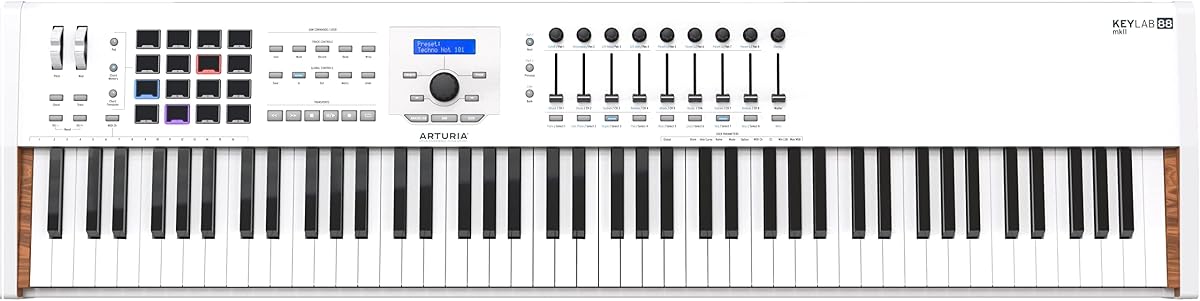
The Arturia KeyLab 88 MkII features a high quality Fatar TP keybed with aftertouch and velocity sensitivity for expressive playing. Its control bank includes 9 faders and 9 rotary knobs providing extensive tactile control for mixing and automation.
We may earn a commission when you buy through this link, at no additional cost to you.
With 16 RGB backlit performance pads and inclusion of Analog Lab V software this controller offers a complete production package. The hammer action keys deliver a solid piano feel that suits both melodic playing and rhythmic triggers.
While it is a heavy unit with limited portability its robust build and control surface make it excellent for studio use. The absence of a stand in the box is a minor inconvenience but does not affect core functionality.
This model is best for producers who need a comprehensive control surface alongside quality keys. If you require faders and knobs for complex mixing tasks this model delivers professional grade features.
Nine faders allow dedicated volume control for tracks and busses enhancing workflow in large sessions.
Aftertouch and hammer action allow for dynamic modulation and nuanced phrasing during performance.
We may earn a commission when you buy through this link, at no additional cost to you.
The Studiologic SL88 MK2 is known for its compact design and weighted keys that provide a solid feel for studio use. It includes an onboard display screen that allows for quick access to settings without needing external software.
We may earn a commission when you buy through this link, at no additional cost to you.
Its compatibility with Numa player and integration of 7 encoders offer flexible control for various synthesizers and instruments. The build quality is robust ensuring reliable performance over years of use in demanding environments.
While it lacks dedicated pads for drum triggering the focus remains on keybed quality and essential controls. The menu navigation via display can take time to learn but offers deep customization for specific workflows.
This controller is ideal for players who prioritize portability and key feel without sacrificing essential controls. If you need a reliable interface for live performance or studio work this model is highly capable.
The onboard display shows settings and parameters clearly reducing guesswork during parameter changes.
Multiple input options ensure compatibility with different setups including keyboards and modular systems.
We may earn a commission when you buy through this link, at no additional cost to you.
The Arturia KeyLab 88 mk3 in White offers a sleek aesthetic that complements modern studio setups without sacrificing performance. It features fully weighted hammer action keys for an authentic piano touch alongside pressure sensitive performance pads.
We may earn a commission when you buy through this link, at no additional cost to you.
The included sheet music stand and USB-C power ensure convenience during long sessions. Its build quality remains consistent with the black version ensuring reliability and durability for daily use.
While the white finish may show fingerprints or dust more than darker options it remains a popular choice for visual appeal. The control layout is standard for this model offering essential features without excessive complexity.
This model is best for users who value design and key feel equally. If you want a reliable controller that looks elegant in your space this is a strong option.
The white finish provides a clean modern look that stands out in studio photography and setups.
All core features are present ensuring performance matches standard models without visual compromise.
We may earn a commission when you buy through this link, at no additional cost to you.
The Roland A-88MKII features the PHA-4 keyboard technology for unmatched playability and premium materials like wood for durability. It is built to last and includes three customizable zones and an onboard arpeggiator for creative workflows.
We may earn a commission when you buy through this link, at no additional cost to you.
Its thin design with shallow depth fits into modern studio environments effectively. The control application allows for deep customization and instant recall ensuring your settings are always available when needed.
While the price is high and some features rely on app settings the build quality justifies the cost for professionals. The readiness for MIDI 2.0 ensures future compatibility with emerging standards.
This model is best for professionals who demand the highest quality build and keyboard technology. If you want a controller that will serve you reliably for years this is a top premium option.
MIDI 2.0 readiness ensures compatibility with next generation devices and standards for longevity.
The control application provides deep settings customization for tailored performance environments.
We may earn a commission when you buy through this link, at no additional cost to you.
Choosing the right controller requires understanding keybed types software needs and connectivity options.
Semi weighted keys offer a balance between resistance and ease of playing ideal for synth work. Fully weighted hammer action keys mimic acoustic pianos and are best for classical piano dynamics.
Select based on your primary playing style and whether you prioritize expressive piano dynamics or synth agility.
Velocity sensitive keys respond to how hard you press allowing for dynamic volume changes. Ensure the controller captures soft and hard touches accurately for realistic performances.
This feature is essential for expressive control and should be a standard requirement for most producers.
USB MIDI connectivity is standard for digital audio workstations but consider if you need 5 pin MIDI outputs for hardware integration. Bus power can be a convenience feature if outlets are limited.
Choose a controller that supports your existing hardware interface to avoid unnecessary adapter purchases.
Many controllers come bundled with DAWs and plugin suites like Ableton Live or Analog Lab. Verify that the included software aligns with your workflow needs and budget.
These tools can save money on initial setup so factor them into your overall value assessment.
Consider the number of pads faders and knobs needed for your workflow. Drum pads are useful for beat production while faders help with mixing tracks.
Match the physical controls to your typical session types to enhance efficiency during production.
Solid construction and materials like wood or premium plastics ensure durability over time. Weight can also indicate sturdiness but impacts portability for travel.
Invest in a model that withstands daily use if you plan to use it in a professional environment.
Check for native support for your digital audio workstation like Logic Pro or Ableton Live. Deep integration reduces manual mapping and improves workflow speed.
Ensure the controller is recognized by your software immediately to minimize setup time.
Aftertouch allows for modulation after a key is pressed enabling vibrato or filter sweeps. Channel aftertouch affects all keys while polyphonic aftertouch affects individual notes.
Consider if you need this expressive feature for sound design or performance control.
Start by connecting the controller to your computer via USB and installing any required drivers. Check the manufacturer software to ensure the latest firmware is installed for optimal performance.
Clean the keys regularly with a soft dry cloth to remove dust and oils. Avoid using harsh chemicals that may damage the surface or internal components.
Store the unit in a stable environment away from extreme temperatures and humidity. Using a cover when not in use helps prevent dust accumulation and physical damage.
Semi weighted keys use a spring mechanism for return and are lighter. Hammer action keys use weights to mimic the feel of a piano with graded resistance for a realistic touch.
Many modern controllers are plug and play via USB but some models require specific drivers for advanced features. Always check the product documentation before purchase to ensure compatibility.
Yes many models are designed to sit flat on a desk or table. Some units come with a music stand attachment but a dedicated keyboard stand is ideal for ergonomic playing.
Look for controllers with built in presets or scripts for your specific software like Ableton or Logic. This simplifies mapping and ensures immediate access to essential controls.
Aftertouch adds expressive control for modulation but is not essential for basic use. It is a premium feature beneficial for sound designers and advanced performers.
Some models support iOS devices via USB Camera Adapters. Always verify mobile compatibility requirements as bus power may not be supported on tablets.
Our top picks highlight a range of options from budget friendly to premium build quality. The Novation Launchkey and Arturia KeyLab models stand out for integration and feel respectively.
Prioritize keybed type and DAW compatibility based on your primary music goals to ensure long term satisfaction. These factors have the most impact on your daily workflow experience.
Prices and availability may change so always check current details before finalizing your purchase. With the right controller you can unlock greater creativity and efficiency in your studio.