
ESP8266 ESP-01S
4.4Editor score
4MB flash memory
Low cost option
Compact size
This guide compares the top Arduino WiFi modules for 2026 to help you find the best wireless connectivity solution for your embedded and IoT projects.
Arduino WiFi modules enable seamless internet connectivity for your projects. Choosing the right one depends on your specific needs, budget, and technical requirements for reliable wireless communication.
We evaluated ten top-rated modules based on connectivity options, processing power, ease of use, and community support. Each product offers unique strengths for different project types and skill levels.
Each pick highlights key features and real-world applications. Prices and availability may change, so verify details before purchasing. These selections cover everything from budget-friendly chips to advanced integrated boards.
4.4Editor score

4.7Editor score

4.5Editor score
This table provides a side-by-side comparison of all ten selected modules, highlighting their core specifications, connectivity options, and ideal use cases for quick reference.



The Arduino UNO R4 WiFi stands out as the top choice for developers needing advanced capabilities. It combines the Renesas RA4M1 and ESP32-S3 chips for powerful dual-core processing while maintaining Arduino compatibility.
We may earn a commission when you buy through this link, at no additional cost to you.
This board features built-in Wi-Fi and Bluetooth 5.0 for robust wireless communication. The integrated 12×8 LED matrix provides immediate visual feedback for status indicators or data displays without external components.
While it costs more than basic modules, the added features like CAN bus support and 12-bit DAC justify the investment for serious projects. The USB-C port simplifies power delivery and programming significantly.
Ideal for professionals and enthusiasts building complex IoT systems, smart home devices, or industrial controllers. Its versatility and modern features make it a future-proof investment for advanced development.
The dual-core architecture enables handling complex tasks like edge AI and real-time data processing simultaneously without performance degradation.
The built-in LED matrix allows for quick status updates and interactive displays, eliminating the need for external screen components.
We may earn a commission when you buy through this link, at no additional cost to you.
This kit offers three ESP8266 ESP-01 modules at a budget-friendly price point. The ESP8266 provides powerful on-board processing and storage capabilities ideal for basic connectivity projects.
We may earn a commission when you buy through this link, at no additional cost to you.
Supporting AP, STA, and combined modes, these modules are versatile for various network configurations. Their serial interface makes them easy to connect to Arduino boards for WiFi functionality.
The main drawback is the need for careful voltage regulation as they operate strictly at 3.3V. Without proper level shifting, connecting directly to 5V Arduino pins can damage the module.
Perfect for hobbyists experimenting with WiFi connectivity on a tight budget. It provides reliable performance for simple IoT applications like sensor data logging or basic automation tasks.
Multiple operation modes allow the module to act as an access point or connect to existing networks, offering versatile deployment options.
Purchasing three modules provides extras for prototyping failures and allows simultaneous testing of different network configurations.
We may earn a commission when you buy through this link, at no additional cost to you.
The ESP8266 ESP-01S improves on the original with 4MB flash memory and stronger signal capabilities. This version is specifically optimized for better wireless range and stability in various environments.
We may earn a commission when you buy through this link, at no additional cost to you.
Programmers select 'Generic ESP8266 Module' in Arduino IDE for seamless setup. The 4MB flash allows storing more code and data compared to older variants with limited storage capacity.
While excellent for the price, users often need breakout boards due to the tight pin spacing. This adds slight complexity to prototyping but does not compromise functionality significantly.
Best for budget-conscious developers needing reliable WiFi connectivity. Its balance of performance and cost makes it ideal for simple sensors, home automation, and educational projects.
The latest ESP-01S version features improved RF performance for better signal strength and range compared to previous iterations.
With 4MB of flash memory, you can store larger sketches and more complex applications without external storage solutions.
We may earn a commission when you buy through this link, at no additional cost to you.
This five-pack provides exceptional value for projects requiring multiple modules. The ESP8266 chip supports standard AP, STA, and combined modes for versatile networking solutions.
We may earn a commission when you buy through this link, at no additional cost to you.
Each module includes 1MB SPI flash and operates at 3.0-3.6V. They work seamlessly with Arduino boards when proper voltage level shifting is implemented for safe connection.
The compact size is great for space-constrained designs but can make wiring challenging without breakout boards. Ensure power supply is stable to avoid reset issues during transmission.
Excellent for classrooms, large-scale prototyping, or building multiple device nodes. It allows users to test different scenarios without worrying about running out of modules.
Buying in bulk ensures you have enough units for multi-node projects and reduces per-unit cost significantly.
Support for three distinct network modes allows flexible deployment as either a client or access point.
We may earn a commission when you buy through this link, at no additional cost to you.
These boards leverage the powerful ESP32 platform with dual-core processing up to 240 MHz. This allows handling complex tasks like sensor processing and wireless communication simultaneously.
We may earn a commission when you buy through this link, at no additional cost to you.
Built-in WiFi and Bluetooth 4.2 offer robust connectivity for smart devices. Flexible power-saving modes support battery-powered IoT devices by reducing energy consumption during idle periods.
USB-C provides modern connectivity for programming and power delivery. OTA support means you can update firmware wirelessly without reconnecting via USB for every revision.
Ideal for developers needing more power than ESP8266 provides. Great for voice assistants, complex automation, or any project requiring dual wireless protocols and higher processing speed.
The dual-core architecture allows for parallel task execution, significantly improving performance for complex applications.
Simultaneous WiFi and Bluetooth connectivity expands possible use cases for smart devices and interactive projects.
We may earn a commission when you buy through this link, at no additional cost to you.
Powered by the ESP32-S3, this board offers dual-core performance up to 240 MHz. It features advanced connectivity including Wi-Fi and Bluetooth 5.0 for reliable low-latency data transfer.
We may earn a commission when you buy through this link, at no additional cost to you.
Unique features include HID support for custom input devices and MicroPython compatibility for rapid prototyping. This makes it highly versatile for developers preferring Python for embedded applications.
The lack of pre-soldered headers reduces initial cost but requires some soldering skill. However, this ensures better durability and cleaner design for finished products.
Perfect for modern IoT projects requiring cutting-edge features. Its support for Python and USB-C makes it future-proof and accessible to a wider range of developers.
MicroPython support enables faster development cycles and more accessible coding for developers coming from software backgrounds.
HID support allows creating custom keyboards and mice, opening up innovative application possibilities.
We may earn a commission when you buy through this link, at no additional cost to you.
This four-pack offers balanced value for users needing more than one unit. The modules feature self-calibrated RF ensuring optimal performance for various applications like home automation.
We may earn a commission when you buy through this link, at no additional cost to you.
Built from durable materials, these transceiver modules can be reused multiple times. This makes them cost-effective for iterative prototyping where components may be swapped frequently.
Standard ESP8266 support means vast community resources are available. The compact design suits wearable electronics and wireless sensing devices where space is at a premium.
Best for hobbyists needing a reliable supply of modules. It offers a safe middle ground between purchasing single units and large bulk packs.
Self-calibrated RF ensures consistent signal quality, reducing connectivity issues in production or testing.
Reusability and standard support allow quick iteration and testing across different project ideas.
We may earn a commission when you buy through this link, at no additional cost to you.
This set provides five modules with 4MB flash, supporting high-speed 115200 baud rates. Select Generic ESP8266 Module and DOUT protocol in IDE for proper configuration.
We may earn a commission when you buy through this link, at no additional cost to you.
The extra storage allows for complex code without external memory. High baud rates ensure fast data transfer, which is crucial for real-time sensor applications.
Be aware of the DOUT protocol requirement to avoid flash corruption issues during uploads. Voltage regulation remains critical as these operate strictly at 3.3V.
Ideal for larger projects requiring multiple nodes with substantial code storage. The high baud rate supports faster communication speeds compared to older standards.
115200 baud rate enables faster data throughput, improving responsiveness for real-time applications.
4MB flash memory provides ample space for advanced code and larger variable storage without external components.
We may earn a commission when you buy through this link, at no additional cost to you.
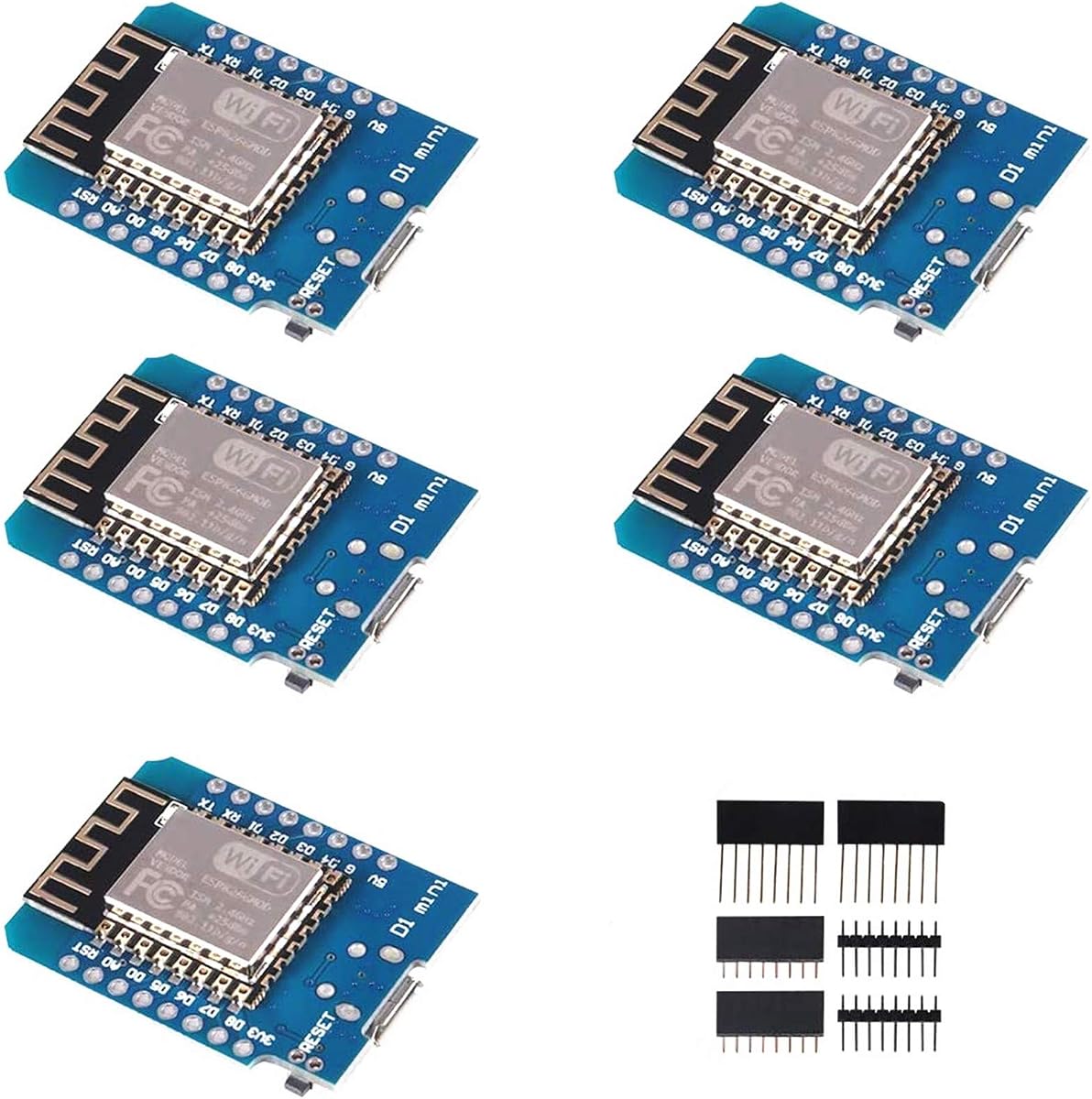
These are mini NodeMcu boards based on ESP8266EX with 11 digital pins. They feature Micro USB connection and onboard switching power supply for convenient programming and power.
We may earn a commission when you buy through this link, at no additional cost to you.
All pins support interrupt, PWM, and I2C with 3.2V max analog input. The compact size makes them easy to integrate into final projects compared to bare modules.
While larger than the ESP-01, the integrated USB makes them significantly easier to use without breakout adapters. This saves time and reduces wiring errors.
Best for those wanting easy connectivity without breadboard adapters. The 4M bytes flash supports substantial code, and compatibility with Arduino IDE ensures easy setup.
Integrated USB and power supply reduce external wiring needs, speeding up prototyping significantly.
Eleven GPIO pins support multiple peripherals and protocols, enabling complex circuit designs easily.
We may earn a commission when you buy through this link, at no additional cost to you.
This massive ten-pack offers the best value for large deployments. ESP8266 provides robust on-board processing and ample storage for complex algorithms and data retention.
We may earn a commission when you buy through this link, at no additional cost to you.
Supports AP, STA, and AP+STA modes with LWIP protocol. This ensures compatibility with Arduino platforms for streamlined development and enhanced project interoperability.
Managing ten units requires organization but enables extensive testing or building full mesh networks. The high customer rating indicates reliable quality across all units in the batch.
Ideal for bulk deployments, classrooms, or production prototypes. It eliminates supply uncertainty during development and reduces total unit cost significantly.
Ten units provide plenty of supply for extensive testing and multiple project iterations.
Strong processing capabilities allow efficient execution of complex networking and data tasks.
We may earn a commission when you buy through this link, at no additional cost to you.
Selecting the right WiFi module depends on your technical skills, project requirements, and budget constraints.
Consider whether you need basic connectivity or advanced processing like dual-core chips. Higher power enables more complex tasks but costs more.
Evaluate your project complexity to determine if a basic chip or advanced board is necessary.
Check if the module supports both Wi-Fi and Bluetooth. Some projects require dual connectivity for enhanced functionality.
Ensure the module supports required protocols like BLE or standard Wi-Fi.
Modules operate at different voltages like 3.3V or 5V. Ensure your power source matches requirements to avoid hardware damage.
Always use proper voltage regulators if your Arduino board runs at 5V.
Larger flash memory allows storing more code and data. This is crucial for complex sketches requiring significant storage.
Choose modules with at least 4MB flash for modern application needs.
Modules with built-in USB or breakout boards are easier to prototype with. Bare modules require external circuitry for safe connection.
New developers should prioritize integrated boards over bare chips.
Buying in packs reduces unit cost and ensures backup units are available. This is beneficial for testing or building multiple devices.
Calculate how many units you need to avoid overbuying or running short.
Popular modules have more documentation and libraries. This helps resolve issues quickly and accelerates development time.
Stick to well-documented platforms like ESP8266 or ESP32 for better resources.
Consider USB-C and newer protocols like Bluetooth 5.0 for longevity. Older micro USB standards may become obsolete soon.
Invest in modern interfaces to ensure long-term usability of your project.
Begin by connecting the module to a stable 3.3V power source. Ensure voltage levels match specifications to prevent hardware damage during operation.
Use serial communication libraries to send AT commands or data. Configure the network credentials carefully to ensure stable connectivity.
Store unused modules in anti-static bags to protect sensitive components. Keep them in a dry environment to avoid corrosion or moisture damage.
Most ESP8266 and ESP32 modules are compatible with standard Arduino boards like Uno or Nano. You may need to install additional board managers in the IDE for support.
ESP32 offers dual-core processing, Bluetooth, and faster speeds. ESP8266 is cheaper and simpler but lacks advanced features like Bluetooth or dual-core performance.
Yes, ESP8266 modules require 3.3V power. Connecting them directly to 5V Arduino pins will damage them. Always use a regulator or a dedicated module.
Connect via USB or serial adapter and select the correct board in Arduino IDE. You may need to hold specific pins during reset to upload code successfully.
Modules with integrated USB like the ESP-32 Dev Board or NodeMcu are easiest. They handle power and communication without complex external wiring.
Yes, modules with low power modes like ESP32 are suitable. They offer deep sleep features to extend battery life significantly for remote projects.
We reviewed ten options ranging from budget ESP8266 chips to advanced Arduino boards. The UNO R4 WiFi leads for power while the ESP-01S offers affordability.
Prioritize processing power and connectivity options based on your specific project needs. Ensure voltage compatibility and sufficient flash memory for your code.
Prices fluctuate, so check current listings before purchasing. Investing in the right module saves time and ensures reliability for your embedded systems.