
ASUS Dual Radeon RX 9060 XT 16GB GDDR6
4.7Editor score
16GB VRAM Capacity
Compact 2.5 Slot
Quiet Operation Mode
This guide compares the top 10 GPUs for Comfyui including NVIDIA RTX and AMD Radeon options to help you choose the best card for AI image generation tasks.
Choosing the right graphics card is crucial for running Comfyui efficiently. You need a GPU that handles large models and complex workflows without crashing. The best options offer high VRAM and fast processing speeds.
We compared ten top GPUs based on architecture, memory capacity, and AI performance. Each product was evaluated for compatibility with Comfyui nodes and stability during long generation tasks. This list covers both professional and enthusiast options.
Each pick highlights key strengths and potential trade-offs for your setup. We focus on real-world usability for AI art and design work. Please note that availability and specifications may vary by region and retailer.
4.7Editor score
4.6Editor score

4.3Editor score
This table provides a side-by-side overview of the top ten graphics cards suitable for Comfyui workflows. Compare memory sizes, architectures, and cooling solutions to find the best fit for your system.


The NVD RTX PRO 6000 stands out as the ultimate powerhouse for demanding Comfyui workflows. With 96GB of DDR7 memory it handles massive models that other cards cannot. Its professional features ensure stability during extended generation sessions.
We may earn a commission when you buy through this link, at no additional cost to you.
Powered by the Blackwell architecture it delivers unprecedented AI performance through 5th Gen Tensor Cores. The PCIe Gen 5 interface doubles bandwidth allowing faster data transfers between CPU and GPU. This makes fine-tuning local models significantly quicker.
While it excels in performance the cost is substantial for most users. Export regulations may also complicate international purchases. These trade-offs are acceptable only for enterprise or professional studio environments requiring top-tier resources.
Buy this if you need absolute maximum VRAM and enterprise isolation features. It is ideal for studios running concurrent heavy workloads. For standard Comfyui users it may be overkill compared to consumer options.
Universal MIG divides the GPU into isolated instances for secure multi-user workflows.
1.8 TBps bandwidth enables rapid processing of complex 3D and AI projects.
We may earn a commission when you buy through this link, at no additional cost to you.
The ASRock Intel Arc Pro B60 offers impressive 24GB memory at a reasonable price. It targets workstation users who need reliable AI inference without breaking the bank. Linux multi-GPU support makes it unique for scalable clusters.
We may earn a commission when you buy through this link, at no additional cost to you.
Built on Intel Xe2-HPG architecture it provides strong AI acceleration with XMX engines. The PCIe 5.0 support ensures future readiness for bandwidth-intensive tasks. Twin Media Transcoders also speed up video exports alongside image generation.
Driver maturity may vary compared to established leaders in the market. The blower cooler can be louder under load than open designs. These factors are manageable for technical users comfortable with optimization.
Consider this card if you need more VRAM on a budget. It suits Linux environments and multi-GPU setups well. Users preferring plug-and-play simplicity might find setup slightly more involved.
Optimized for Linux multi-GPU deployments for scaling AI performance effectively.
24GB GDDR6 handles large LLMs and generative design tasks comfortably.
We may earn a commission when you buy through this link, at no additional cost to you.
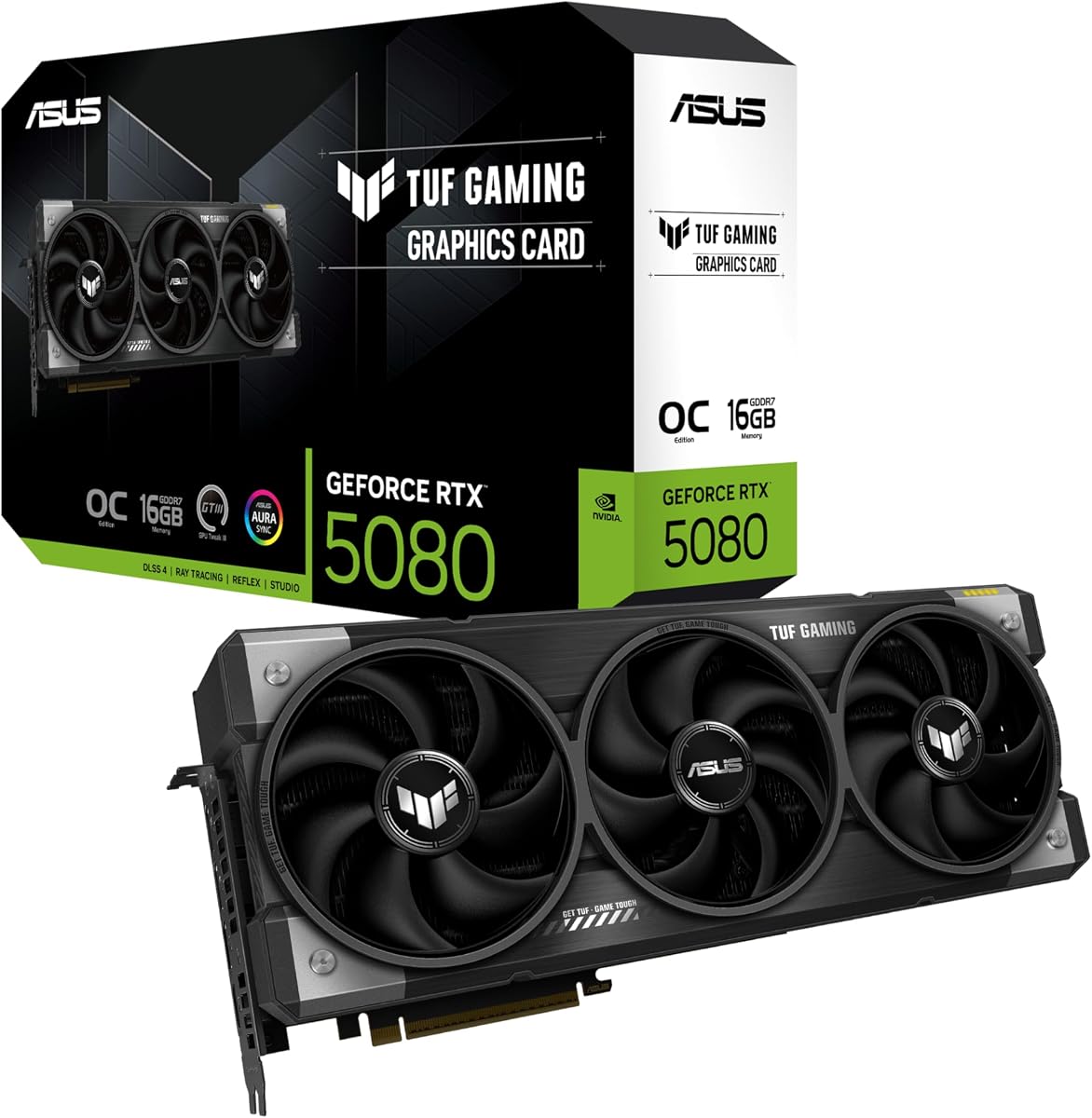
The ASUS TUF Gaming RTX 5080 balances power and reliability perfectly for Comfyui. Its 16GB GDDR7 memory supports complex node graphs and high resolutions. The military-grade components promise longevity under continuous workloads.
We may earn a commission when you buy through this link, at no additional cost to you.
Powered by NVIDIA Blackwell it delivers efficient processing for generative AI tasks. The phase-change thermal pad maintains optimal temperatures during extended use. Protective PCB coating adds resilience against dust and moisture inside the case.
It demands an 850W PSU and substantial case clearance which may limit smaller builds. The price is higher than entry cards but justified for the robust design. These constraints are worth it for stable professional output.
Buy this for reliable daily use in creative workflows. It fits users who prioritize durability over raw clock speeds. Ensure your case and PSU can accommodate its size before purchasing.
Phase-change thermal pads outlast traditional paste for consistent performance.
Protective PCB coating guards against moisture and debris damage over time.
We may earn a commission when you buy through this link, at no additional cost to you.
This GIGABYTE model delivers top-tier performance for Comfyui generation tasks. The 16GB GDDR7 memory handles high-res outputs without bottlenecks. WINDFORCE cooling keeps thermal levels manageable during long renders.
We may earn a commission when you buy through this link, at no additional cost to you.
Blackwell architecture ensures compatibility with latest AI features. PCIe 5.0 interface maximizes data throughput for faster node execution. Overclocking out of the box provides extra headroom for tweaking.
Fan noise may increase under heavy load. The physical dimensions require a spacious chassis. These issues are minor given the raw performance available for demanding users.
Choose this for maximum speed in generation workflows. It suits advanced users willing to manage thermal throttling. Verify case dimensions before buying to ensure proper fit.
WINDFORCE system ensures heat dissipation during extended AI workloads.
PCIe 5.0 support allows rapid data transfer with latest motherboards.
We may earn a commission when you buy through this link, at no additional cost to you.
The ASUS Dual RTX 5060 Ti provides a sweet spot for Comfyui users. 16GB GDDR7 memory is sufficient for most standard models. The quiet mode helps during overnight generation sessions without noise.
We may earn a commission when you buy through this link, at no additional cost to you.
Blackwell architecture supports advanced AI features and DLSS. Dual BIOS allows switching between performance and quiet profiles easily. Axial-tech fans optimize airflow within a smaller footprint.
Core performance may lag behind higher tier cards in complex scenes. Build materials feel lighter than premium options. These are acceptable trade-offs for the price point offered.
Buy this for reliable performance without breaking the budget. Ideal for enthusiasts needing moderate VRAM in smaller cases. Check power requirements before installing to ensure safety.
0dB technology stops fans at low loads for silent light tasks.
2.5-slot design fits more cases than bulky alternatives available.
We may earn a commission when you buy through this link, at no additional cost to you.
The ASUS TUF RTX 5070 balances durability and speed for Comfyui. 12GB GDDR7 memory works for most standard generation tasks. Auto-Extreme manufacturing ensures high reliability across production units.
We may earn a commission when you buy through this link, at no additional cost to you.
Military-grade components provide long-lasting performance. Phase-change pads maintain thermal efficiency under heavy loads. GPU Guard reduces risk of physical damage from bending or mounting.
12GB VRAM may limit large model handling compared to 16GB options. It consumes moderate power requiring adequate PSU capacity. These factors suit typical home studios needing robust hardware.
Choose this for balanced performance and reliability. It is well-suited for general AI workflows and design. Ensure your power supply meets the minimum wattage requirements.
Auto-Extreme automation ensures higher reliability and consistent quality.
Phase-change thermal pads outlast traditional paste for lasting cooling.
We may earn a commission when you buy through this link, at no additional cost to you.
The ASUS Dual RX 9060 XT offers great value for Comfyui users. 16GB GDDR6 memory handles complex tasks efficiently. The compact design fits well in smaller workstations without sacrificing space.
We may earn a commission when you buy through this link, at no additional cost to you.
Axial-tech fans provide effective cooling with low noise. Dual BIOS allows profile switching for balanced power use. This card supports many workflows requiring high memory bandwidth.
AMD cards may require extra setup for specific AI nodes. Software ecosystem is smaller than NVIDIA. However performance per dollar remains competitive for many users.
Buy this if you prioritize memory and size. It suits home offices needing flexible hardware. Check specific node compatibility before committing to an AMD setup.
2.5-slot design allows greater compatibility with small chassis builds.
16GB GDDR6 memory supports large models and complex node graphs.
We may earn a commission when you buy through this link, at no additional cost to you.
The GIGABYTE RX 9070 XT delivers strong raw power for Comfyui. 16GB GDDR6 memory supports various generation workflows without issues. WINDFORCE cooling keeps the card cool during intense usage.
We may earn a commission when you buy through this link, at no additional cost to you.
Server-grade thermal gel improves heat transfer efficiency. PCIe 5.0 interface ensures fast communication with modern CPUs. RGB lighting adds a touch of visual flair to the setup.
Fan noise can be intrusive during quiet work periods. AMD driver support for AI varies by application. These limitations are manageable for technically adept users.
Consider this for raw power and aesthetic appeal. Ideal for users prioritizing performance over specific AI features. Ensure proper ventilation in your case to handle the heat.
Server-grade gel ensures better heat dissipation under heavy loads.
PCIe 5.0 support maximizes data speed with latest hardware.
We may earn a commission when you buy through this link, at no additional cost to you.
The ASUS Dual RTX 5050 is an entry option for Comfyui. 8GB GDDR6 memory works for basic generation tasks. Its small footprint fits easily into slim chassis systems.
We may earn a commission when you buy through this link, at no additional cost to you.
Blackwell architecture supports new AI features. 0dB technology ensures silent operation during light tasks. Dual BIOS switch allows profile toggling easily for different needs.
Memory limits large model processing and high-res outputs. It is best for learning or light workflows. These constraints make it unsuitable for heavy professional work.
Choose this for small form factor builds. It suits beginners learning Comfyui basics. Check VRAM requirements before purchasing for your specific needs.
2-slot design maximizes compatibility for small case builds.
0dB technology stops fans for silence during low loads.
We may earn a commission when you buy through this link, at no additional cost to you.
The PNY RTX 5060 offers solid performance for Comfyui. 12GB GDDR6 memory handles moderate generation tasks efficiently. Factory overclocking provides extra speed out of the box.
We may earn a commission when you buy through this link, at no additional cost to you.
VelocityX software allows easy control over fan curves. Dual-fan cooling ensures stability without excess noise. Compact design fits various system configurations including small cases.
Build quality is functional but lacks premium features. It may not suit heavy daily professional workloads. These factors keep the price competitive for most users.
Buy this for reliable entry-level performance. It suits hobbyists needing decent VRAM and controls. Check physical dimensions before buying to ensure case fit.
VelocityX software allows full control over clocks and curves.
Dual-fan cooling ensures efficient heat dissipation in compact sizes.
We may earn a commission when you buy through this link, at no additional cost to you.
Selecting the right GPU requires balancing memory, architecture, and cooling. This guide breaks down the key factors to help you make an informed decision.
VRAM determines the size of models you can load into memory. Larger models and higher resolutions require more memory to run smoothly without crashing. Aim for at least 12GB for standard workflows and 16GB or more for professional work.
Always check your typical model size and choose a GPU with enough memory to handle peak load comfortably.
Newer memory types like GDDR7 offer higher bandwidth than GDDR6. Faster bandwidth improves data transfer speeds between the processor and memory. This results in quicker generation times and more efficient node processing.
Look for GPUs with the latest memory standards to ensure future compatibility and speed.
Modern architectures like Blackwell include specific cores optimized for AI tasks. These cores handle tensor operations more efficiently than older designs. Compatibility with latest AI libraries often depends on these architectural features.
Select a GPU with a recent architecture to benefit from optimized performance and software support.
Long generation tasks generate significant heat that cooling systems must dissipate. Efficient cooling prevents thermal throttling which slows down performance during use. Quality fans and heat sinks maintain stable clock speeds under load.
Choose a card with robust cooling to ensure consistent performance over time.
Graphics cards vary in length and slot width requiring specific case clearance. Oversized cards may not fit in compact or smaller workstation chassis. Measure your case dimensions to avoid installation issues.
Always verify physical dimensions against your case before purchasing to ensure proper fit.
High-performance GPUs draw significant power from your power supply unit. Insufficient wattage can cause system instability or unexpected shutdowns during use. Check minimum PSU requirements and have headroom for other components.
Ensure your PSU meets or exceeds recommended wattage for stable system operation.
Modern GPUs support PCIe 5.0 and DisplayPort 2.1 for faster data transfer and displays. These interfaces maximize bandwidth for multi-monitor setups and large data movement. Compatibility with motherboard slots is essential for full performance.
Check PCIe slot availability to ensure the card connects properly to your system.
NVIDIA GPUs generally have broader support for AI frameworks and libraries. AMD and Intel options may require additional configuration for specific Comfyui nodes. Consider existing workflows when deciding on vendor ecosystems.
Research node compatibility with your chosen brand to avoid setup challenges.
Install your GPU properly into the PCIe slot and connect power cables. Ensure all connections are secure to prevent instability during heavy workloads.
Update drivers regularly through the manufacturer website or software tool. New updates often include bug fixes and performance optimizations for AI tasks.
Monitor temperatures using system tools and keep airflow clear. Dust accumulation can reduce cooling efficiency and impact longevity over time.
For basic workflows 12GB is usually sufficient. For complex nodes and high resolutions 16GB or more is recommended. Professional use may require up to 24GB or 96GB depending on model size.
AMD cards can run Comfyui but may require additional setup for specific nodes. NVIDIA cards generally have better native support for many AI libraries. Check node compatibility before choosing an AMD GPU.
GDDR7 offers higher bandwidth and improved efficiency over GDDR6. This translates to faster data transfer and quicker processing times. Look for GDDR7 in newer models for best performance.
Throttling occurs when heat or power limits are reached. Improve airflow and clean dust filters to prevent overheating. Also check if your PSU provides enough wattage for sustained loads.
Older GPUs may run basic workflows but lack memory for modern models. Look for at least 12GB VRAM for reliable performance. Newer architectures handle complex tasks more efficiently.
Check the manufacturer minimum requirement for your specific GPU model. Most high-end cards require 750W or more for stability. Add extra headroom for other components to avoid power shortages.
We reviewed ten top GPUs ranging from entry to professional levels for Comfyui. The TUF RTX 5080 offers the best balance for most enthusiasts. The RX 9060 XT is great for compact setups with high memory.
Prioritize VRAM capacity and cooling to ensure smooth workflows. Architecture compatibility with your specific nodes is equally important. Choose a card that fits both your budget and case requirements.
Prices and availability may change quickly so verify current listings before buying. We hope this guide helps you find the perfect graphics card for your needs. Check current specs and reviews for the most accurate data.